FALCONER “Chukar” made by TOYO
Tani here from the Kamiuma shop.
Today is a continuation of my last post: the other bike we exhibited at BESPOKED, plus one very important announcement.
At the BESPOKED bike show, we displayed another bike alongside the Rivendell Rambouillet I wrote about previously.
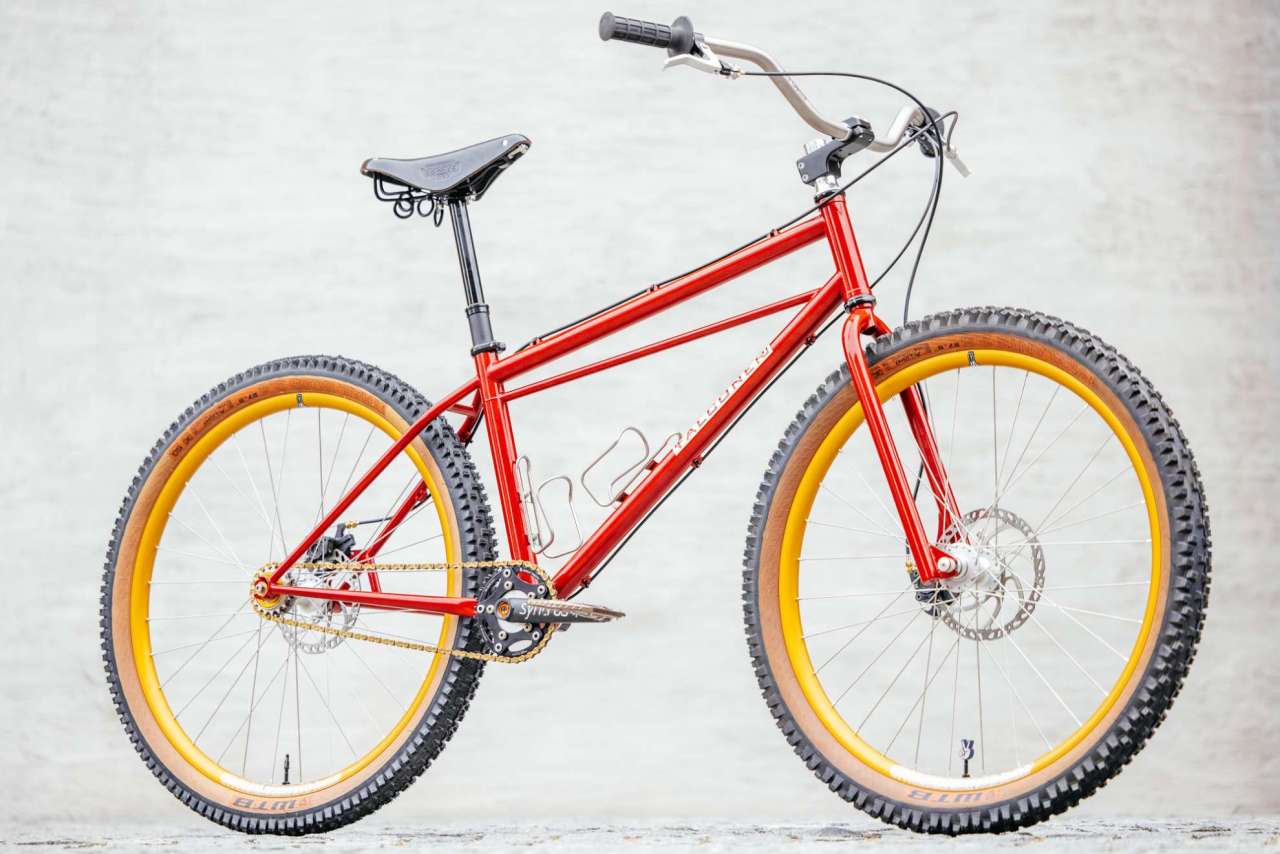
FALCONER CYCLES “Chukar” made by TOYO
Like the Rambouillet, this frame was also built by Ishigaki-san at TOYO FRAME.
⸻
FALCONER CYCLES. Handmade bikes built by Cameron Falconer, my favorite frame builder.
For the past few years, I’ve basically decided that Rivendell is what I want to ride in everyday life, but when it comes to bikes for something outside the everyday — what you might call a proper “ride” or “cycling” — I want Cameron to build all of them.
That’s how big a fan I am of his bikes.
Why? Of course, the starting point is the simplest reason of all: His frames are just cool. They have this kind of energy.

But more importantly, when I actually rode the bikes he made for me, I had some of the best experiences I’ve ever had on a bicycle.
I could ride all day, finish the day and genuinely think: “Man, that was fun. I want to ride again.” More than I ever had before.
…Hmm. Written down like this, it sounds kind of cheesy and fake.
I wonder if Kaneyan and Santa, who ride with me, understand this almost sexual urge I have toward these bikes.
Anyway, mountain bikes,

track bikes,

road bikes.
My current obsession with different kinds of riding changes all the time, but no matter the category, his bikes completely cured me of being lazy about going for rides.
The amount of riding I do outside of commuting exploded. I started looking forward to my next day off. I started checking the weather forecast.
Alongside Grant Petersen, Cameron is one of the people who changed my life with bicycles.
At the shop, I’ve slowly shared some of those feelings with customers, and we’ve delivered several FALCONER CYCLES to our regulars.
And beyond my personal feelings, from a work perspective — as BLUE LUG Kamiuma — I always thought that if our shop could offer bikes from FALCONER, and from the next-generation genius Tom LaMarche, my personal two top builders, that would basically complete my idea of the perfect bike shop.
⸻
Those feelings eventually led us to hold HANDMADE BIKES & PARTS in KAMIUMA this June, an event focused on handmade bikes that can be ordered through the Kamiuma shop.
But shortly before the event, Cameron contacted us. He told us that he was going to stop frame building. I was shocked.
The reason was that he had started working for a company in the Bay Area developing wildfire-prevention drones, something that has become increasingly important where he lives. I heard that both he and his partner were turning their attention toward something bigger: protecting forests.
And honestly, for someone like Cameron, who can weld, design, use CAD, operate a lathe, and basically make anything, it made complete sense that he could do great work there.
I was really disappointed. But I also genuinely like Cameron as a person.
When Wakako-nee-san, who received the news directly from him, replied: “It’s sad, but it’s your life. If you’re happy, that’s the most important thing, so this is good news!”
I completely agreed.
Cameron also added that he felt truly, deeply sorry for the customers he had kept waiting for so long.
Hearing that made me want to support this next phase of his life. But although that’s genuinely how I felt, it’s also true that I was pretty depressed. Personally, professionally, and as a shop, I had become heavily dependent on his bikes.
And because of that, I couldn’t bring myself to announce the news properly through the blog or social media.
That was completely my fault.
During HANDMADE BIKES & PARTS in KAMIUMA, several customers actually came in wanting to order a FALCONER.
It was painful, and the best I could manage was explaining the situation individually in person.
That is the important announcement I failed to make.
…..
From there, I started thinking: What would be best for me?
For Cameron?
For our customers?
Even if Cameron had stopped building handmade bikes himself, could we somehow produce a bike that he designed?
Could we make a production model in Taiwan or somewhere else, like RITCHEY or SKLAR?
Could we somehow preserve the DNA of FALCONER CYCLES, the bikes that had changed my own cycling life?
That’s where my thinking went. Of course, that was my own ideal. I decided from the beginning that if Cameron himself wasn’t excited about the idea, I’d drop it immediately.
So I told him what I was thinking.
His response was: “I’d be honored. Absolutely.” He seemed genuinely happy about it.
So the biggest personal mission of that trip became continuing this conversation with him.
And then that idea overlapped with what I mentioned earlier:
Having TOYO FRAME build Japanese-made frames for us to exhibit at BESPOKED.
…..
After leaving Rivendell, we headed toward Quincy, California, where Cameron lives. We got up at 5:00 AM, caught an early flight from San Jose to Reno, then rented a car and started a long drive.
I’d never been to Reno or Quincy before.
Reno is a casino town, although nowhere near as flashy as Vegas, and the people hanging around the casinos seemed a little rougher too. Haha.
The highway toward Quincy was all desert, bare mountains, and landscapes with almost no buildings or man-made structures. Very different from the typical image people have of California.
Quincy itself is a small town, but it felt simple and warm.
It reminded me a little of Point Reyes, where Black Mountain is based.

Further out, closer to the mountains, was Cameron’s house and workshop.
The last time I visited his workshop, he was still in San Francisco before he moved, so this was my first time here.

There was a house he built himself with friends, and a single-story workshop next to it.
And outside was the infamous “toilet with no door” that Travis from PAUL had told me about.
I don’t even remember how many years it had been since I last saw him, but he looked really healthy and happy.
Also, his hug was incredibly strong. I liked that. I think I’m going to copy him.
Before getting into the work conversation, he showed us around the workshop.
It was basically still set up exactly like a frame builder’s workshop.
Tools, machinery, old frames he had built, bicycles, components, motocross motorcycles…

He still uses the workshop for his current job too, and showed us some components he had made for the legs of a wildfire-fighting drone.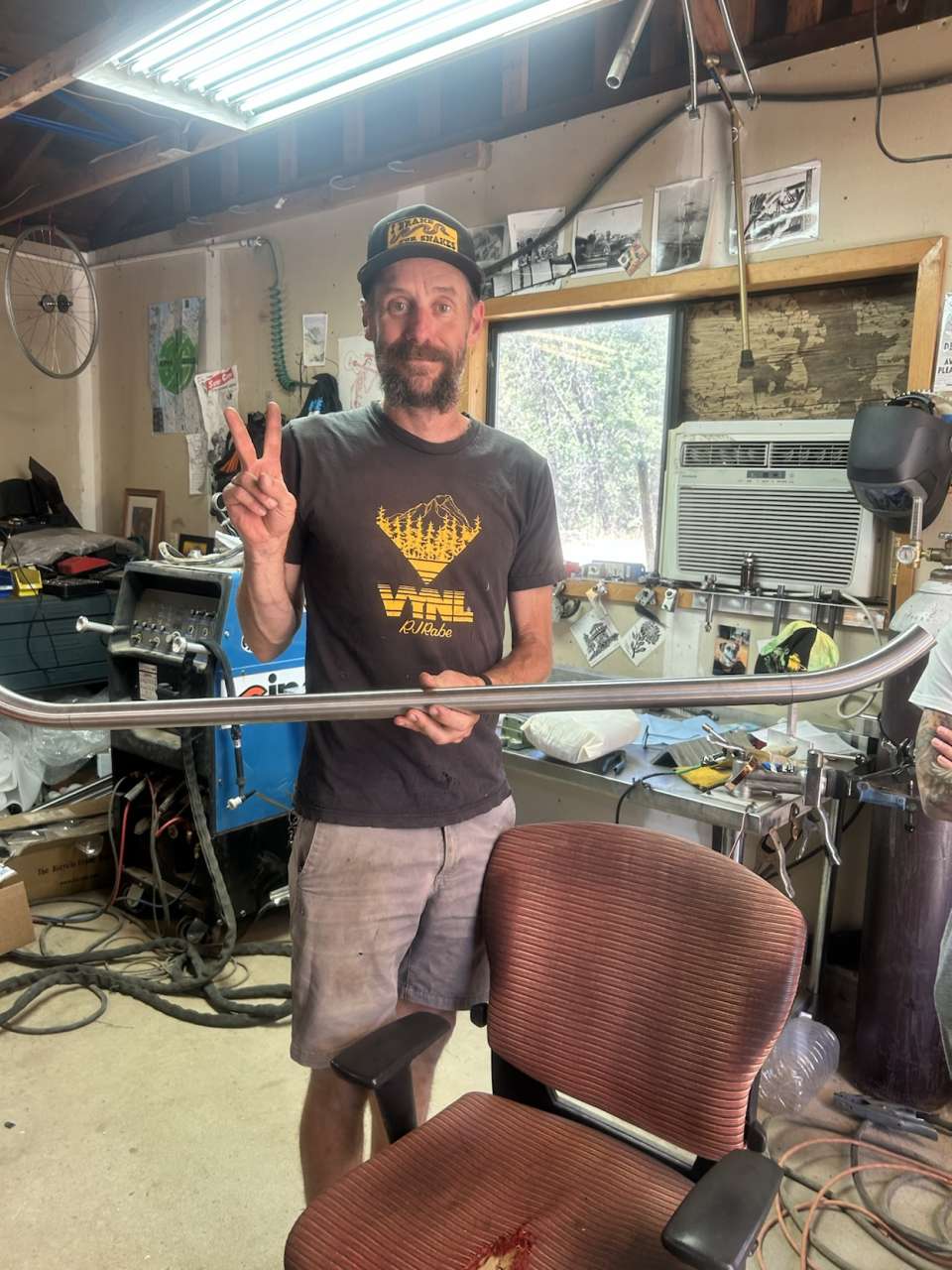
If I remember correctly, it was titanium tubing bent on Oscar from Simple Bicycle’s tube bender and then welded by Cameron.
He explained: “My bender can only bend tubes up to around 28mm, so I have Oscar bend the larger stuff.”
I’ve always loved the beautifully hand-bent chainstays on Cameron’s bikes.
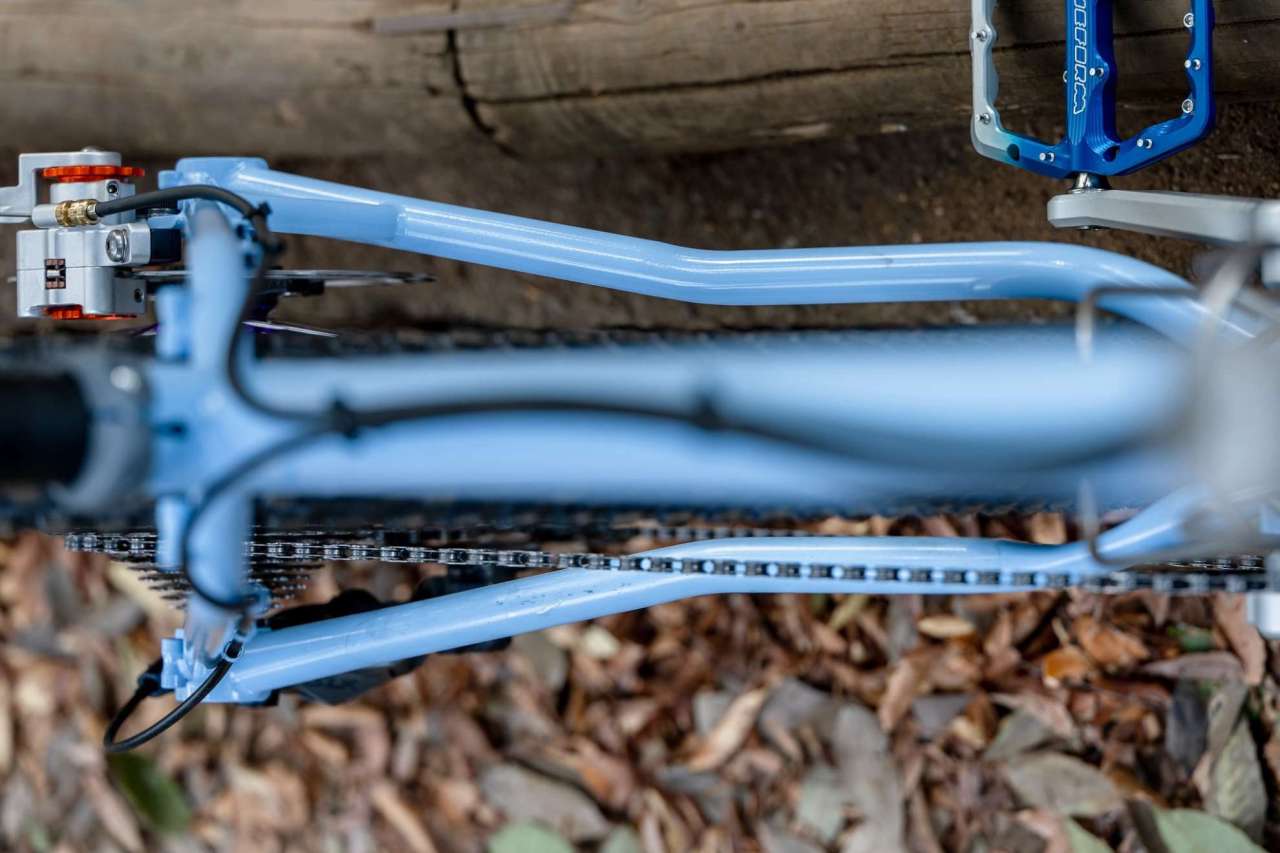 So while listening, I started wondering: Maybe those stays are bent with that same “up to 28mm” bender?
How exactly does he do it? Once I started thinking like that, I realized there were an infinite number of things I wanted to ask Cameron.
So I started bombarding him with questions.
About Ed Litton, Cameron’s mentor. About Zo.
Even private questions.He answered all of them carefully. Thank you.
Ask him anything about bicycles and he basically knows the answer.
He helped me confirm so many things I’d wondered about over the years.

It made perfect sense why Tyler from BTCHN calls him the person he goes to when he’s stuck — his mentor.
Cameron really is like a professor. I was so happy that I just kept talking.
Then I decided I was going to show him just how much of a FALCONER nerd I really am.
I’ve basically memorized almost every bike of his that has appeared online or on social media and is visible from Japan.
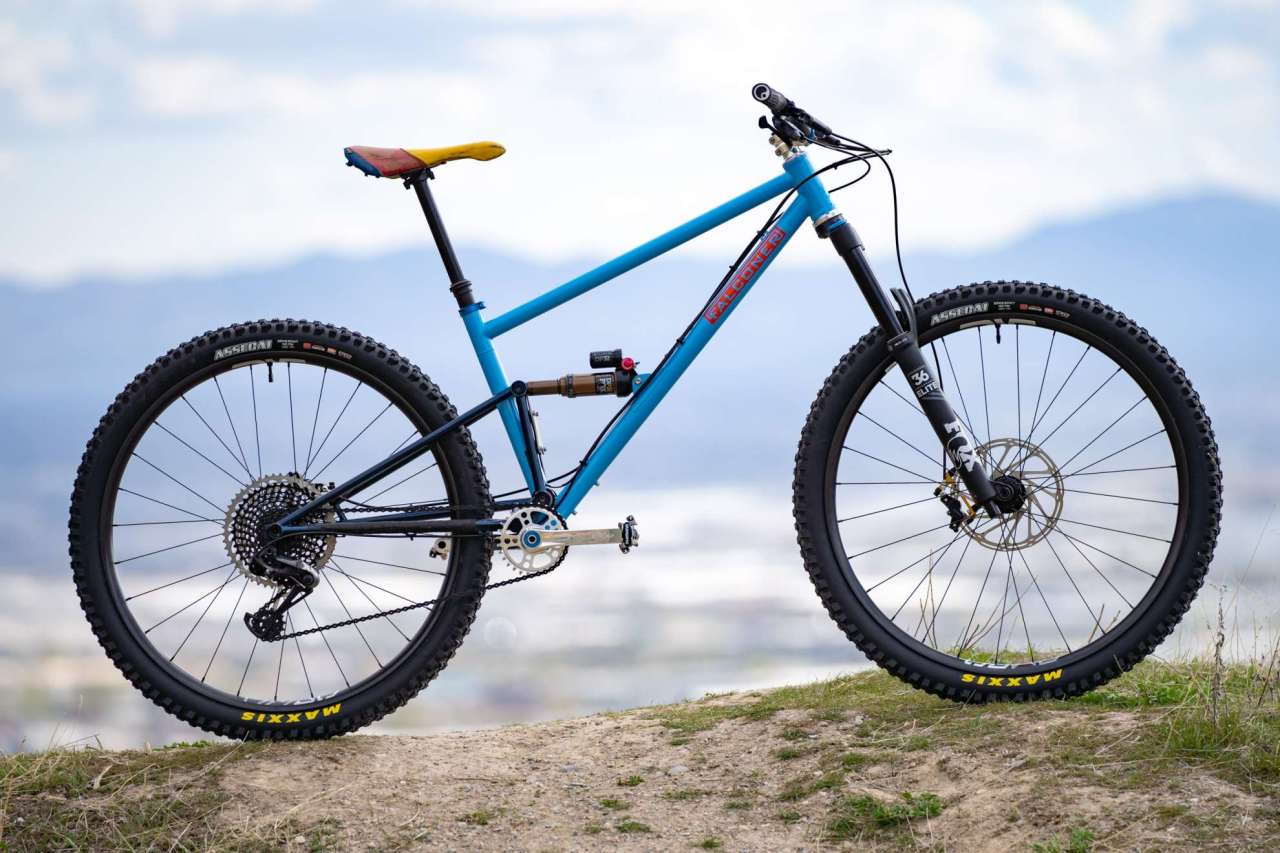 So we started talking about: “What’s your favorite FALCONER?”
I said: “There are a lot, but probably that blue full-suspension bike that says NOT FOR SALE.”
Cameron just went: “Oh, that one.”
And looked above our heads.

Wait. It’s right there. I’m freaking out, and Cameron casually says:
“I changed it after it was featured on The Radavist…” Then he pulled it down for me.
And he was right. The pivot location and the entire rear triangle had changed.
“I tried a bunch of things, but it never really worked that well.”
He didn’t sound particularly satisfied with it.
 Meanwhile I’m basically hyperventilating: “Yeah, but even if it doesn’t work perfectly, the design is still insanely cool!”
Then he says: “You can have the original rear triangle.”
Wait. I get the rear triangle! I was insanely happy. Let’s make it a treasure at the shop.
It’s hanging at Kamiuma now, so if you want to see or touch it, come by.
…
I really respect him, and I really love his bikes.
So after his frame-building career ended, I was genuinely happy just to be able to see him again and talk like this.
I kept going and going. But eventually we had to get to the actual reason we were there.
Time for the important work conversation. We reset and explained the project properly.
The idea had changed slightly from what we originally discussed, so I told him: “If this doesn’t sound exciting to you, please be honest.”
Then I explained: “We want to make your bike in Japan instead of Taiwan.”
“And we want to debut the first prototype as a BESPOKED show bike.”
His response was: “That’s even better!”
He agreed immediately.
Then when I told him that the builder would be TOYO, who used to produce Ritchey frames, he got even more excited.
He said: “When I was living in San Francisco 20 years ago, Japanese-made bikes and KEIRIN bikes had a really good image.”
And just like that, we were already discussing the design.

As for how we would position the bike, our proposal was: It could be a BLUE LUG Original Frame — Design by FALCONER.
Or, if Cameron was comfortable with it, I personally wanted to release it under the FALCONER CYCLES name.
I told him either was fine.
Whichever felt more comfortable for him. He had no problem with it and chose the latter.
So he gave us permission to make it as an actual FALCONER CYCLES, with FALCONER written on the downtube.

(Cameron carefully explaining the logic behind the bike.)
The bike we asked him to design was based on a style he had built several versions of in the past.
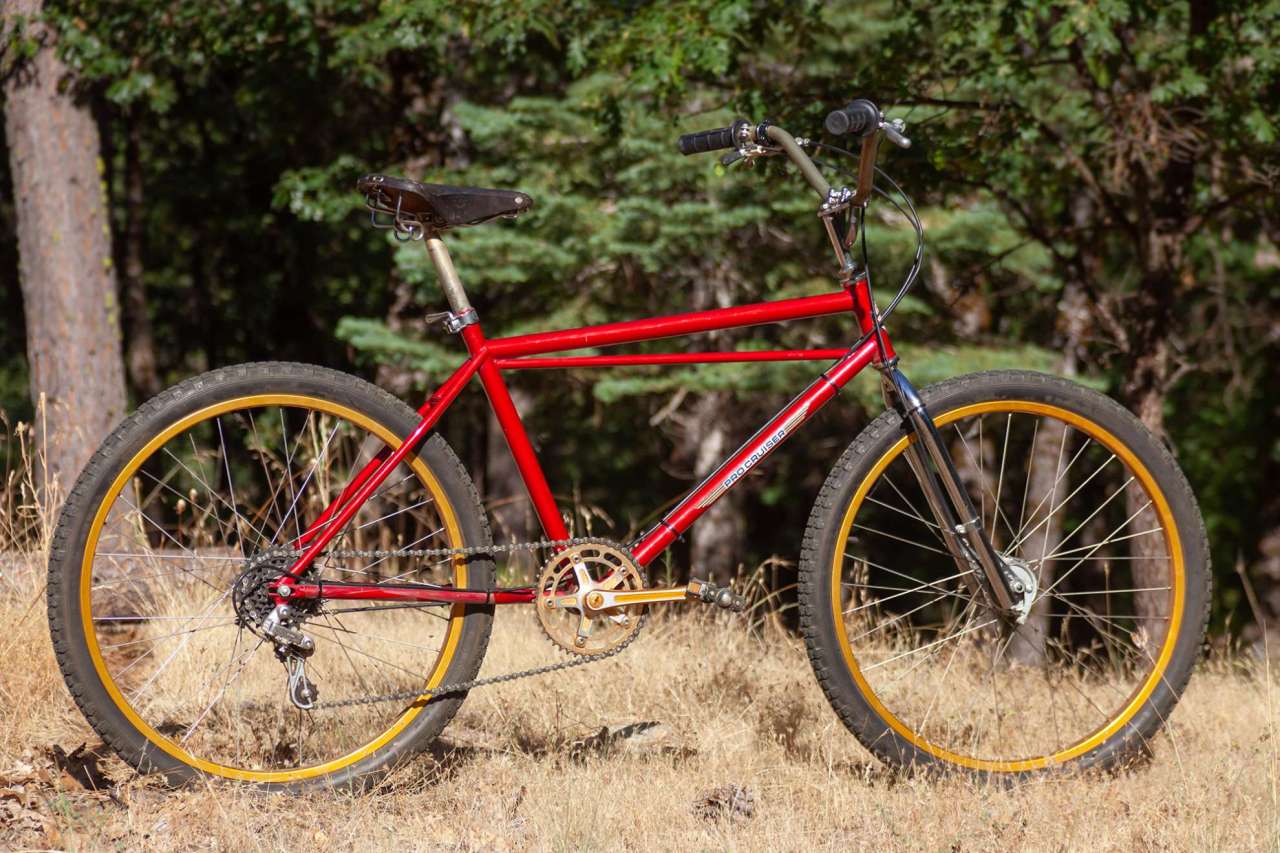 This is Cameron’s own original 1979 Lawwil Knight Pro Cruiser. You could basically call it a 50-year-old mountain bike.
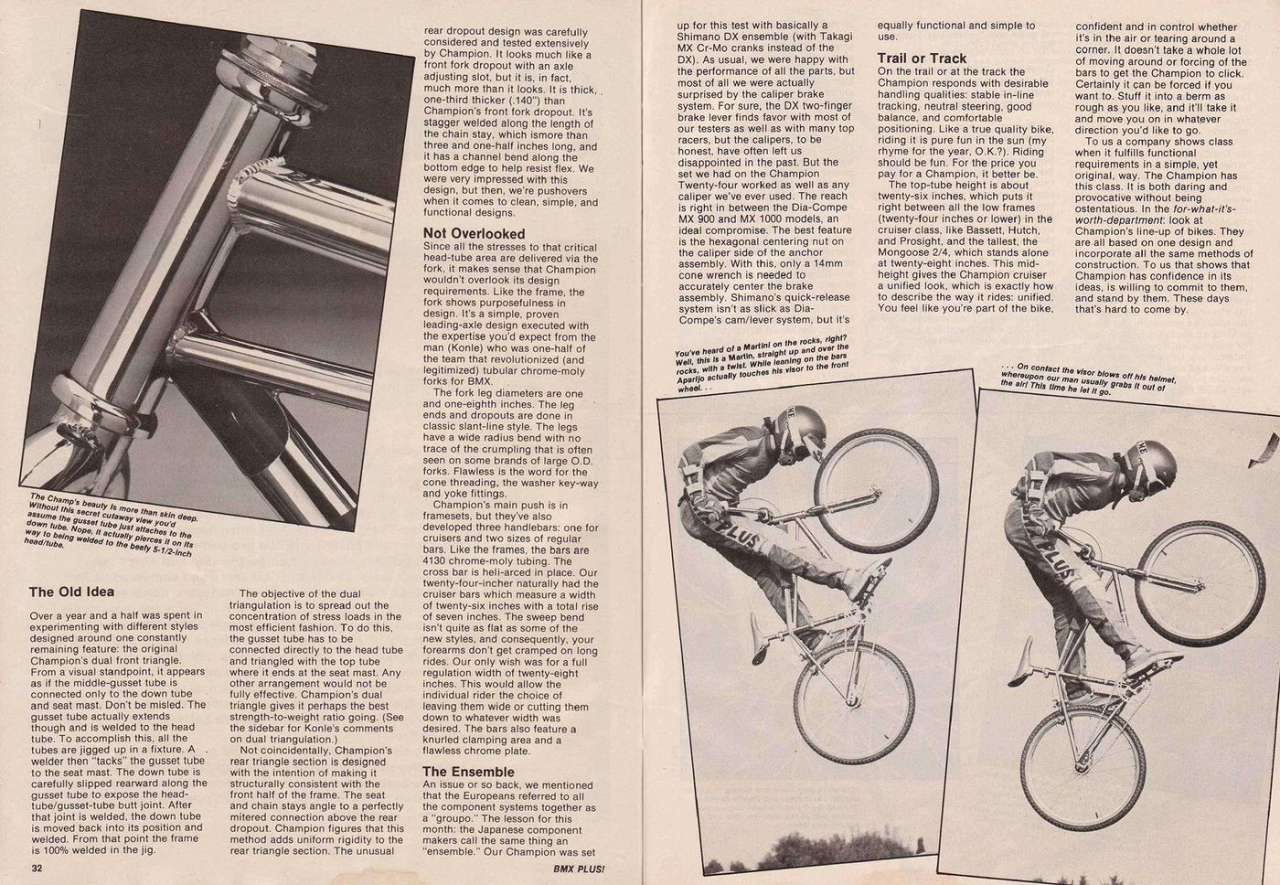 Its distinctive second top tube passes through the down tube and is welded directly to the head tube.
That’s one of its defining structural details. Cameron has a huge amount of respect for this bike.
He takes the original concept, interprets it through his own theories, and adapts it into a modern mountain bike.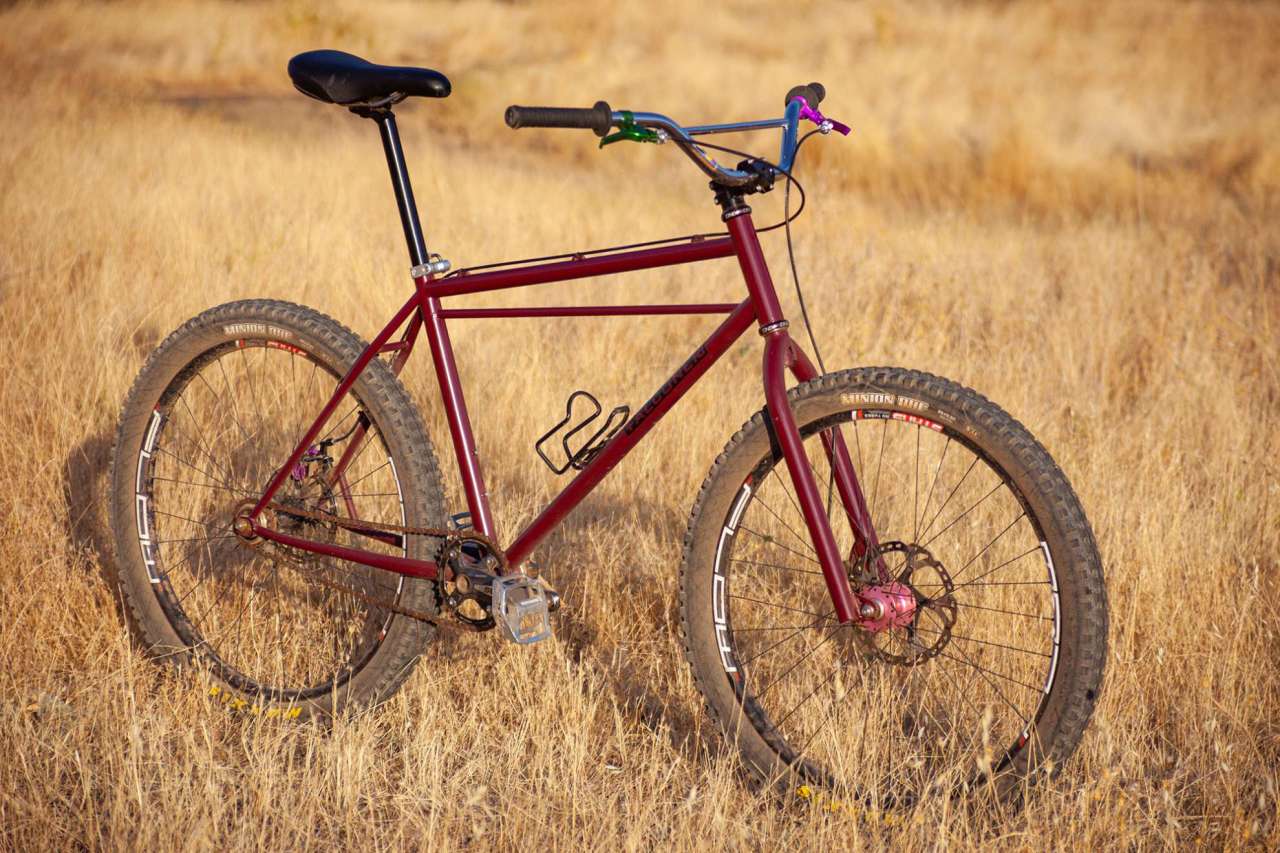 (This particular one uses 26-inch wheels. The fork was made by S&M, and Cameron added the disc tab himself.)
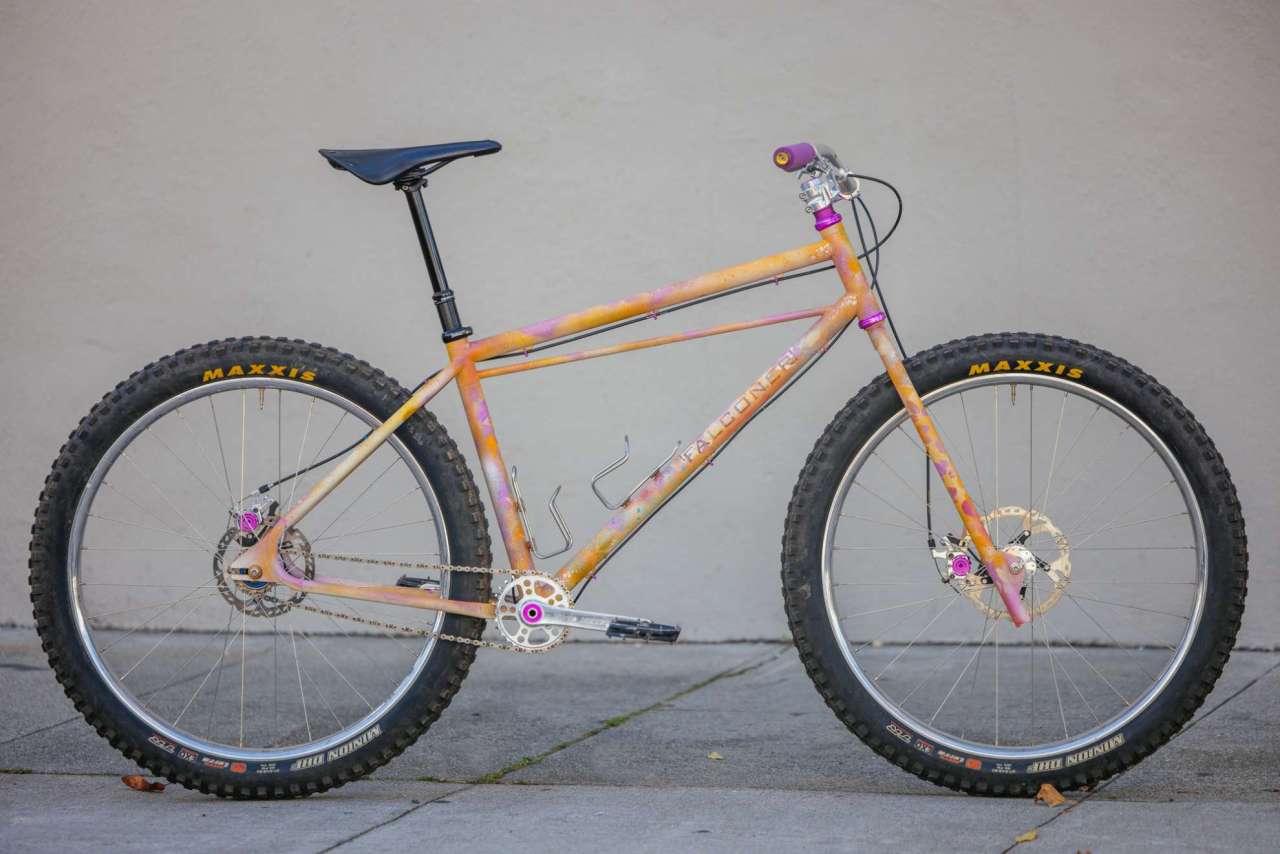 (The bike owned by Chris McNally has his own paintwork and a loop-style rear dropout. I found out later that making that loop end is apparently extremely difficult.)

There’s also one in Japan. A customer ordered it through Kamiuma.
It belongs to someone who has been like an older brother to me, both personally and professionally.
Since each one was a custom order, every bike had different intended use, standards, details, and geometry.
But we used this PRO CRUISER style as the starting point and explained again what kind of bike we wanted from this project.
I told Cameron about our monthly mountain rides.
About the conversations Kaneyan and I have in his car on the drive home.
About the places I usually ride, the terrain, and what everyday riding in Tokyo is like.
I basically threw everything at him.

Then Cameron filtered it all through his own way of thinking. He redrew the geometry specifically around the idea of:
Japanese satoyama riding and singletrack. So visually, it’s a type of frame he has built before.
But the ride is different from the others, and I wanted this bike to have its own name.
Cameron gave us several options.
Some were even titles of MELVINS songs, because he loves MELVINS.
Out of those, I liked: Chukar
A desert-dwelling bird from the partridge family.
So that’s what we chose.
FALCONER “Chukar.”
Good name. On the drive into Quincy, we had been looking out at this dry, desert-like landscape.
And with the bike’s long top tube, short stem, and thick 27.5 × 2.5 tires, its chunky proportions somehow reminded me of this little desert bird.
With that, our main mission for the trip was complete.

Then Cameron made another suggestion.
“Want to go up to the lookout where my girlfriend works?” So we got back in the car.
At first it was paved roads, but once we left town we quickly found ourselves bouncing along an unpaved gravel mountain road for about 25 minutes.
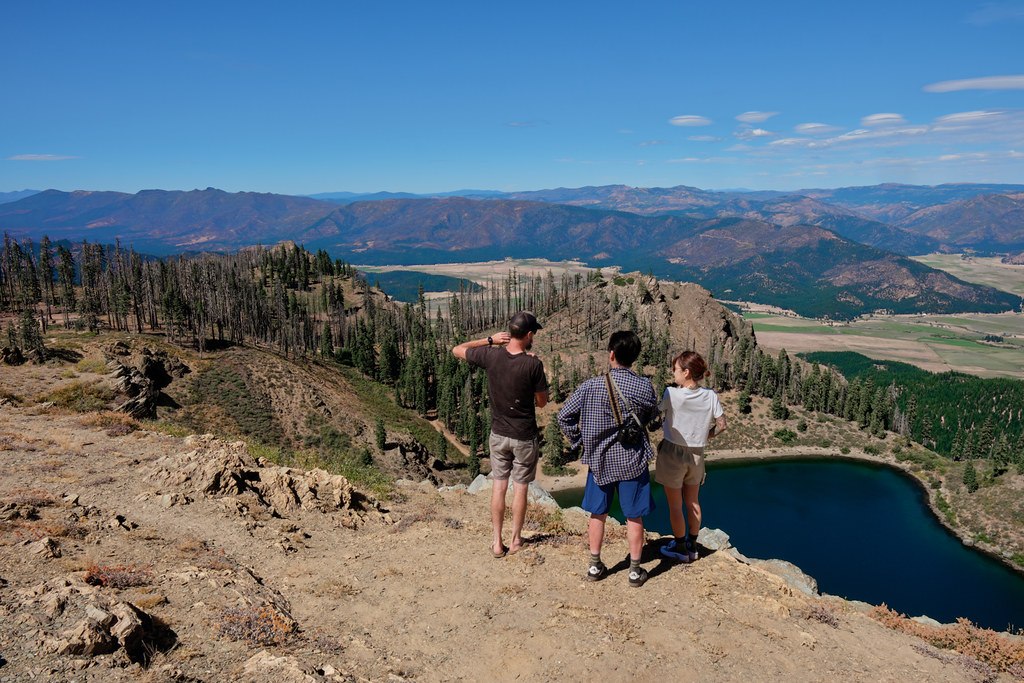
Near the summit, Cameron stopped at an incredible viewpoint and explained the mountains and lakes we could see around us.
Then he said: “You asked why I left San Francisco?”
He pointed at the landscape in front of us.
“This.”

From there we walked up to the tower at the summit where his partner Emily works.
She stays in this small mountaintop hut for half the week as part of her job monitoring the forest and spotting wildfires.
She welcomed us and carefully explained what the job involved. It really made me understand both how difficult and how meaningful the work is.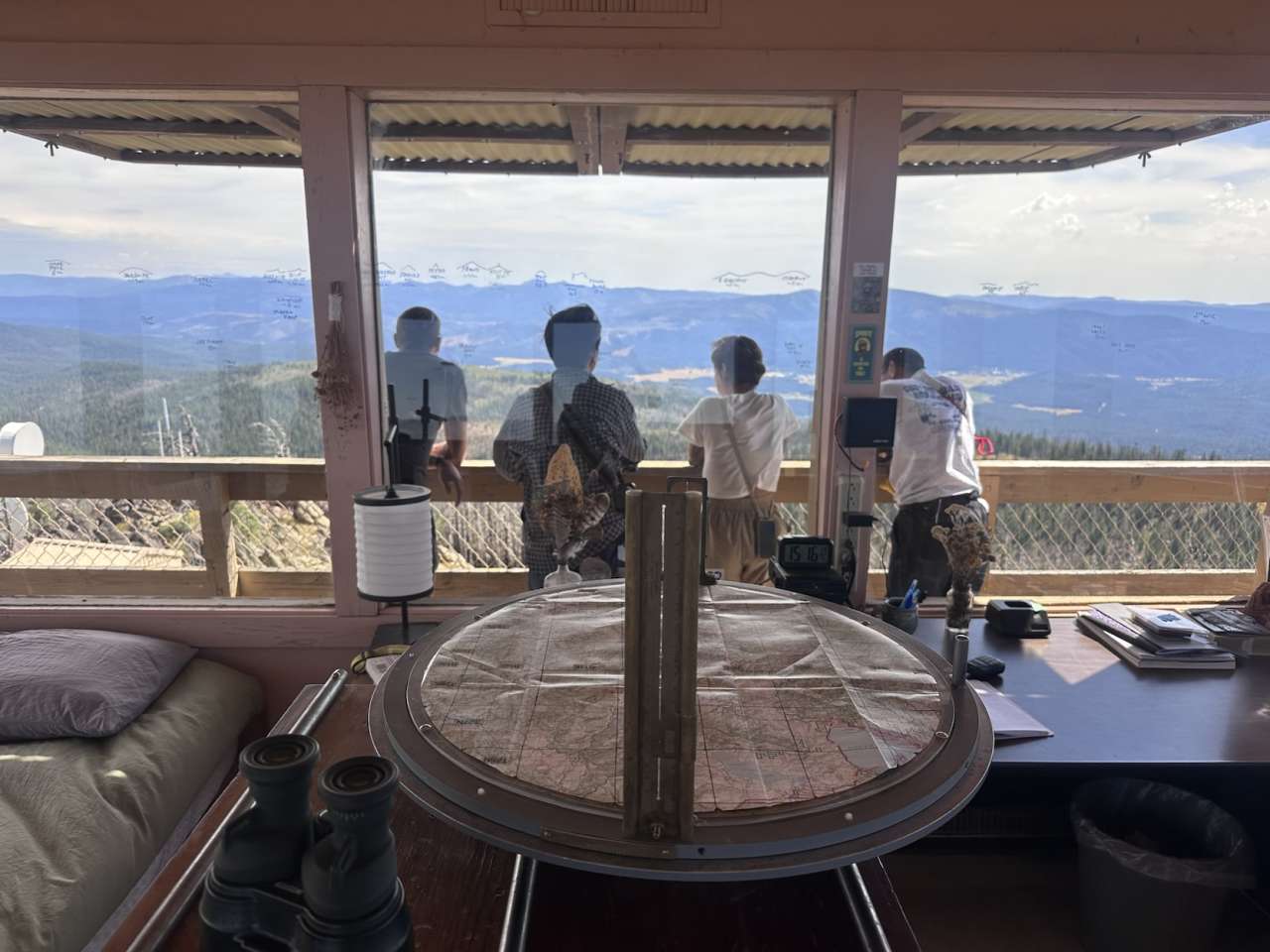 Cameron looked incredibly happy with her. They built their home somewhere close enough to reach this lookout easily.
The two of them share the same values: Getting away from the noise of the city. Getting closer to nature.
And both of them take real pride in work that protects mountains and the natural environment.
Before seeing him, if I’m honest, somewhere inside me I still had this feeling:
“Why did you quit frame building? Your bikes are the best in the world!”
But seeing how happy Cameron is now completely erased that feeling.
…
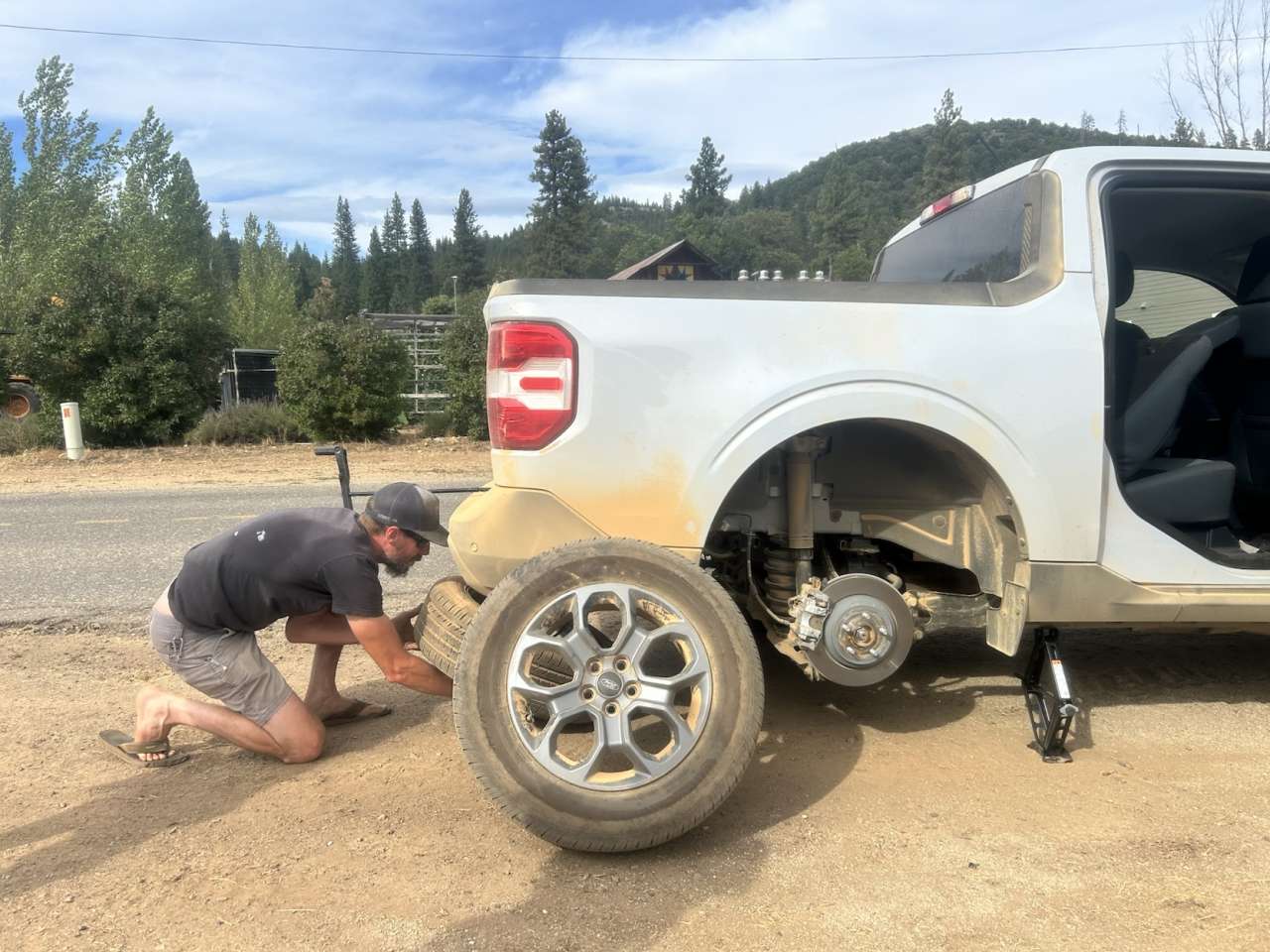
On the drive back, Cameron’s car got a flat. He showed us an incredibly efficient tire change.
Which makes sense. Probably easier than building bike frames, houses, or drones.
 I thought it was finally time to say goodbye, and I was getting sad.
Then Cameron said: “Want to grab a beer and talk a little longer?”
“The auto shop and a bar run by my friend are next door to each other. That’s one of the nice things about a small town.”
So we went to his regular spot, which had a ridiculous number of beer taps, and had a drink together.
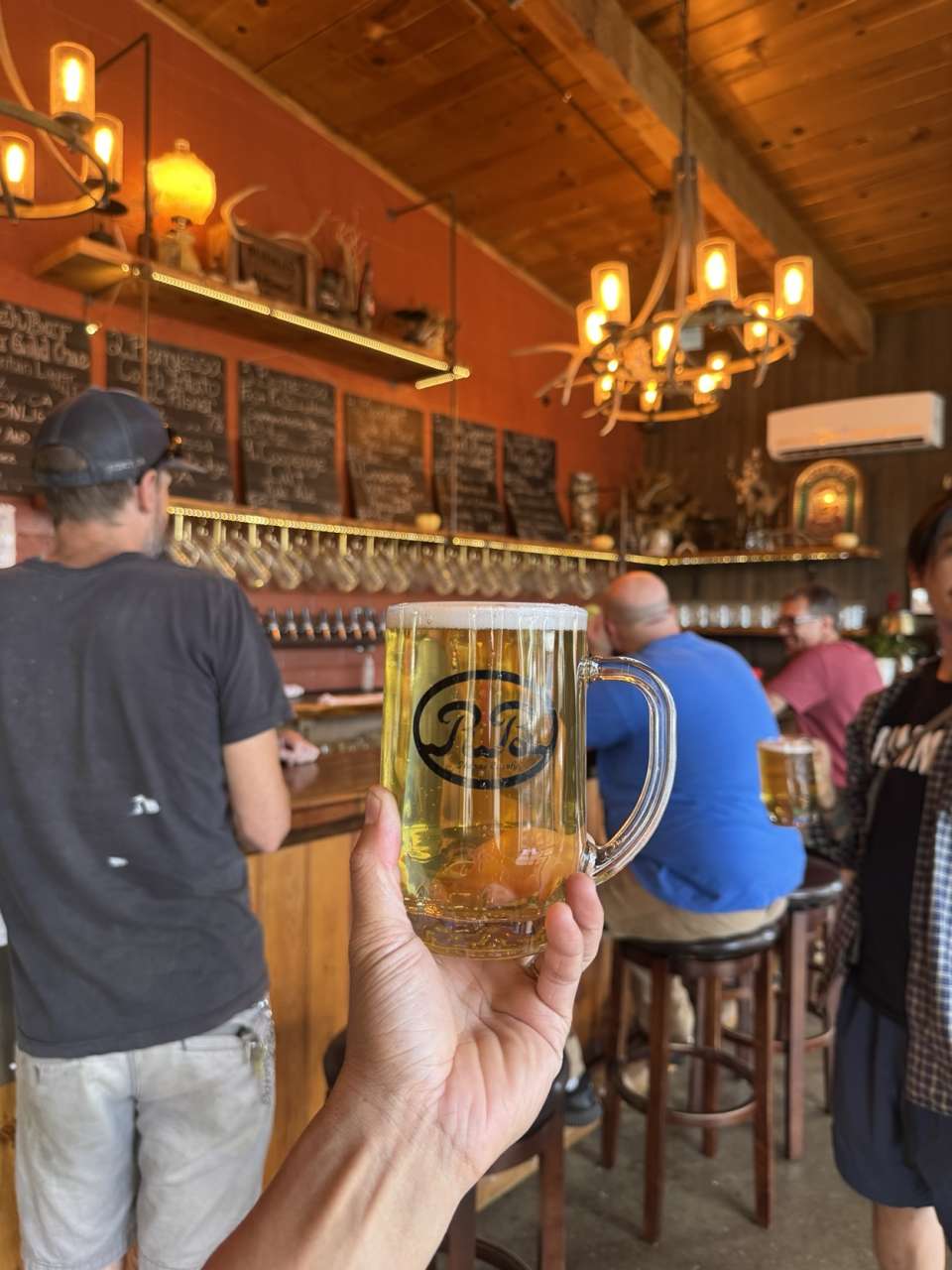
He had already talked with me all day, so I asked: “Aren’t you tired? If I keep talking about FALCONER bikes, am I getting creepy?”
His face lit up and he immediately went: “MORE! MORE!”
Alright! Don’t underestimate a Japanese obsessive bike nerd! I’m your biggest fan!!
So over beers, we talked about bikes for a long time.
That story is even longer, so I put it at the very end of this blog. I promised him that we would make the Chukar drawing I was bringing home into a real bike.
Then I returned to Japan.
…..
We handed the drawings Cameron made in Quincy to Ishigaki-san at TOYO FRAME and asked him to build it.
Cameron is incredible, but just like with the Rambouillet, Ishigaki-san is incredible too.
We sent him the drawings along with reference photos and instructions.
His response: “I don’t think there should be any problem.”
Below are some of the build-process photos Ishigaki-san sent us.
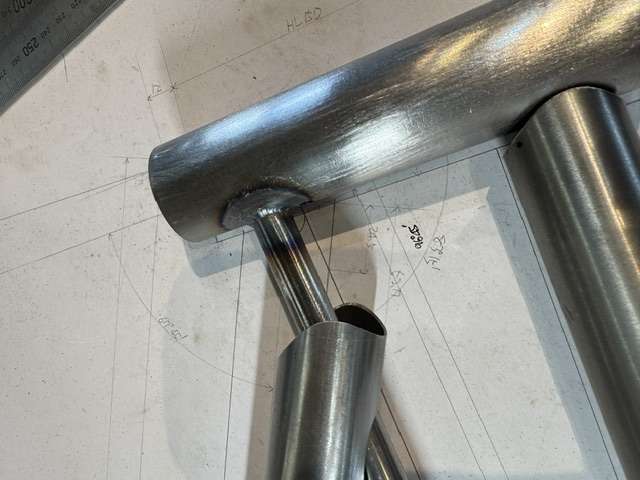
That distinctive second top tube passing through the down tube. And there’s another very FALCONER-specific detail:
The weld mark just below the seat clamp on the seat tube. The outer diameter is the same, but two tubes with different inner diameters are joined at that point to create the butting.
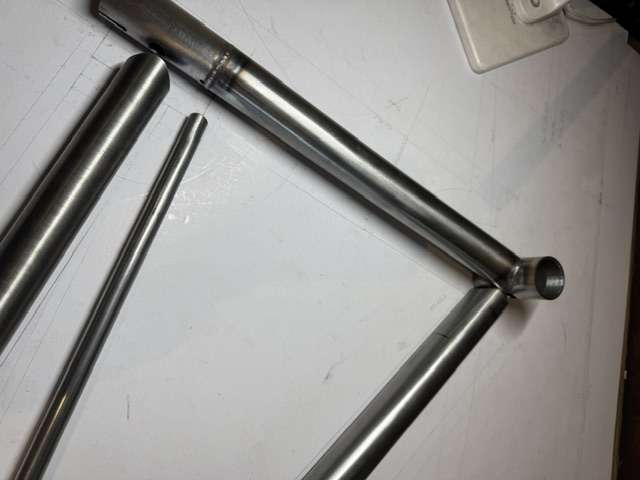
He sent us photos almost immediately. Perfectly reproduced. Legends are scary…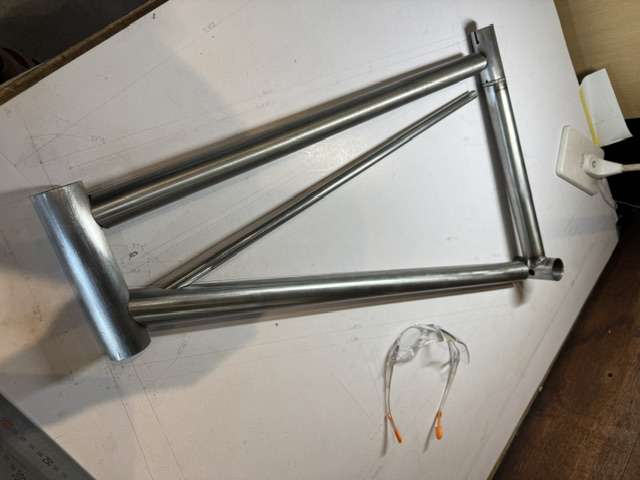
We did hit one crisis. We couldn’t get the PARAGON track ends because PARAGON had closed last year.
But, incredibly, FIRSTHAND had just revived them at MADE this year through people around La Marche and SHOVEL RESEARCH. That meant we were actually able to get the PARAGON ends.
It made me feel like all of the relationships we’ve built with La Marche and SHOVEL over the past few years had somehow connected all the way back to this project.
So many strange connections and little miracles.
…
Now it was our turn.
For paint, of course, COOK Paint Works and Kon-chan again.
But for this FALCONER, we chose powder coat.
The Rambouillet used wet paint, so let me explain the difference. With wet paint, imagine normal paint or artists’ paint. Kon-chan mixes liquid paints to create the color, then sprays it onto the frame.
The finish is glossy and beautiful. A lot of the craft comes through in getting the paint thickness perfectly even and then polishing and smoothing the surface afterward.
Finally, everything is sealed beneath a clear top coat. Think of it like nail polish.
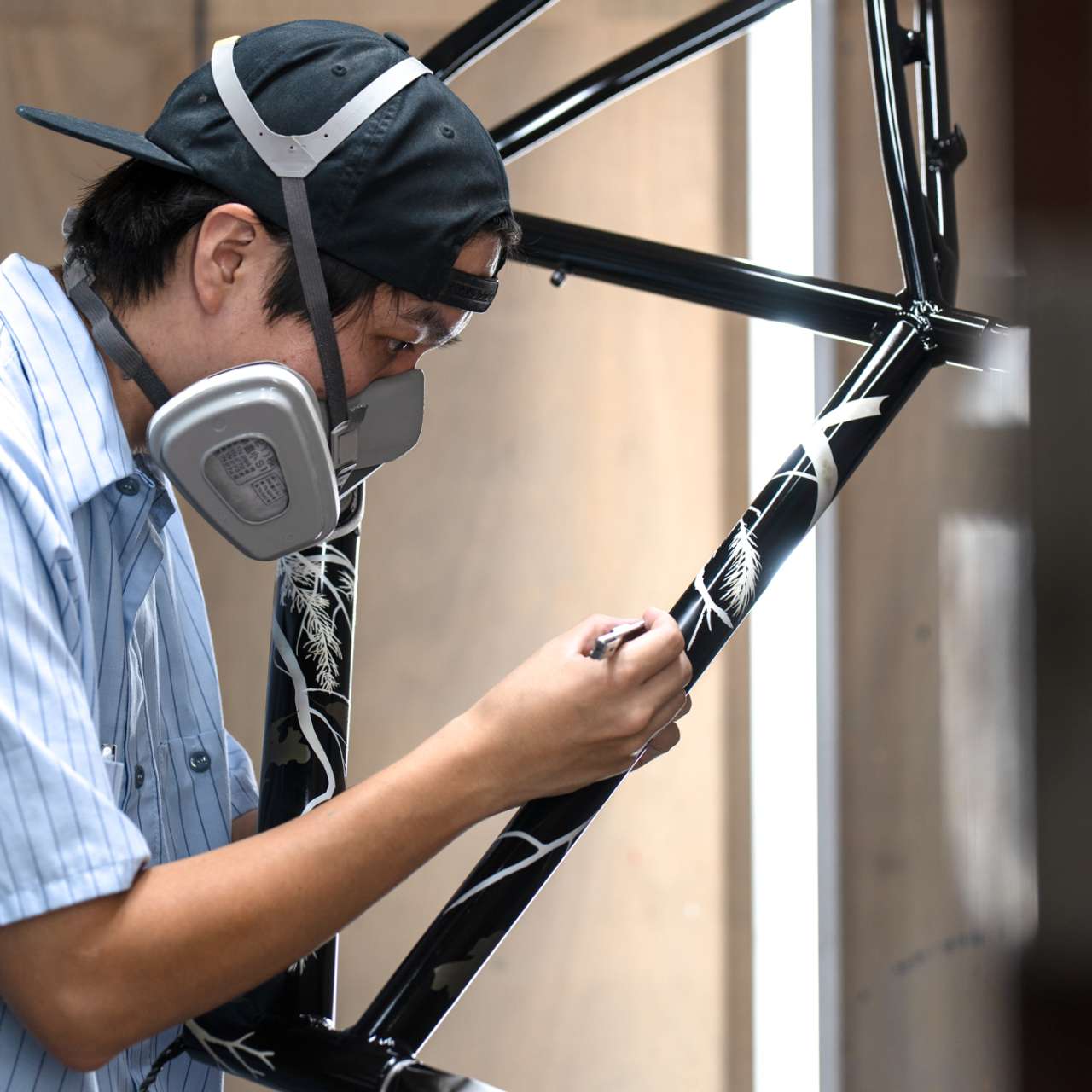 The custom show-bike paint Kon-chan introduced in his recent COOK blog was wet paint.
Complex masking and multiple colors like that are suited to wet paint too. Although the amount of work involved is insane.
I’ve seen countless handmade bike paint jobs at NAHBS, MADE, and in the Kamiuma pit.
And I’m genuinely not saying this just because he’s one of us: Kon-chan’s skill in this kind of work is absolutely on the level of the world’s best show-bike painters. Possibly better.
For the Chukar, on the other hand, we chose powder coat. In the U.S., it’s a technique commonly used on things like chair legs or garden fences.
Instead of a liquid paint, powdered pigment is sprayed using a special gun. Static electricity makes the powder cling to the frame. Then the frame is baked at high temperature, melting the powder into a solid coating.
Think of the shell on an M&M. The powder melts into a slightly thick, rounded skin.
The coating is also tougher and more durable than wet paint.

Compared with wet paint, the surface isn’t perfectly glassy. It can have a slightly uneven, textured finish sometimes described as orange peel, where the thickness varies just enough that the reflection looks a little wavy under light.
But that doesn’t mean: “Powder coat = ugly paint.”
Think about a lot of West Coast builders like FALCONER or HUNTER. Or the kind of frames we sometimes describe as “earthy” — practical, tool-like bikes.
A solid single-color frame with an American feel. A bike that will look even better once you’ve ridden the hell out of it and beaten it up.
For those kinds of bikes, powder coat often suits the frame better.
Sometimes it simply looks cooler.

The Chukar is definitely that kind of bike. Wet paint might look more refined at first glance, and it’s generally considered a higher-skill, more expensive technique.
But I really value the idea that: “This frame should be powder coated.”
Or:
“This particular color would look better in powder.”
I wrote that in an overly dramatic way, but basically it’s just personal taste. If I look at my own bikes, almost all of my solid-color bikes other than Rivendells are powder coated. It isn’t about one kind of paint being “better.”
Part of the fun is sensing what suits the frame and the way you want to build it.
If you’re suddenly thinking: “Hmm, maybe I want my frame powder coated too…”
Come talk to us. I’ll skip most of the parts and build details. It’s basically just full of things I personally like.
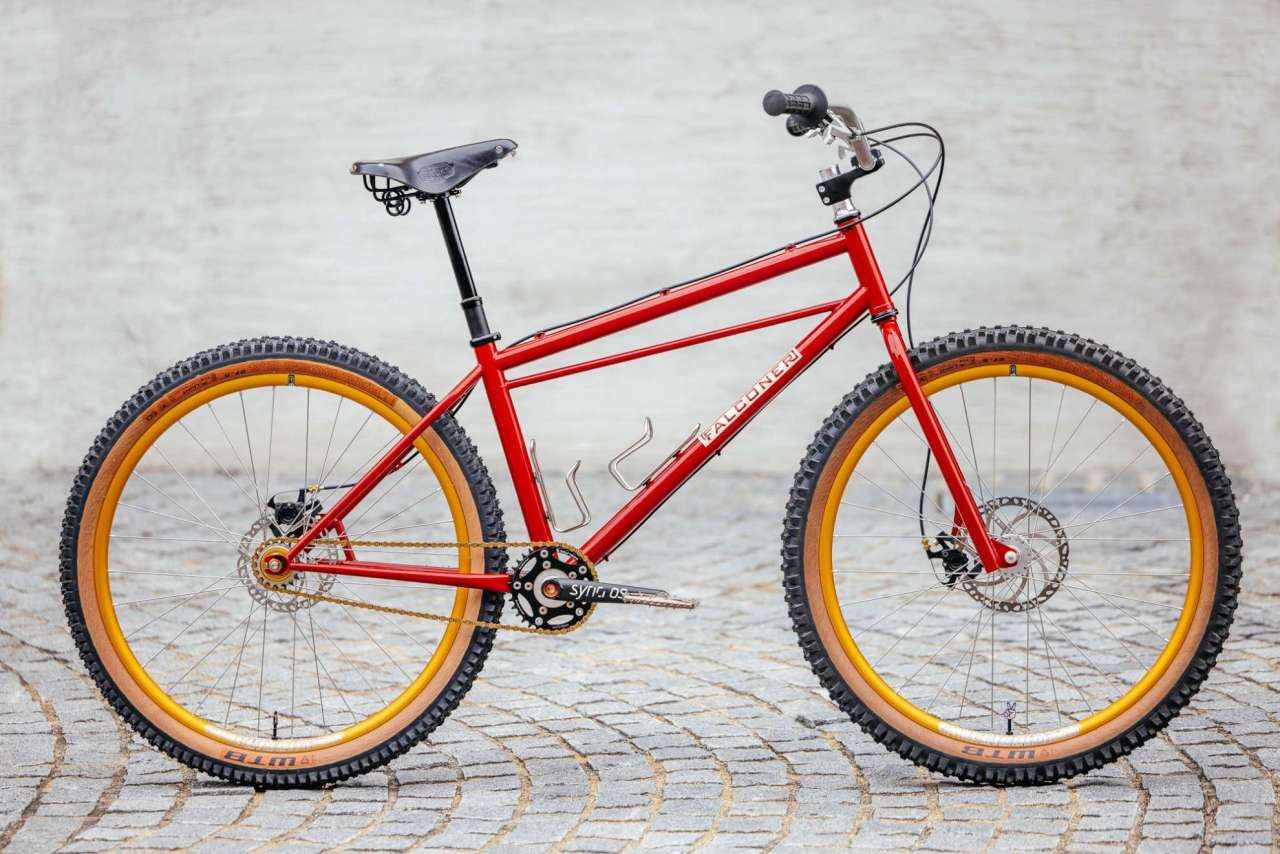 If I had to mention one thing: For the show, as an homage to the original bike, I used a BROOKS saddle with vertical coil springs. But as soon as the show ended, I wanted to go ride it.

So I immediately swapped it for a FLITE. Partly because my butt is used to it, and partly because Cameron loves that saddle so much he could practically be called a collector.
Or maybe I could drill holes into a UNICANITOR and put that on instead. Cameron would probably laugh.
The Rambouillet I wrote about the other day and this Chukar have basically zero visual consistency with each other.
But together, I think they became two very BLUE LUG bikes.
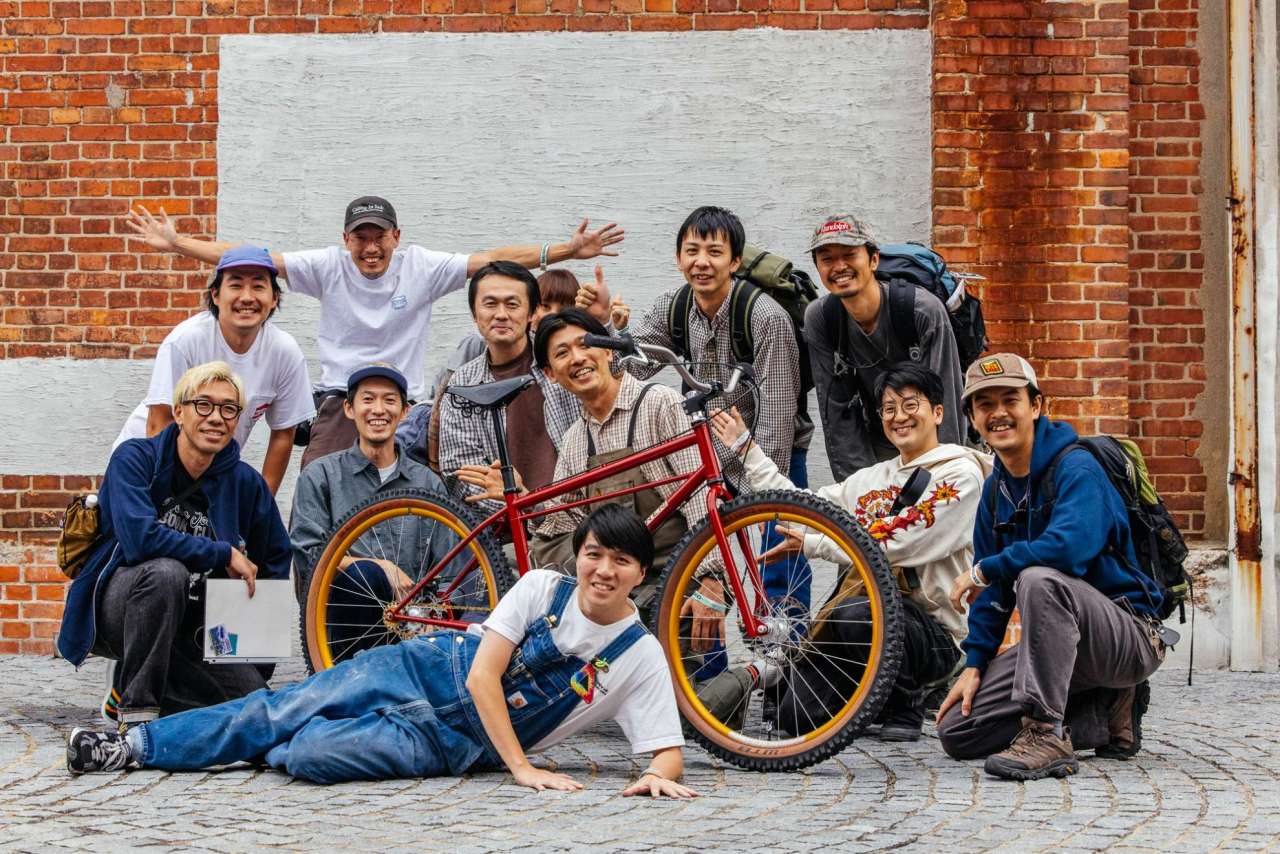 To everyone who came to the show, to Cameron, to Ishigaki-san who built the frame, to Kon-chan who painted it, and to everyone at BLUE LUG who supported me while I was completely losing my mind preparing for the show:
Thank you so much.
There were moments when I wondered if I was just fighting some self-indulgent personal battle by myself. So thank you to the boss as well for pushing me to do this job.
Just like the Rambouillet, my goal is to turn this bike into a real product that customers can actually ride. I’m going to keep working on it, so I hope you’ll look forward to what comes next. And of course, this prototype is available to test ride at the shop.
Please don’t be shy. Ride the hell out of it.
FALCONER CYCLES isn’t decoration. It’s a bicycle.
JUST RIDE!
Thank you to everyone who made it through this ridiculously long post.
Tani here.
— An extension of the unnecessary extra stuff. Only fellow weirdos should continue from here. —
This is completely unnecessary to the main story, but I want to write down a few things that moved me, along with some of the conversations Cameron and I had while drinking the beer he bought me.
I wonder if this will make all of you like FALCONER too. If it does, come ride the Chukar.
Continuing our conversation from that morning, we got back onto: “What are some of your other favorite FALCONERs?”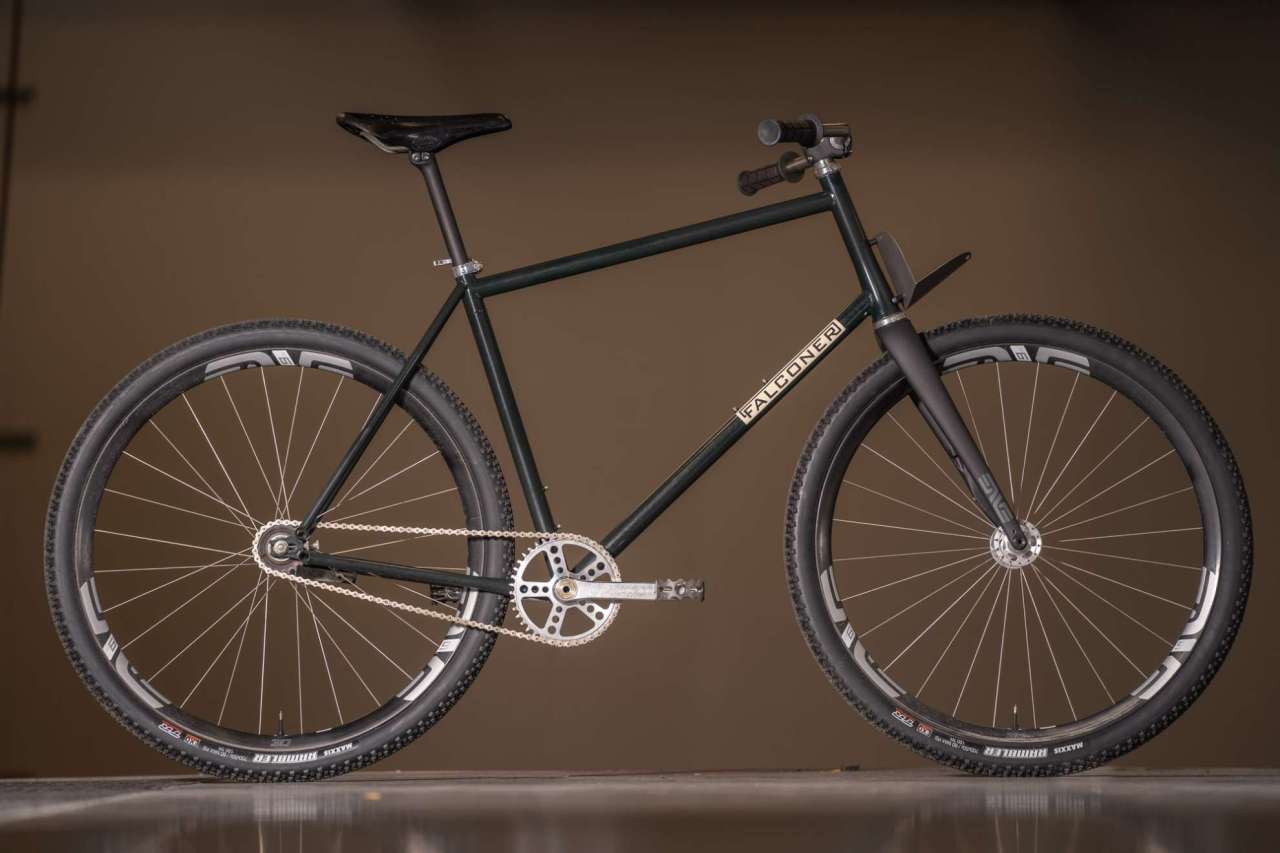
I said: “Was it for an ENVE open house? That coaster-brake ENVE bike! That thing was insane.”
For a second, Cameron looked at me like: “What!?”
So I explained: “I remember scrolling through all the other builders’ serious, fast-looking gravel bikes and mountain bikes — swipe, another gravel bike, swipe, another gravel bike… and then suddenly your coaster-brake bike appeared. It completely caught me off guard!”
Then Cameron laughed like: “Ohhh, that one.”
He started saying: “What parts did I even use on that thing again?”
Which was my chance. I’ve basically memorized the entire parts list, so I started telling Cameron the parts on his own bike that he had forgotten.
That definitely freaked him out. How much do you think I like your bikes!?
Then I asked: “Was that bike… punk rock?”
He immediately cut me off: “YES!” Haha.
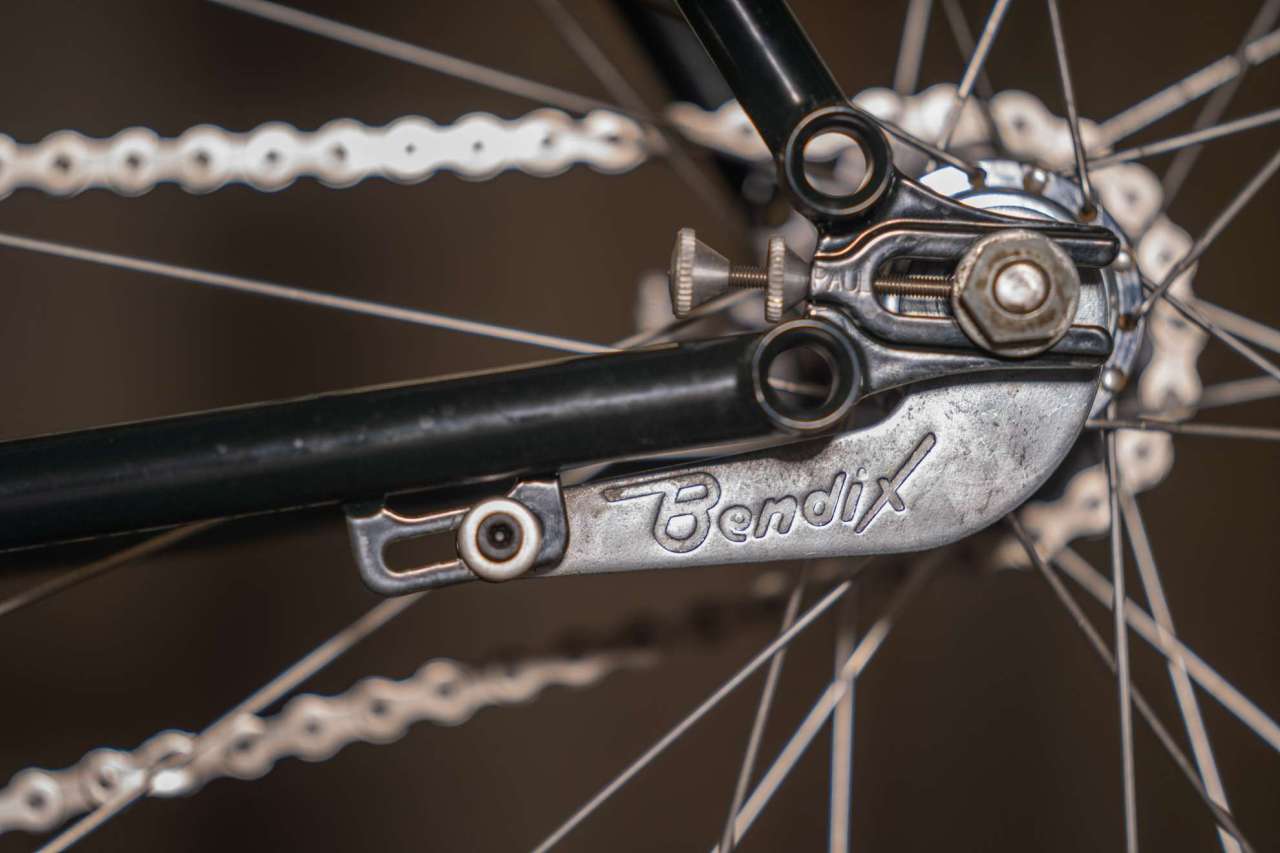
So that bike really was an act of rebellion. Apparently he bought the coaster hub on eBay and rebuilt the supplied carbon rim around it. Vintage Campagnolo pedals, a Unicanitor saddle…
It completely stood out at that show.
He joked: “If I still had that bike and it fit you, I would’ve given it to you.”
Apparently he had already passed it on to someone on the East Coast who owns a bunch of FALCONERs.
Probably would have been too big for me anyway. The hand-bent titanium handlebar and one-off titanium plate rack are obviously the first things you notice.
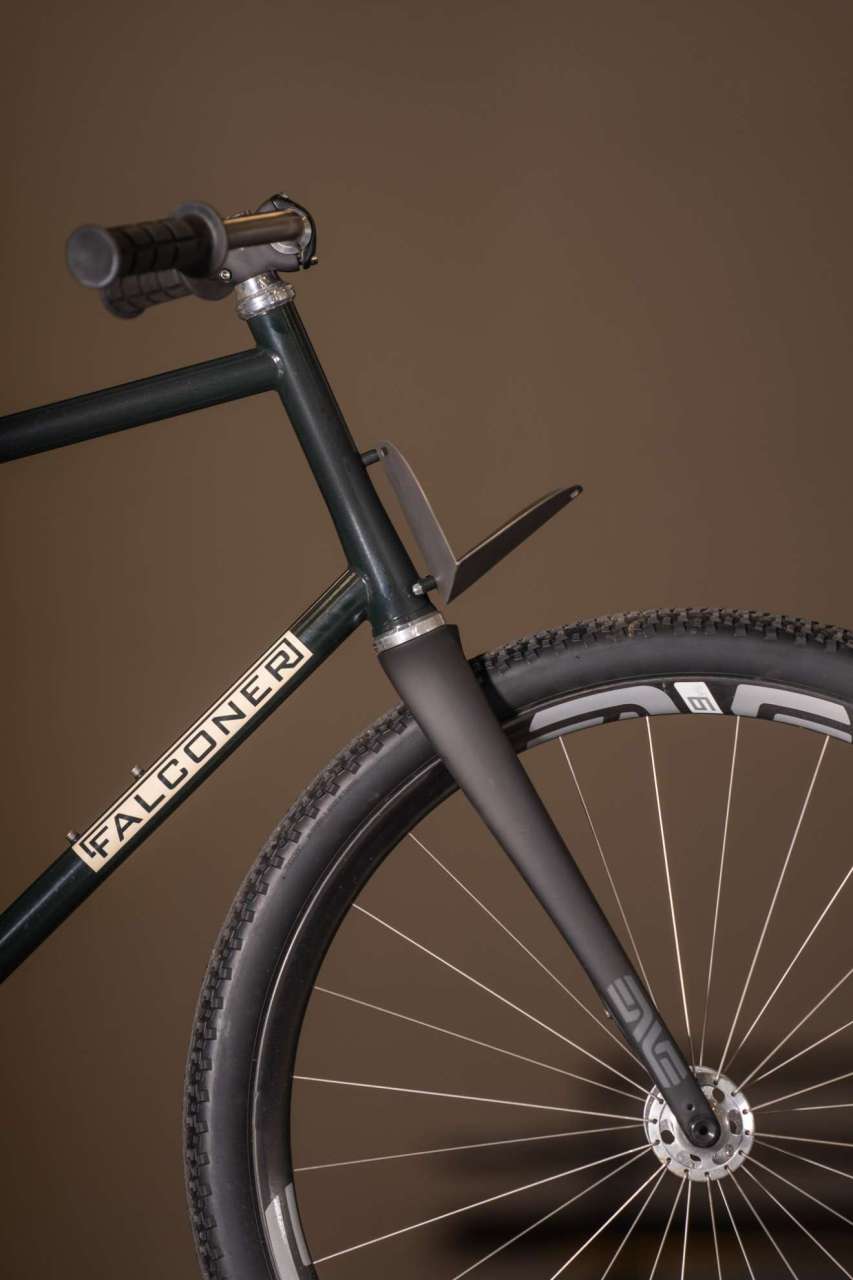
But look more closely: A thru-axle gravel fork… with a PAUL HIGH FLANGE track hub.
Wait. How does that work?
I should have asked him about that too. Apparently because he brought that bike, he wasn’t invited back to the next ENVE show. Haha.
…
Around 20 years ago…
I couldn’t find the photo, and I can’t remember whether it was our boss or Azemi-san who saw it, but there was an orange FALCONER with a MANTIS-style crossing top tube parked somewhere on the streets of San Francisco.
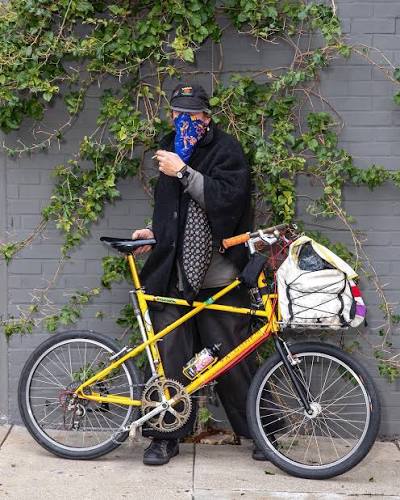
Later we found out that a yellow version of the same style belonged to Eric Zo. So I asked Cameron about the orange one.
Apparently that one was Cameron’s own bike. Which means if it was parked there, Cameron himself must have been somewhere nearby.
…
Another distinctive feature on the Chukar is that second top tube passing through the down tube.

When Cameron was explaining why it’s built that way, he took the pen he was holding and said: “Sorry.”
Then he pushed it hard into my shoulder and twisted it around.
“Hurts, right?” In other words, if you simply welded that tube onto the surface of the down tube, all the stress would concentrate there.
Eventually: BANG! Damage.
That’s why the tube needs to pass all the way through and be welded directly to the head tube.
…
Then there’s Tyler from BTCHN, who considers Cameron his mentor.

One of my favorite stories is Tyler saying that whenever he’s doing some crazy experimental fabrication, Cameron will call him and go:
“Hey! What the hell are you doing now!?” But that’s partly a joke.
Listening to the way Tyler talks about Cameron, it’s obvious how close they really are. There’s a lot of mutual respect and affection there.
From my perspective, their personalities and the bikes they make seem almost completely opposite.
Maybe that’s exactly why they work so well together. Like two mismatched pieces that complete each other.
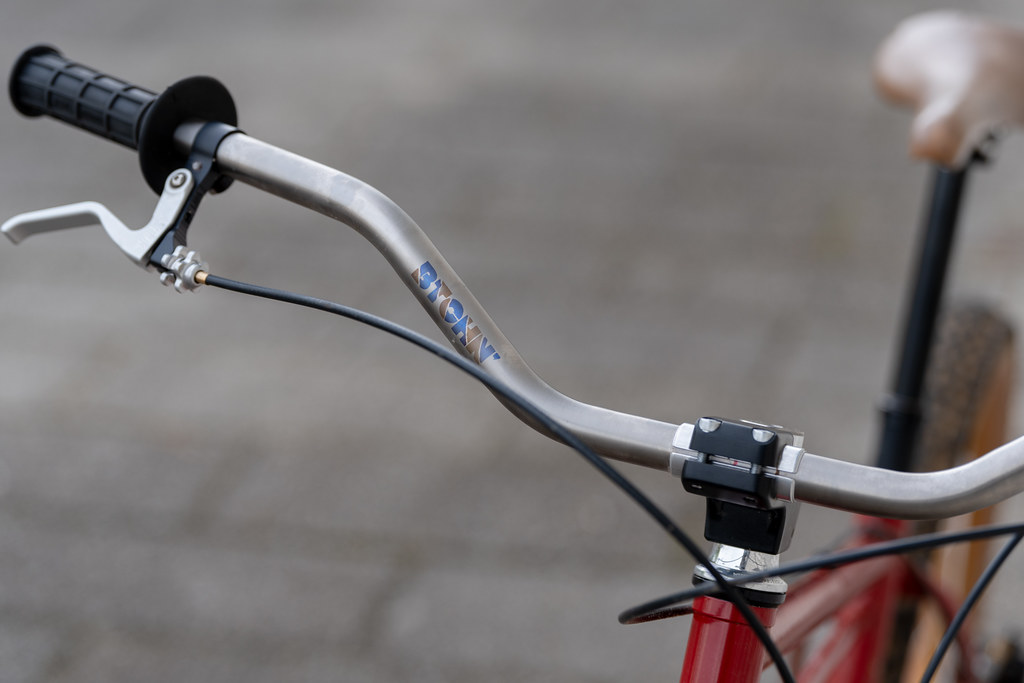
(Which is also why I wanted to build the Chukar with Tyler’s handlebar!)
After BESPOKED, Tyler came to Tokyo and we went for a ride together. As soon as the ride finished, Tyler immediately messaged Cameron.
How close are you two? The next day I told Cameron: “Here are some photos from yesterday’s ride with Tyler. We had four FALCONER bikes and five of Tyler’s handlebars!”
His response: “Holy shit! He’s a great guy, isn’t he?”
Yeah. They’re close.
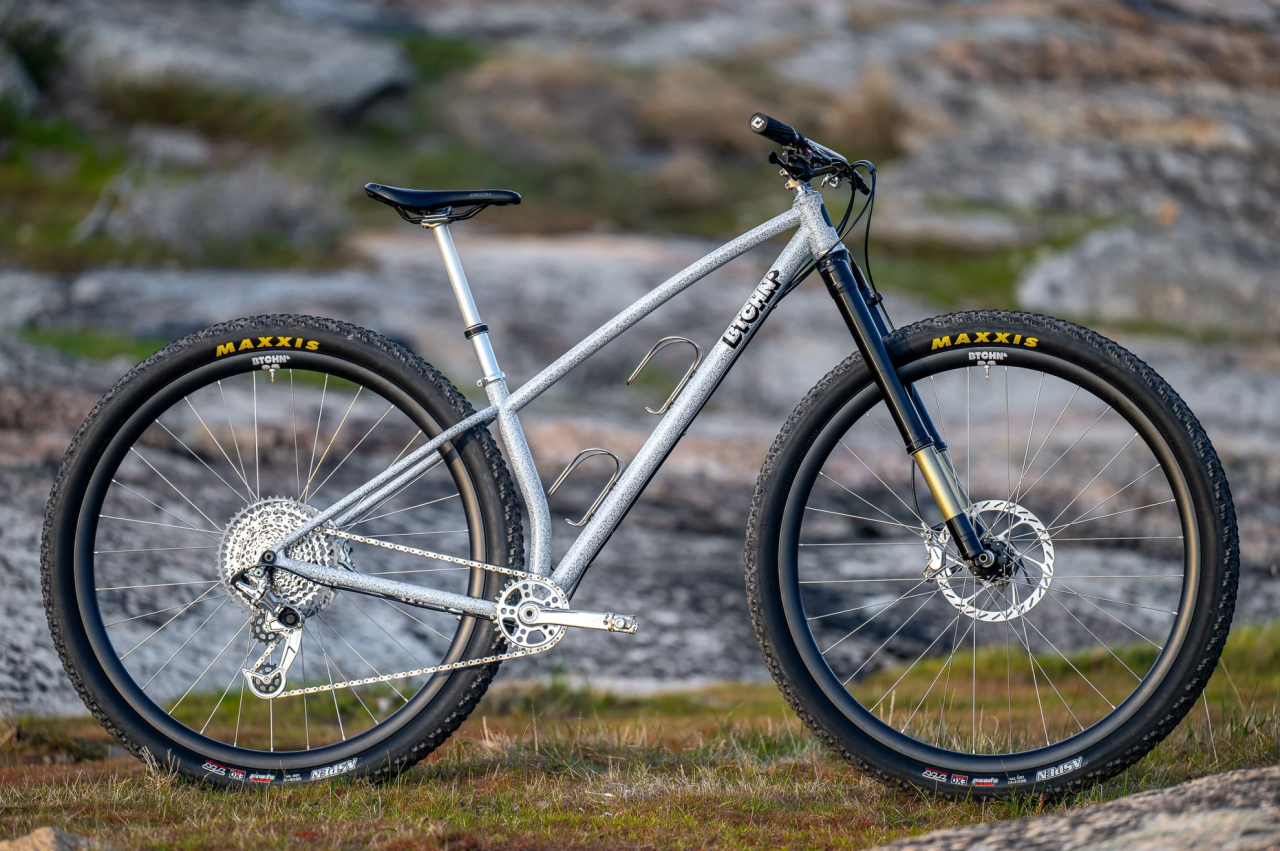
By the way, the two of them have also developed bikes together.
…
It’s been a long time since I’ve typed this much… If you even made it through all the unnecessary extra stuff, please come ride the Chukar.
Tani