Visiting Surly in Minneapolis (Part 2)
Hello! Kasper checking in again!
In Part 1, I wrote about riding the local trails with the Surly crew and the unexpected five hours I spent talking with Adam at the hospital.
That conversation started with bikes, but pretty quickly became something much bigger.
One of the things that stayed with me most was the way Adam thinks about who a bicycle is actually for.
And strangely enough, one of the best examples came from something very small.
—–
At one point, we started talking about steerer tubes and headset spacers.
Let’s say a complete bike comes with six spacers.
Maybe that setup works perfectly for 99 out of 100 people.
But there might be one person who thinks:
“If only the steerer were a little longer, I could have built the position I really wanted.”
Adam was thinking about that one person.
That really stood out to me.
Realistically, Surly sells bikes all over the world.
They can’t sit down with every single customer before they buy a bike and ask how they ride, where they want their bars, what they plan to use the bike for, what feels comfortable, or what kind of bikes they’ve ridden before.
But a bike shop can.
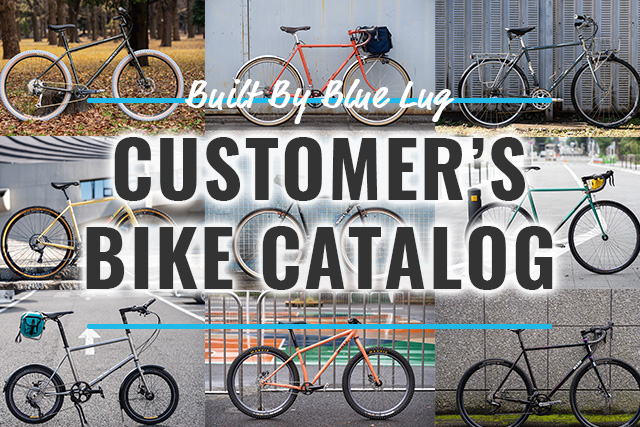
And that led us into a conversation about Blue Lug.
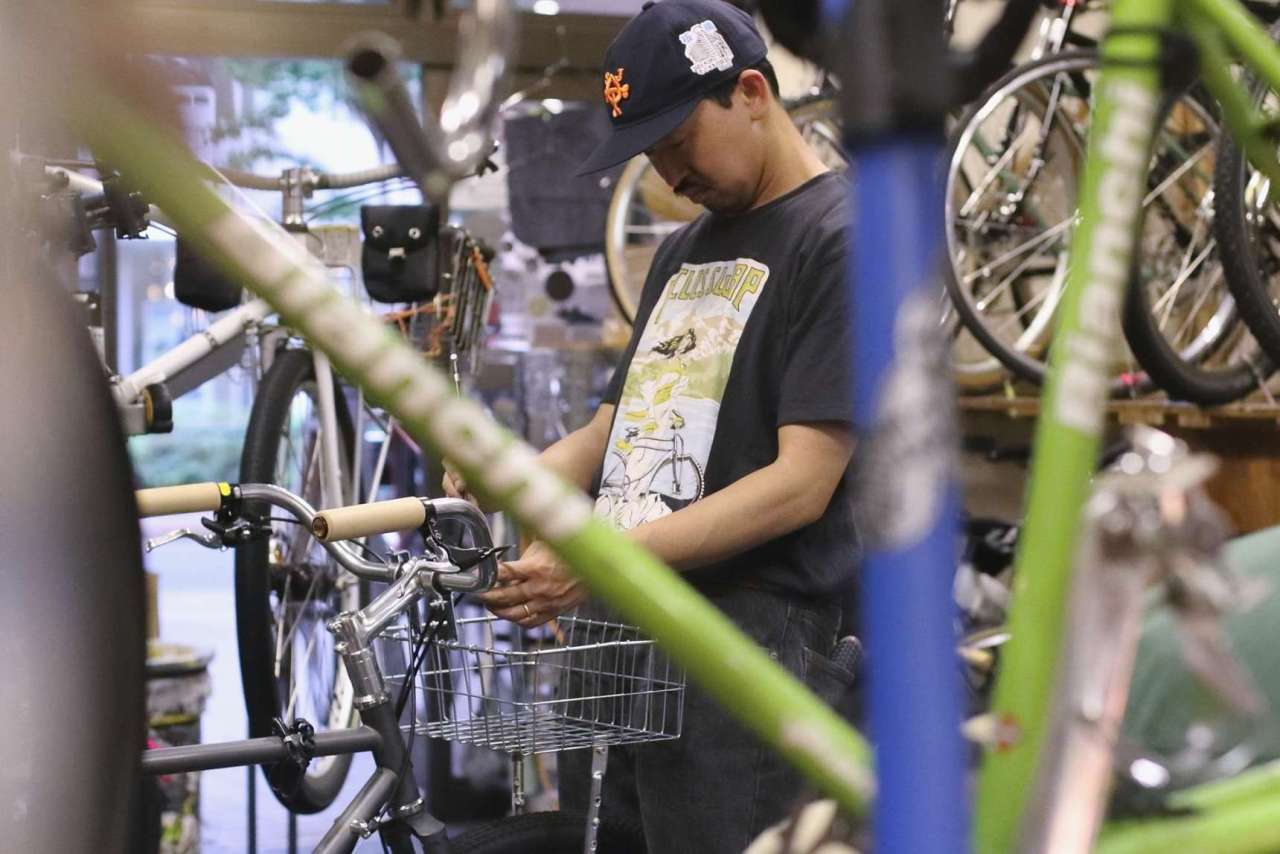
Adam talked about the different ways Blue Lug mechanics have built Surly frames over the years, and how one frame can turn into something completely different depending on the person riding it.
A commuter.
A touring bike.
A trail bike.
A singlespeed.
Something with a strange handlebar.
Something covered in racks.
Something incredibly simple.
And what he seemed to value most wasn’t only the finished bike.
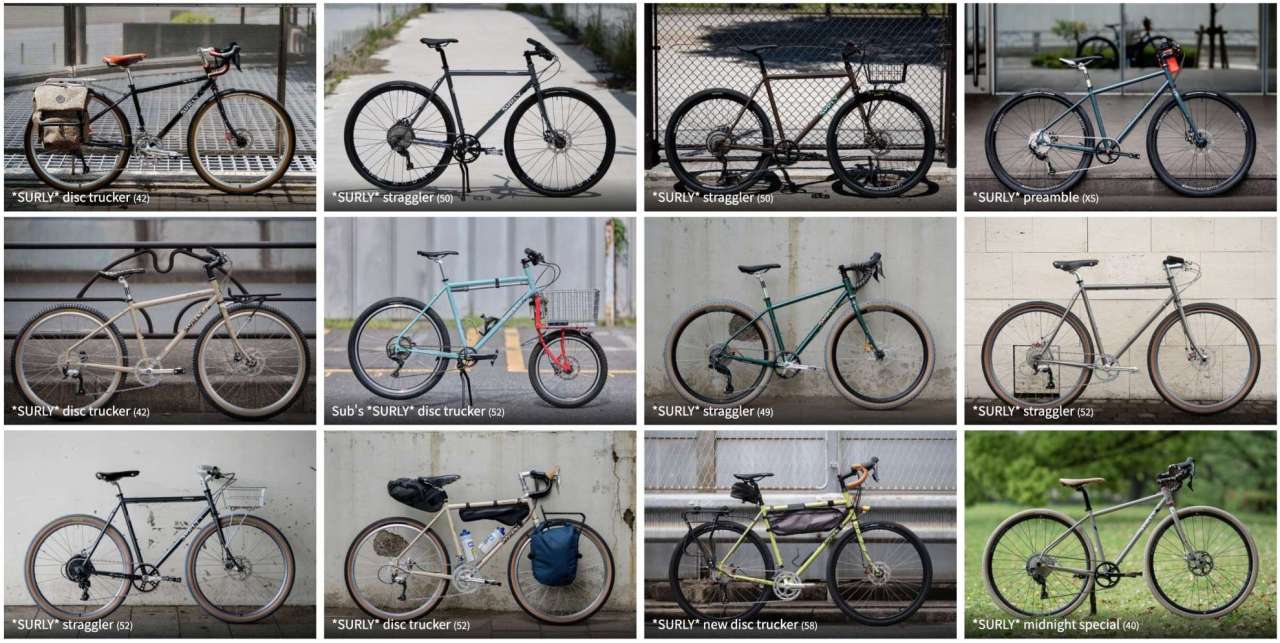
Click Here to See All the Surly Builds at BLUE LUG!
It was the conversation that created it.
The mechanic asking the customer what they actually want to do.
Understanding their body.
Understanding the way they ride or want to ride.
Understanding what they like and dislike.
Then building from there.
One thing Adam kept coming back to was basically this:
No matter how good a bicycle is, if it doesn’t fit the person riding it, then it isn’t really a good bicycle for that person.
That made me think differently about what makes Blue Lug special too.
It isn’t only having cool parts.
It isn’t only building bikes that look good in photos.
There’s something important about sitting across from one person and figuring out together what that bike should become.
The more we talked about it, the more I started to understand why Surly and Blue Lug have had such a long relationship.
Surly creates a bike with room for interpretation, and “Individuality”.
Blue Lug, through the conversation with the rider, helps give that interpretation a shape.
—–
Our conversation eventually moved into Surly’s history.
1×1.
Steamroller.
Cross-Check.
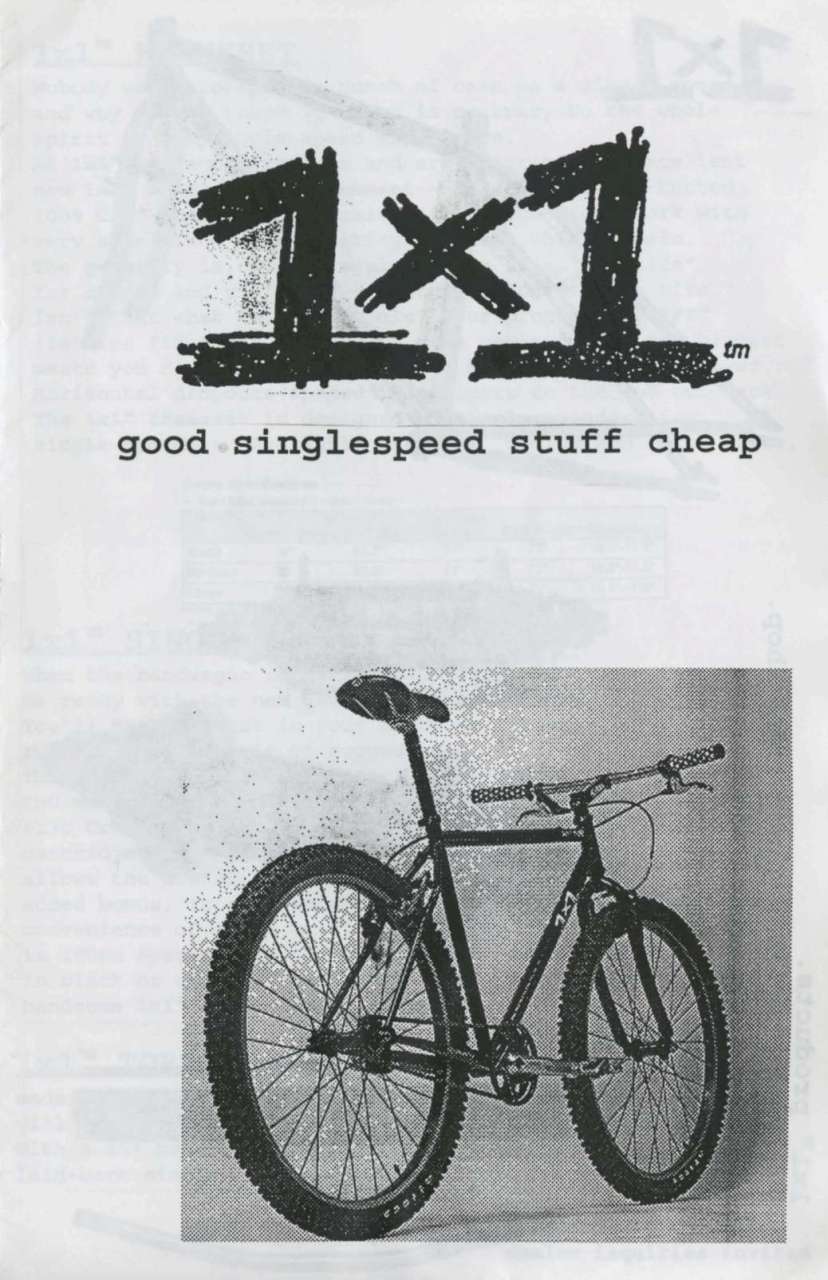
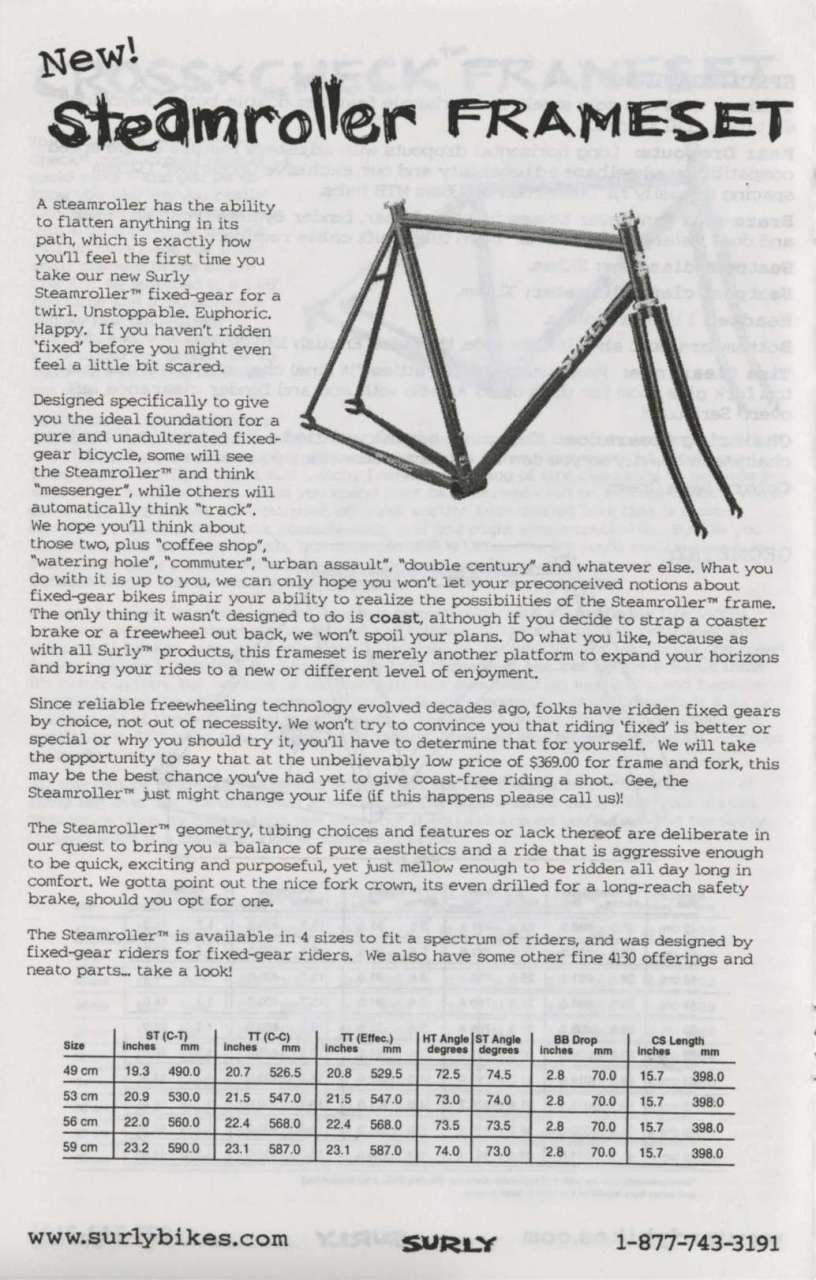
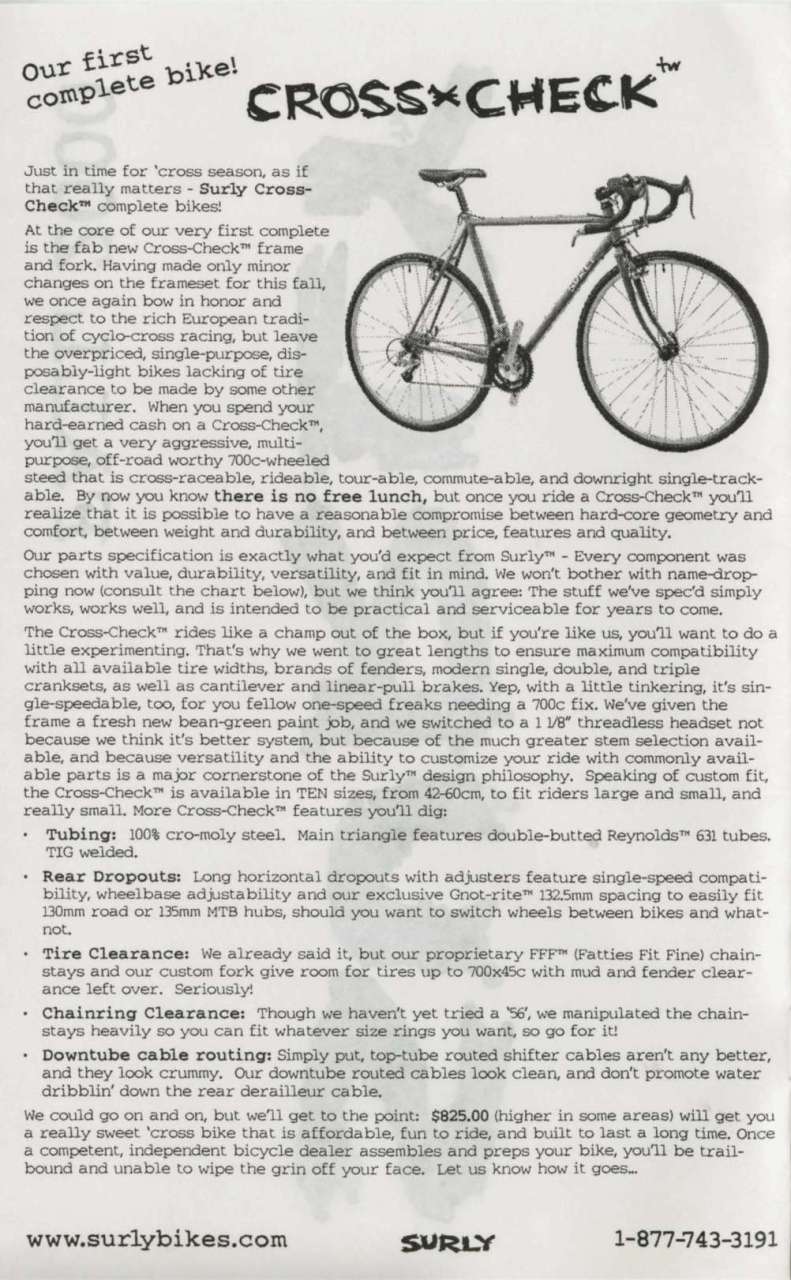
There are Surly bikes that people still talk about with a huge amount of love.
And obviously that history matters.
But Adam said something that I thought was really interesting.
He doesn’t want the current Surly team to become trapped by nostalgia.
Not:
“Old Surly was better.”
Not:
“Let’s just remake everything from before.”
Not:
“This bike was successful, so let’s remake it.”
He clearly has a huge amount of respect for the people who built Surly before him.
But what he wants to inherit isn’t necessarily the exact answers they came up with.
It’s the way they looked for the answers.
Why did someone think the 1×1 needed to exist at that moment?
What was happening around the people who created the Steamroller?
What kind of riders and lifestyles led to the Cross-Check?
Those bikes came from people looking at the world around them, riding, playing, noticing problems, and thinking: “What if we made this?”
That idea stayed with me.
The world changes.
Cities change.
Riders change.
The bike industry changes.
The way people have fun on bikes changes.
So respecting Surly’s history doesn’t necessarily mean building the same bikes forever.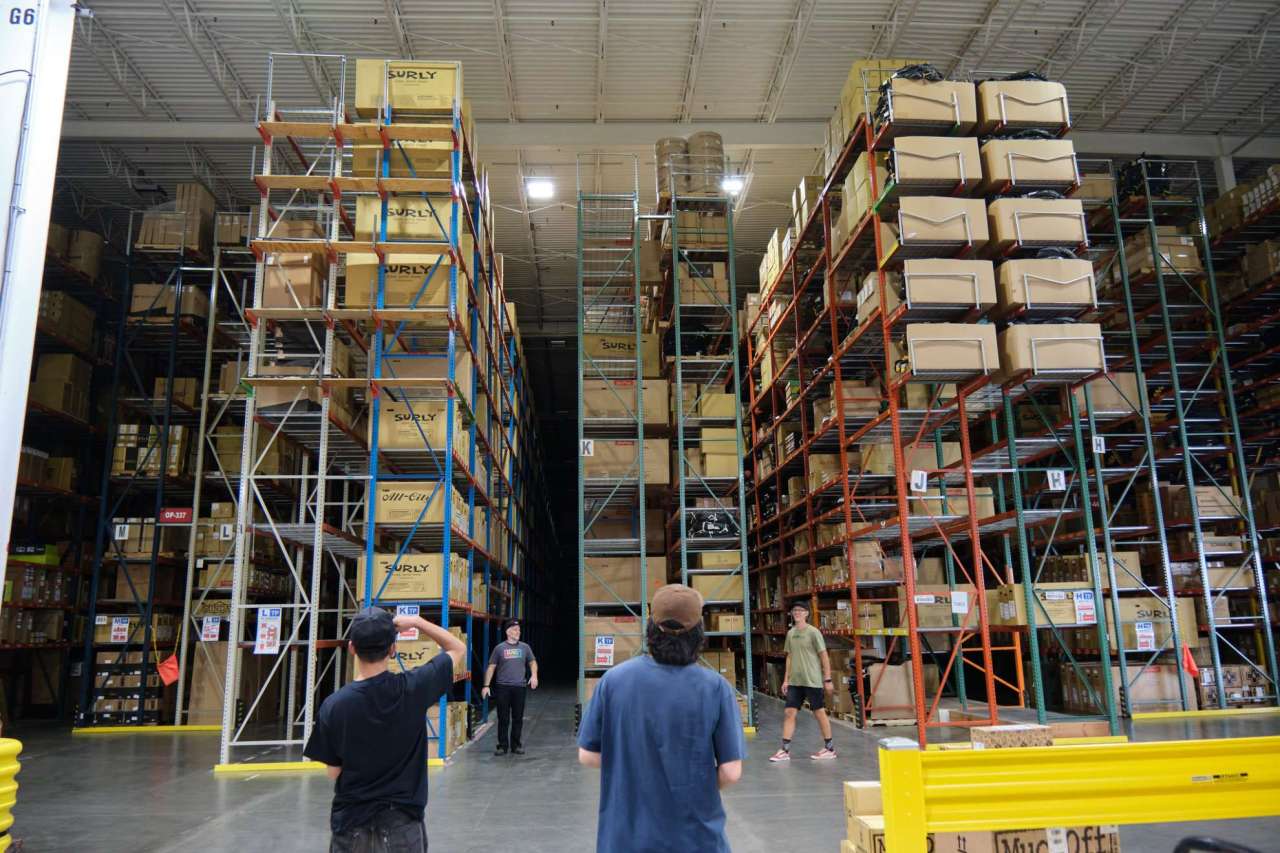 Maybe it means having the same curiosity.
The same willingness to experiment.
The same energy to look at the people around you now and ask:
“What kind of Surly should exist today?”
And honestly, I think that applies to Blue Lug too.
Blue Lug has its own history now.
Its own styles.
Its own bikes.
Its own way of doing things.
But maybe respecting that history doesn’t mean repeating what worked ten years ago either.
Maybe it means understanding why people cared in the first place, then finding a new answer for the people riding today.
That was probably one of the biggest things I took away from talking with Adam.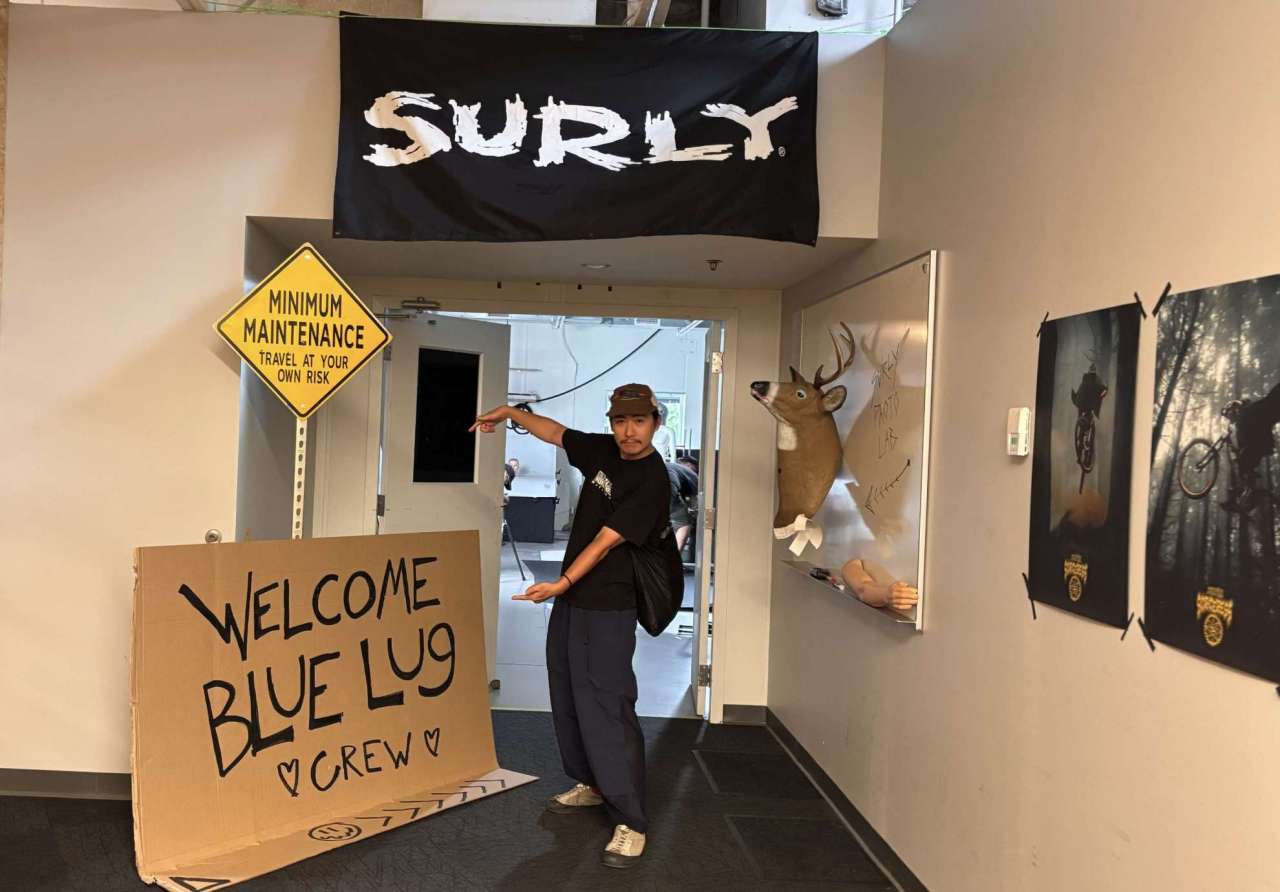
Another part of the conversation that really caught my attention was how interested Adam was in the stories Blue Lug already has.
Not only the crazy Surly builds.
But what happened after those bikes left the shop.
We take photos.
We do Bike Checks.
We hand the bike over to the customer.
For us, that can sometimes feel like the end of the story.
But for the customer, that’s “Day 1”.
What does that bike look like three years later?
Five years later?
Why did they change the handlebar?
Where did all those scratches come from?
Why is that same rack still on there after years?
What changed in their life?
Where did that bike take them?
Who did they meet because of it?
I remember thinking while Adam was talking:
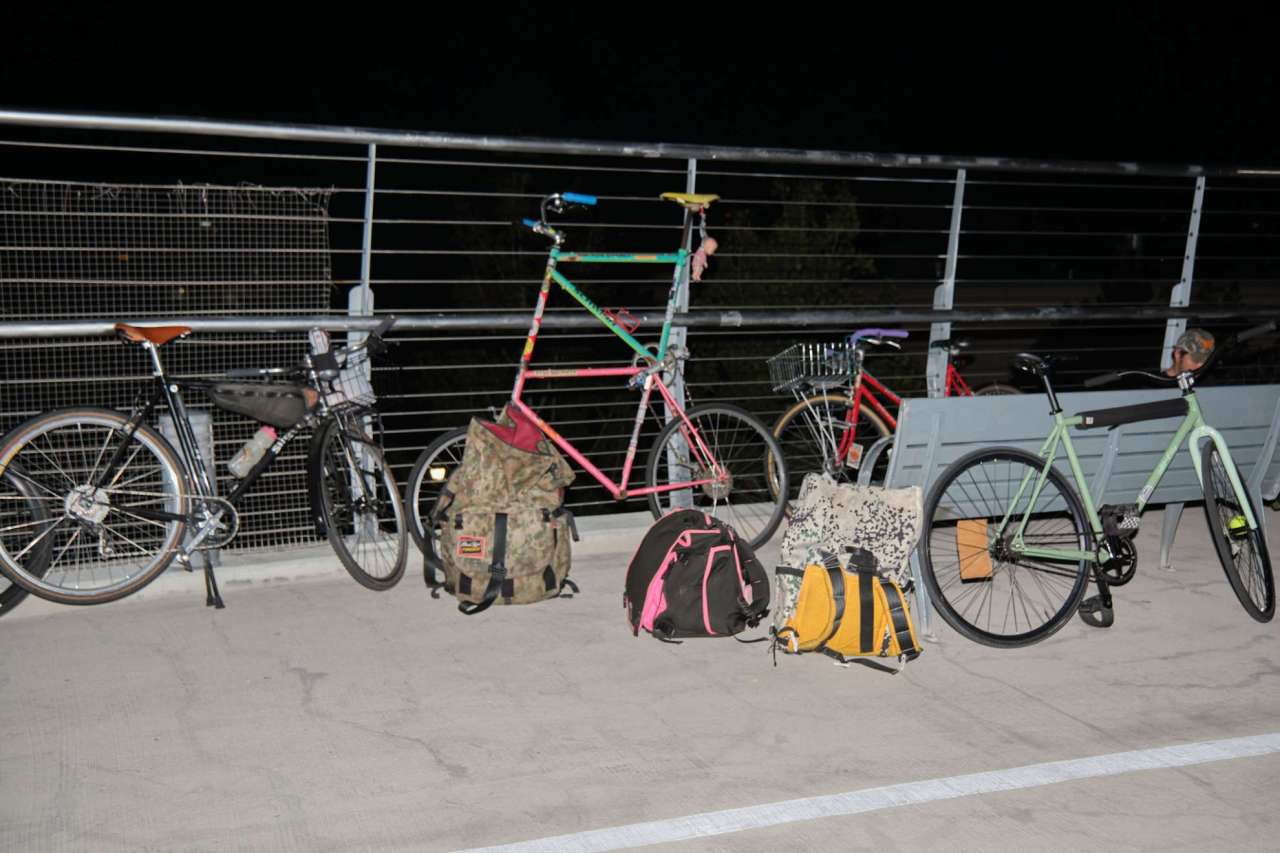
Maybe we need “AFTER” ~ BIKE CHECKS.
Go find those bikes again. Not when they’re clean and freshly built. After they’ve actually lived.
Maybe the bike started as a commuter and slowly became a touring bike.
Maybe the owner moved somewhere new.
Maybe the original setup changed completely.
Maybe almost nothing changed because somehow they got it right from the beginning.
Either way, that story feels important.
Because if a Surly isn’t finished when you buy it, then maybe a Bike Check shouldn’t always be the end of the story either.
The more I thought about that idea, the more it made sense.
A Surly can change because the person changes.
And maybe the best way to understand the bike isn’t by looking at how it looked on the day it was built.
Maybe it’s by looking at what happened to it afterwards.
“The People Behind the Brand”
When I first met Adam and the Surly team in Minneapolis, I was honestly a little nervous…
And then we spent five hours together. (at the hospital…lol)
By the end of those five hours, that nervous-ness was completely gone.
We talked about things I probably wouldn’t write publicly.
His life.
Mine.
Family.
Music.
Work.
The pressure that comes with leading people.
The things we care about.
I would never say I’m glad I got hurt. I’m not.
I changed everyone’s schedule, made people worry, and created a situation that didn’t need to happen.
But since I can’t undo it, I can at least be grateful for what came out of those five hours.
Because without them, I don’t think I would have understood Adam, or Surly, in the same way.
And I think that’s probably the biggest thing I brought home from Minneapolis.
I came back liking Surly much more than I did before. Not only because the bikes are cool. Because the people who make them actually ride them.
They play on them.
They care about where the brand came from.
They think seriously about where it should go next.
They care about the rider who might need something different.
And when someone crashes on a trail, they change their plans and stay with them.
That’s the part that’s hard to see from a website or a product page.
A brand is never just a logo on a downtube.
It’s people.
“Seeing My Own Bike Differently”
Since coming back to Tokyo, I’ve thought about my own Midnight Special a lot.
It’s funny because before this trip, I already loved the bike.
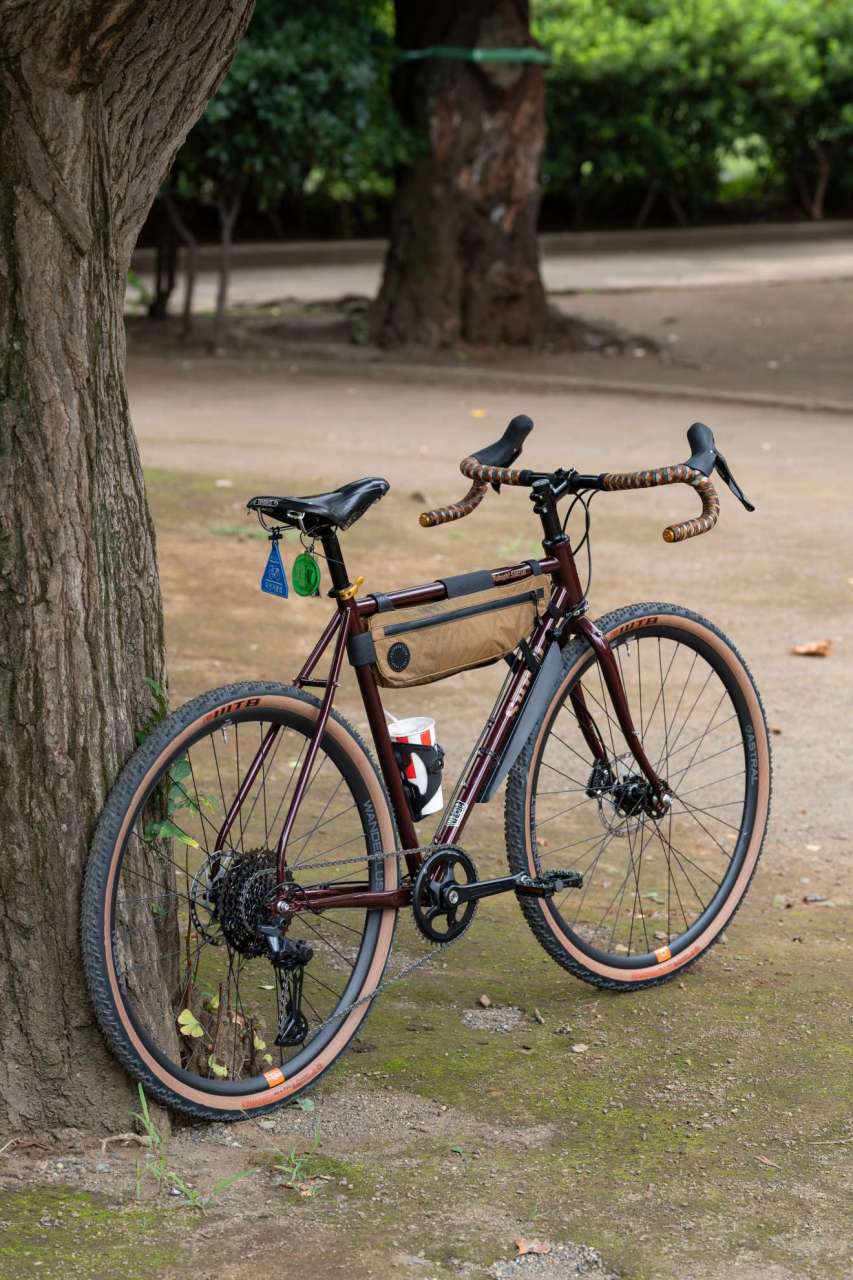
But now when I look at the Surly logo on the frame, I think I’m going to see something a little different.
I’ll think about the trails in Minneapolis.
The people I rode with.
The way the Surly crew moved through those trails like it was just another normal morning.
I’ll think about Adam sitting next to me for hours.
I’ll think about the conversations we had about old Surly, new Surly, Blue Lug, customers, fit, and what a bicycle can become over time.
And I think that makes the bike feel a little more personal now.
Not because the frame changed. Because my understanding of it did.
That’s probably what I like most about bikes in the first place.
The object stays the same, but the meaning around it keeps changing.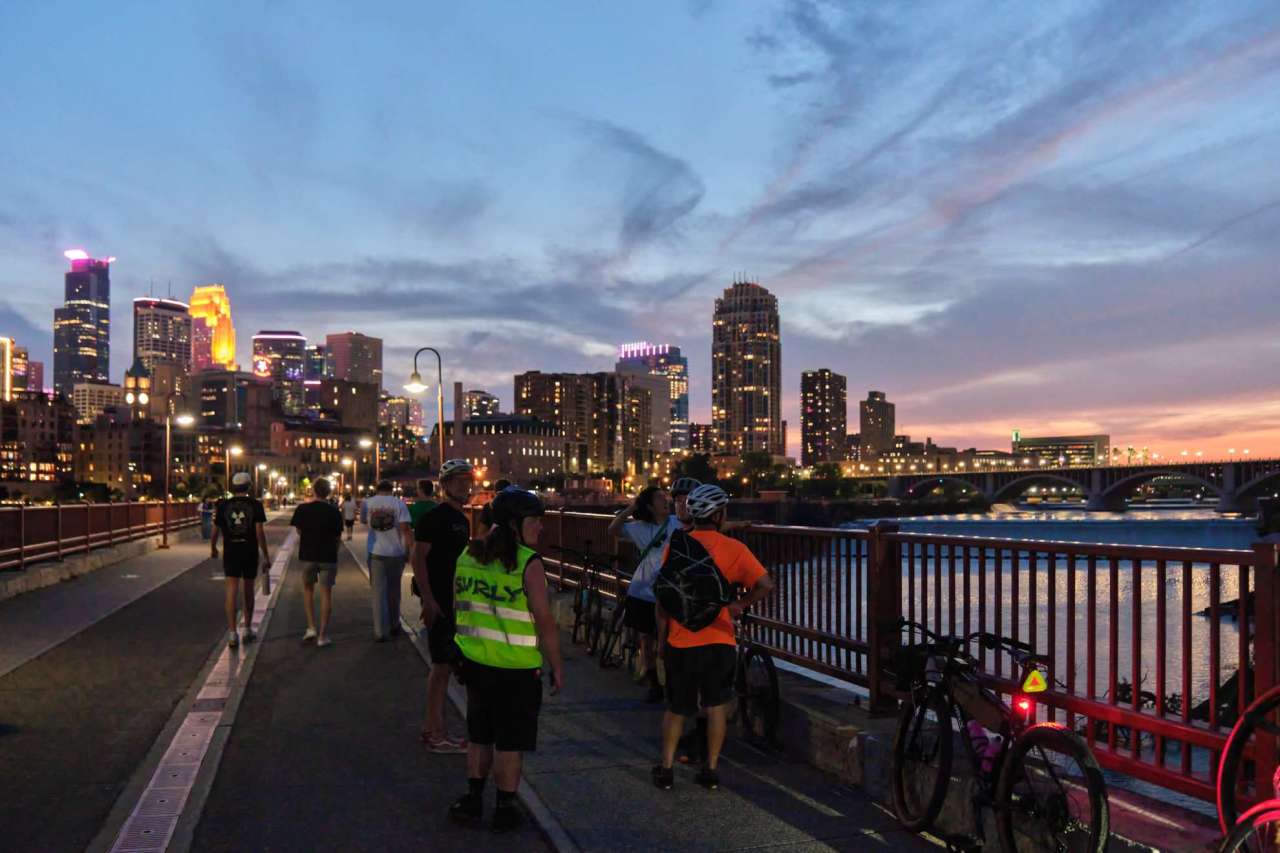
“Bringing Some of Minneapolis Back to Tokyo!”
One thing that was very clear after the trip was that all of us came back completely energized by what we experienced in Minneapolis.
Especially the community around Surly.
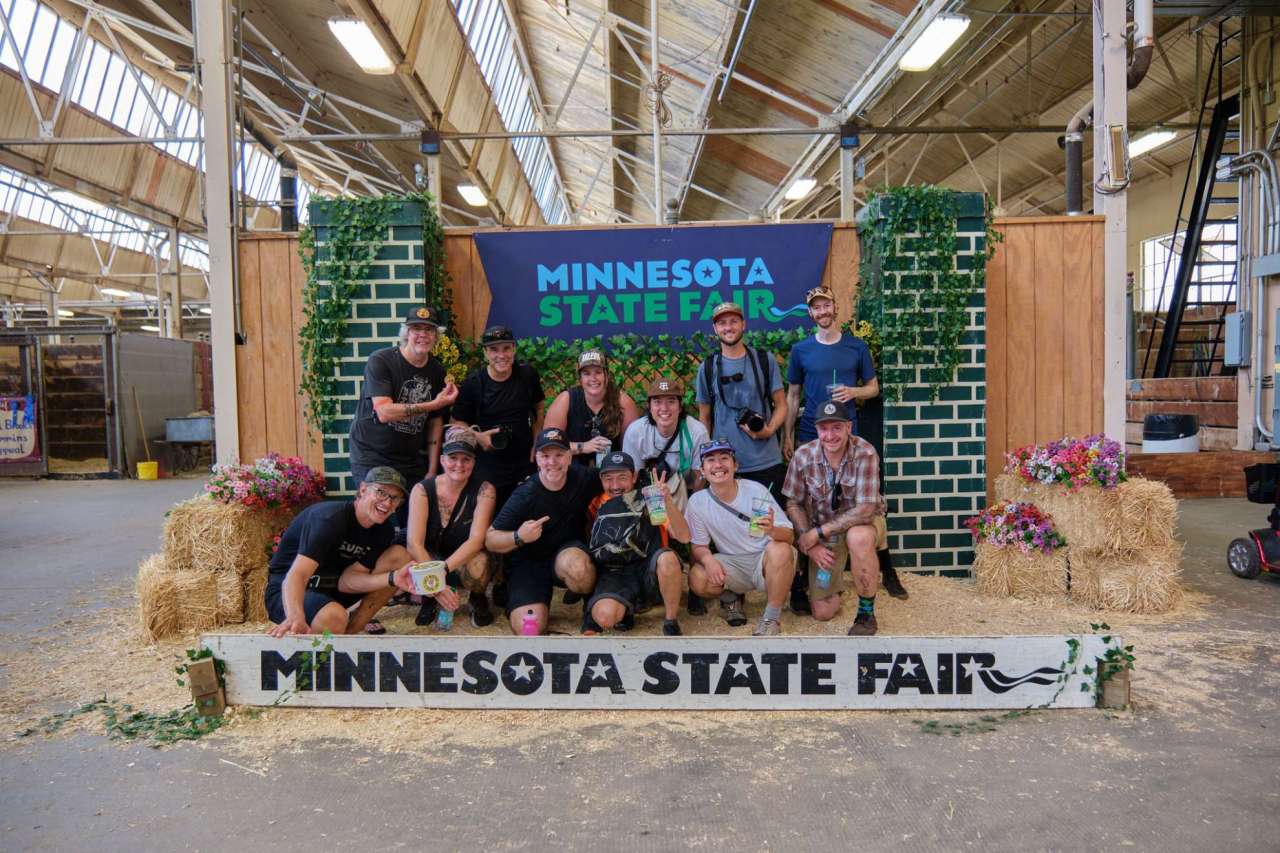
We joined a Surly group ride with local riders from around the city, rode together, talked, ate, and ended up at the Minnesota State Fair.
It didn’t feel complicated.
People showed up because they wanted to ride together. That was it.
And that atmosphere really stayed with us.
So we wanted to bring a little bit of that energy back to Tokyo.
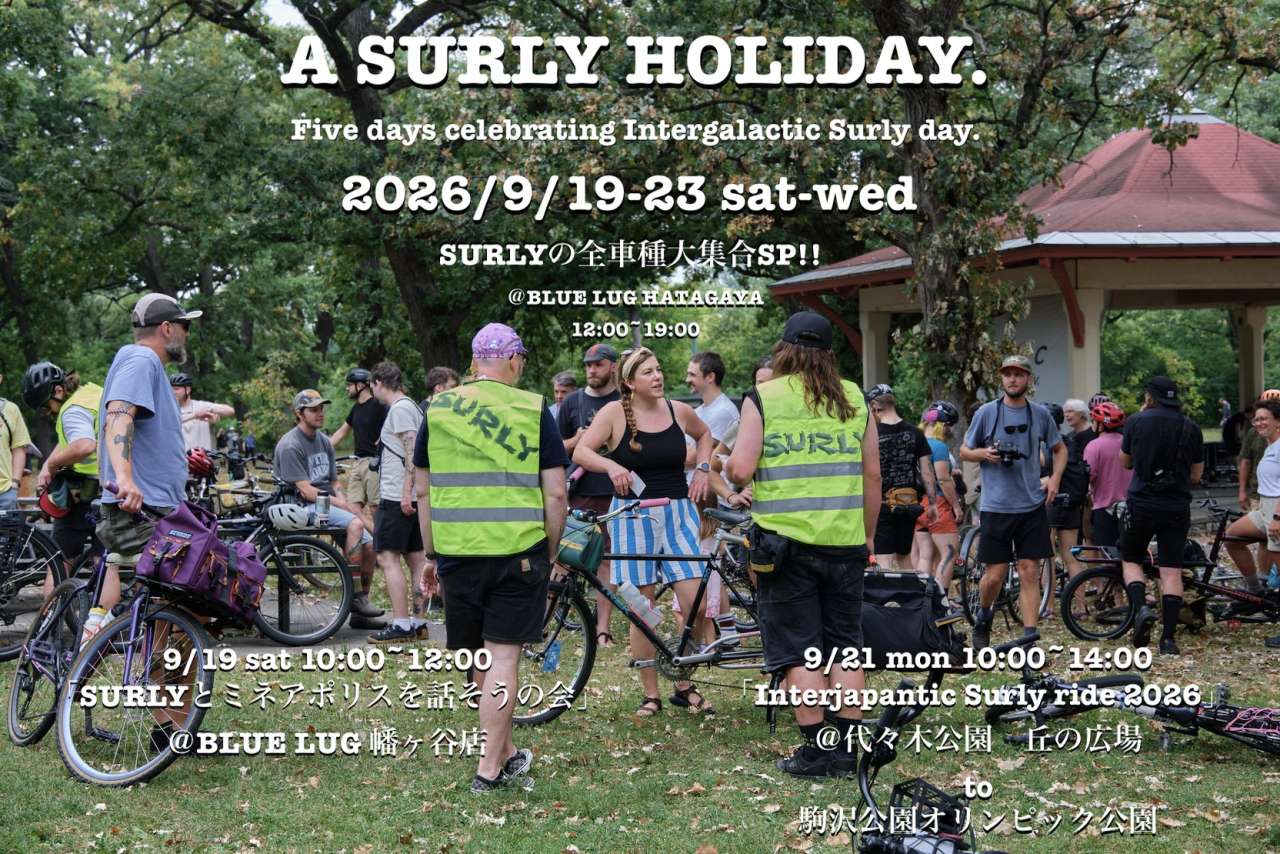
That’s a big part of why we decided to hold A SURLY HOLIDAY at Blue Lug from 9/19th~23rd.
On September 19, we’ll be at Hatagaya talking and sharing more about Surly, Minneapolis, the people we met, and all the things that didn’t fit into these blogs.
Along with all the Surly bike models ready for a test ride! (20+ models!)
Then on September 22nd (Sorry we had to change the date due to the bad weather forecast on the 21st), Intergalactic Surly Day, we’ll be hosting the Intergalactic Surly Ride 2026.
Of course, Surly riders are very welcome. But you definitely don’t need a Surly to join! (We may have some gifts for you!)
Honestly, I think that part is important. Because what inspired me most in Minneapolis wasn’t only Surly as a brand.
It was seeing people come together because bicycles gave them a reason to.
You ride.
You talk.
You eat.
You meet someone new.
Maybe you see a bike that makes you want to change something about yours.
Maybe you ride somewhere you normally wouldn’t.
Maybe nothing particularly special happens at all.
But somehow you go home feeling a little different.
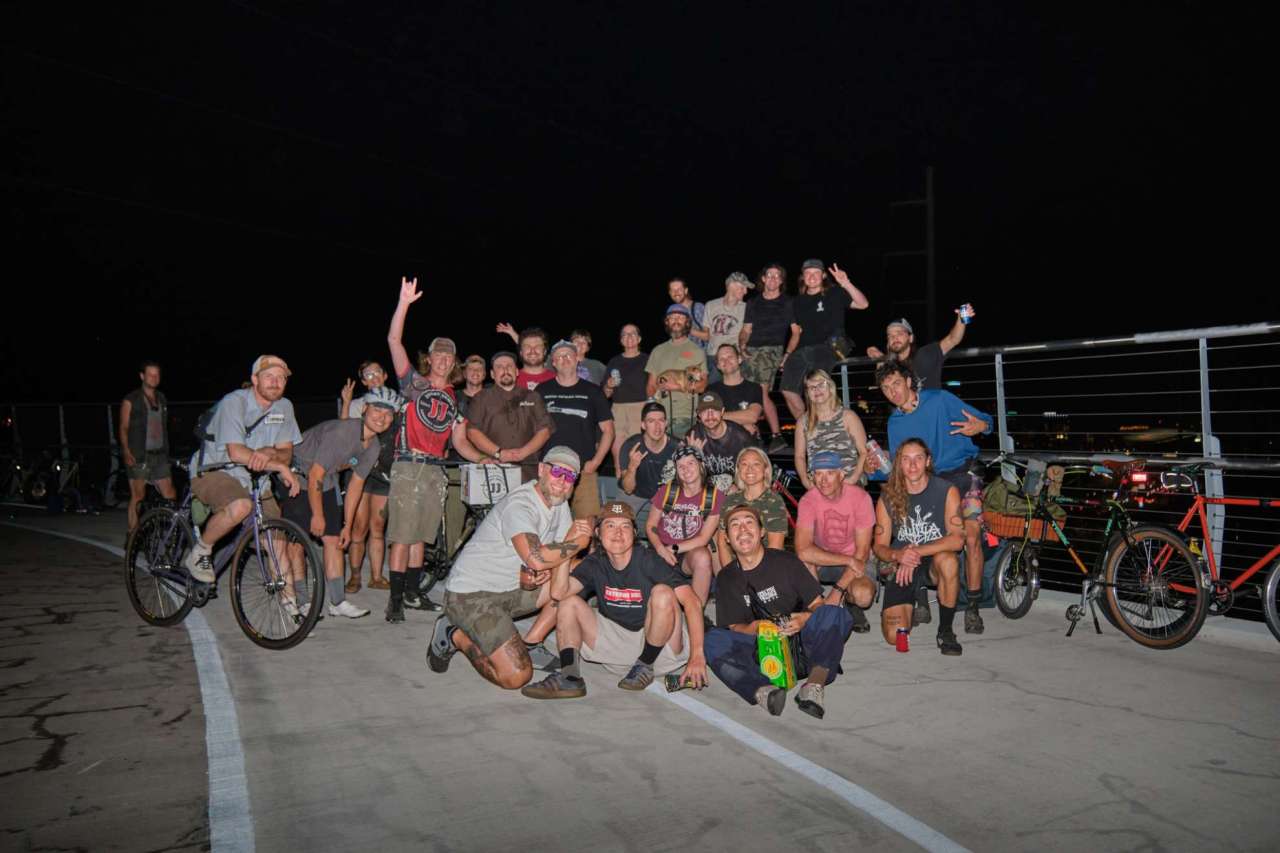
That’s what I want to bring back from Minneapolis.
Not just the photos.
Not just the stories.
Not just the bikes.
The feeling.
The bike matters.
The product matters.
The history matters.
But in the end, the thing that gives all of it meaning is the people around it. That was probably the biggest thing Minneapolis taught me.
And considering I’ve only just started working at Blue Lug, I feel incredibly lucky that this was one of my first experiences here.
There’s still a lot I don’t know about Surly. There’s still a lot I don’t know about Blue Lug.
And there are probably years of stories between these two companies that I haven’t even heard yet.
But now I’m even more curious to hear them. And hopefully, help create some new ones too.
See you at A SURLY HOLIDAY.
Kasper,
Your Friendly Host