My Joe Appaloosa Research
Today, I’d like to write about the Joe Appaloosa, a bike from Rivendell. It’s one of my favorite bikes that I’ve ridden for a long time.
This is going to be a long one, but I would like to write the things that I have been thinking at night.
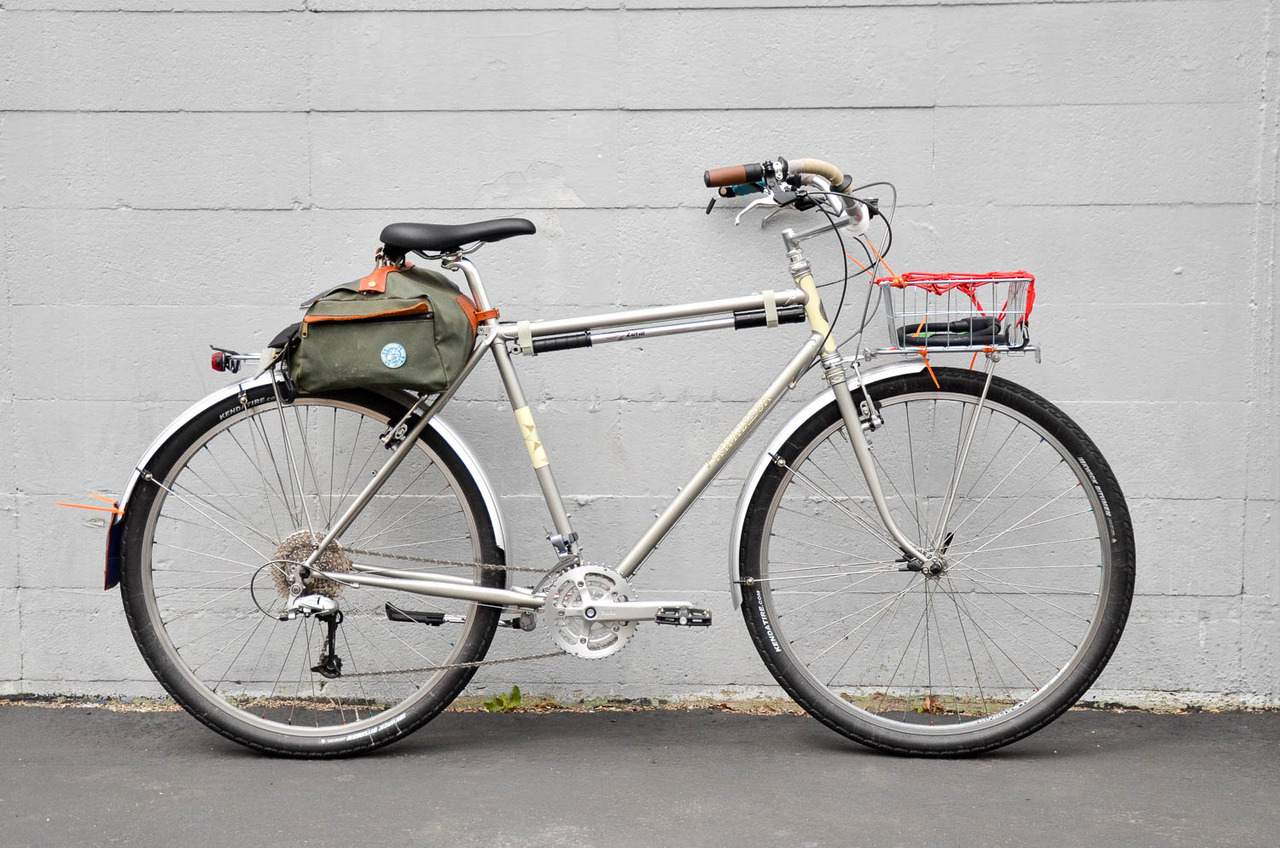
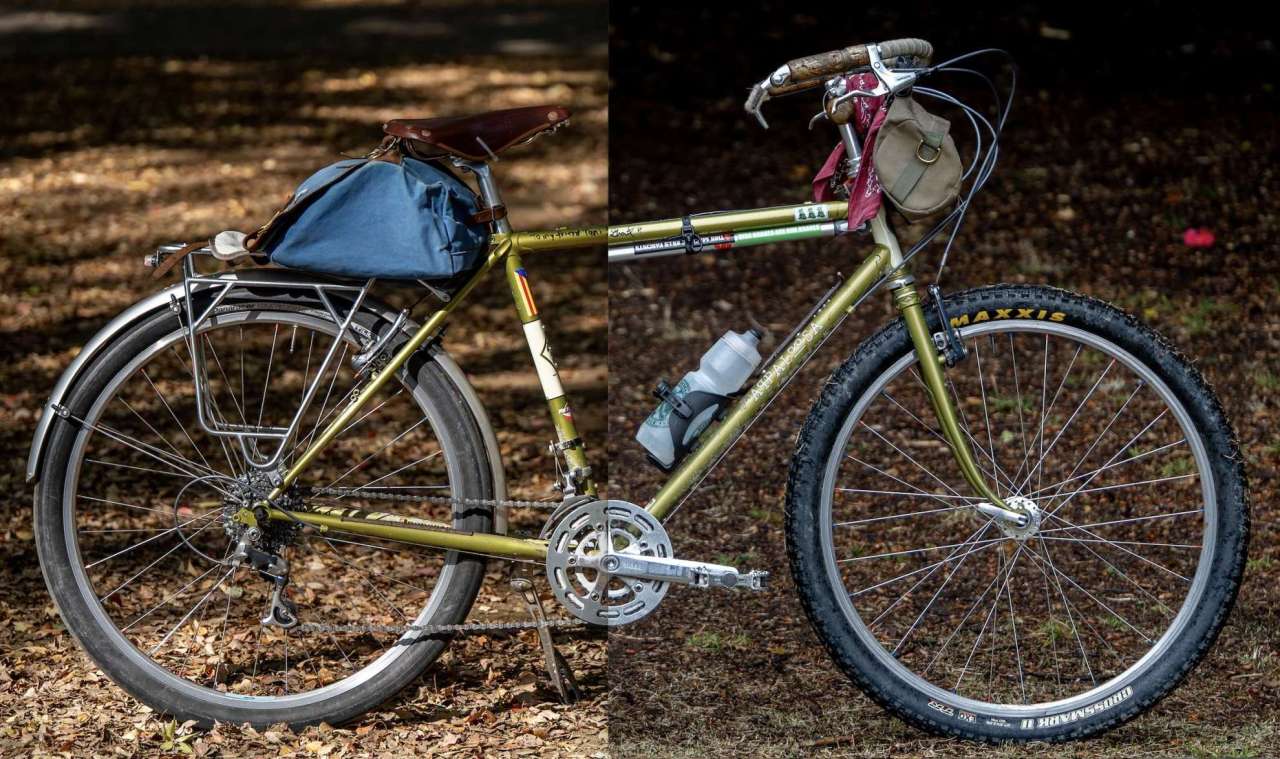
These are two photos of Grant-san’s Appaloosa. The one of above is when he built it,
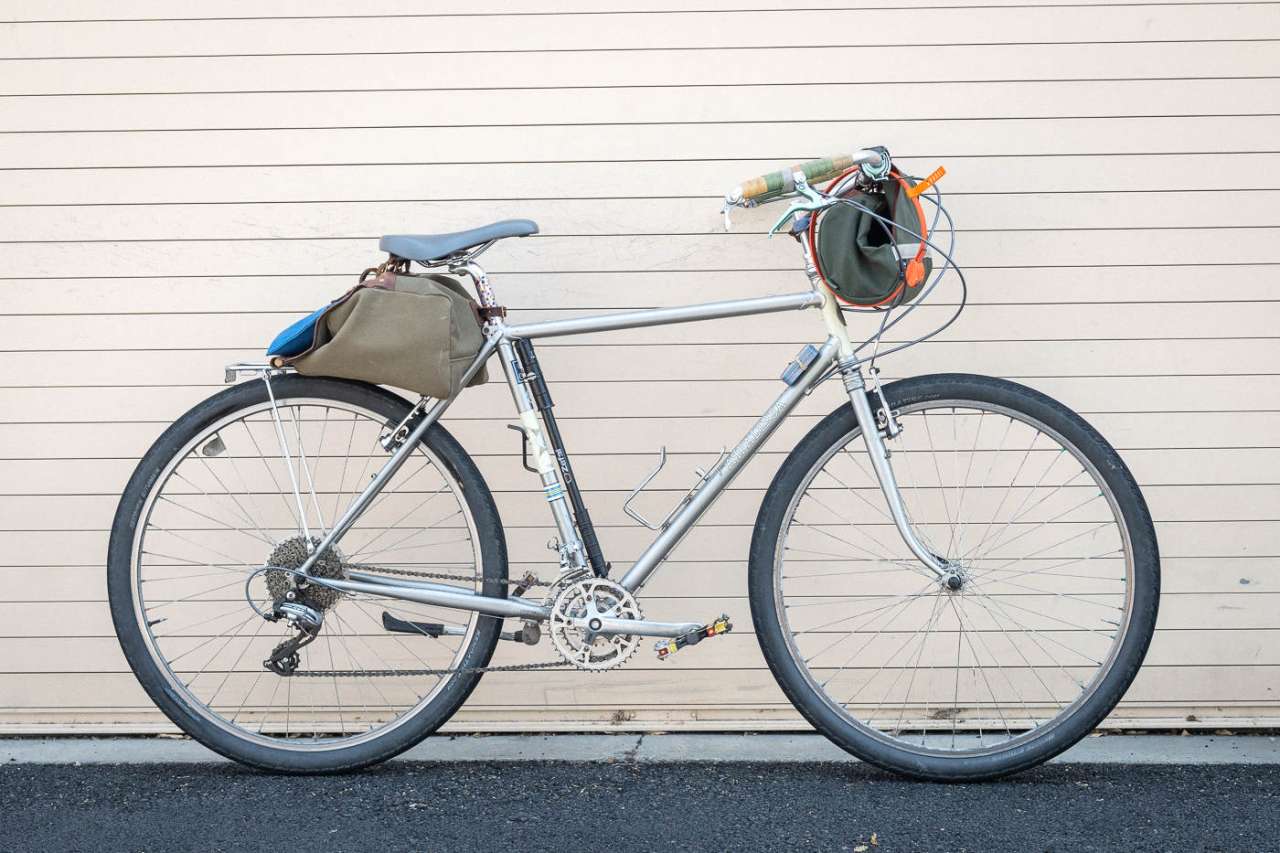
and I believe this is one of the recent photos.
In recent years, Rivendell has continued to produce step-through frame designs. The Joe Appaloosa is the latest diamond-shaped frame designed by Grant Petersen.
—side track—
While Rivendell’s models all share a consistent aesthetic, their riding characteristics are completely different—each one excels at something unique (which is part of the fun).
However, compared to other manufacturers, it’s hard to pin a clear label on each model like “gravel bike,” “touring bike,” or “mountain bike” which makes them a bit tricky to explain.
With that said, the Joe Appaloosa is called the “all-rounder bike.”
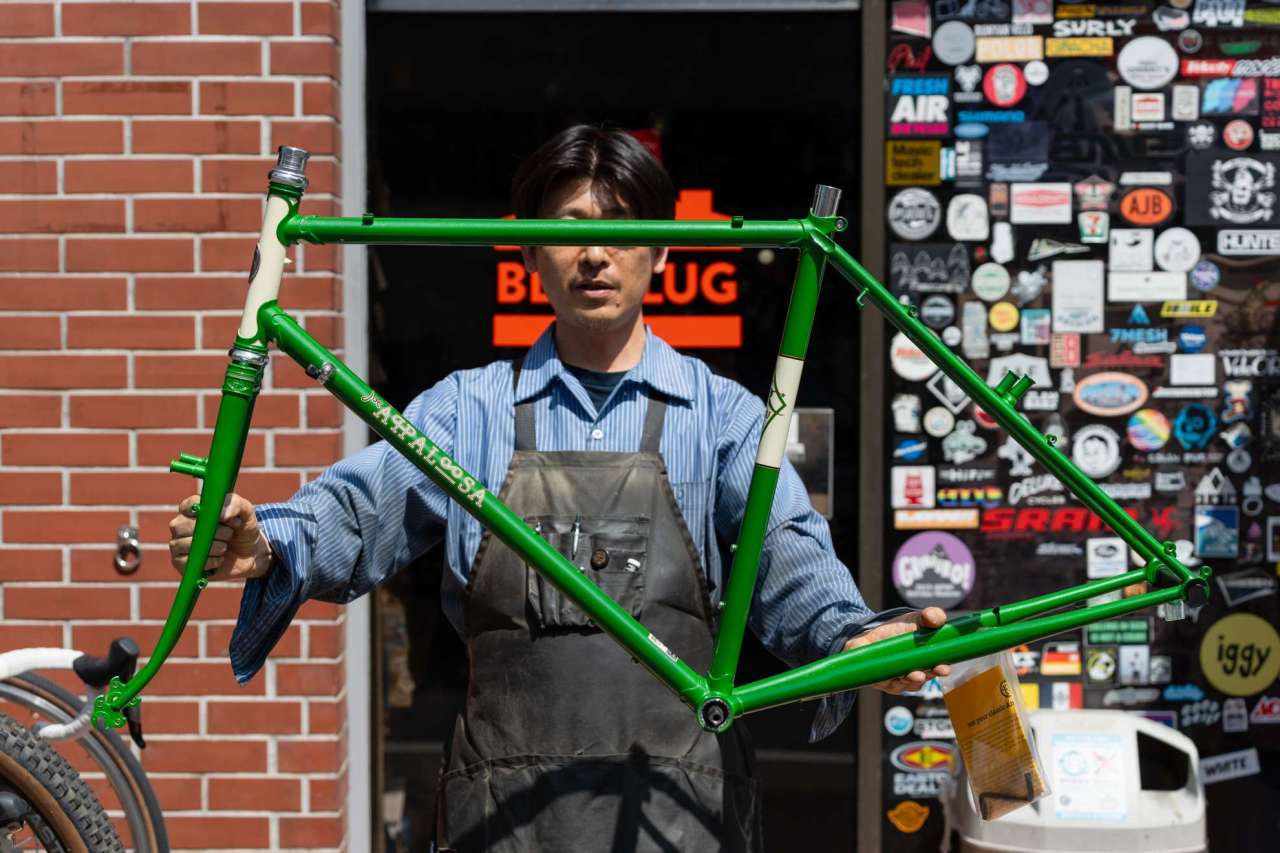
(This is what the general use green paint looks like in the sunlight)
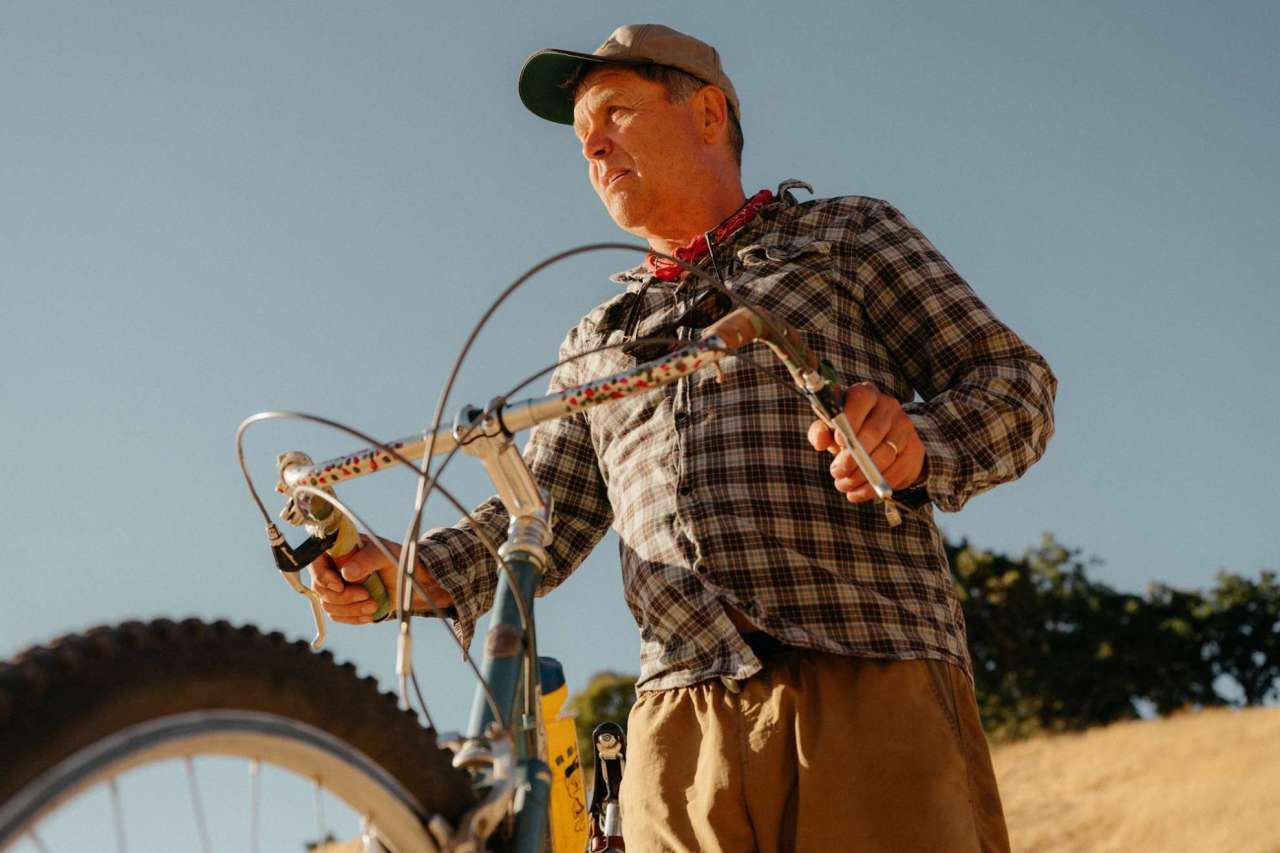
I imagine that if I asked Grant about what kind of bike each model is, he’d probably just say, “It’d be great if it could ridden in all sorts situations.”
I tend to explain that “this frame can do anything,” but I think if I could explain a little more about what that “anything” actually means, many of you might realize, “Oh, the Riv that seems right for me might just be the Appaloosa.”
So today, based on what I know, I’d like to break down the Appaloosa and give you a presentation on this frame that I love so much. It really is a great frame!
The Appaloosa was originally conceived as the successor to the Atlantis, a model that had been part of the brand’s lineup since its early days. (To clarify, I believe the story goes that it was initially created to fill the gap between the Sam Hillborne and the Hunqapillar, and was later dubbed the “successor” because the design philosophy of the current Atlantis, which was later came back, is identical to that of the Appaloosa.)
Here’s a photo I really like.
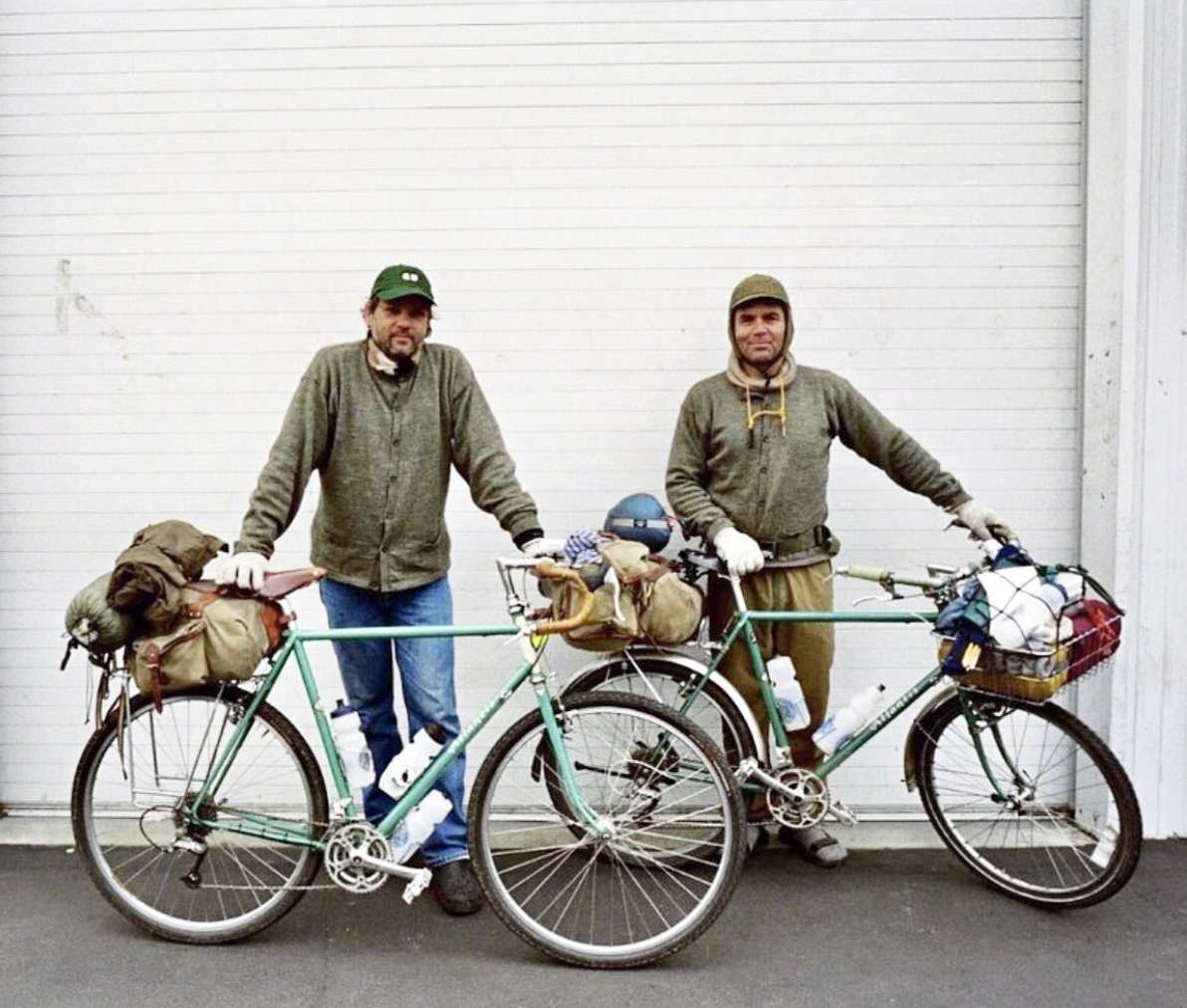
That is young Grant and John after going on a S24O with their Atlantis. I can tell that the two had a great time camping from their smiles.
This Atlantis was also marketed as an “all-rounder,” but back then there were so many touring or travel bike type built that I mistakenly believed the Atlantis was a designed exclusively for touring by Rivendell, kind of like the LHT from Surly.
Then, word leaked out from the official blog that a successor to the Atlantis was in development. I remember getting all excited when I heard on a Rivendell riders’ forum that some people had already ridden the prototype…
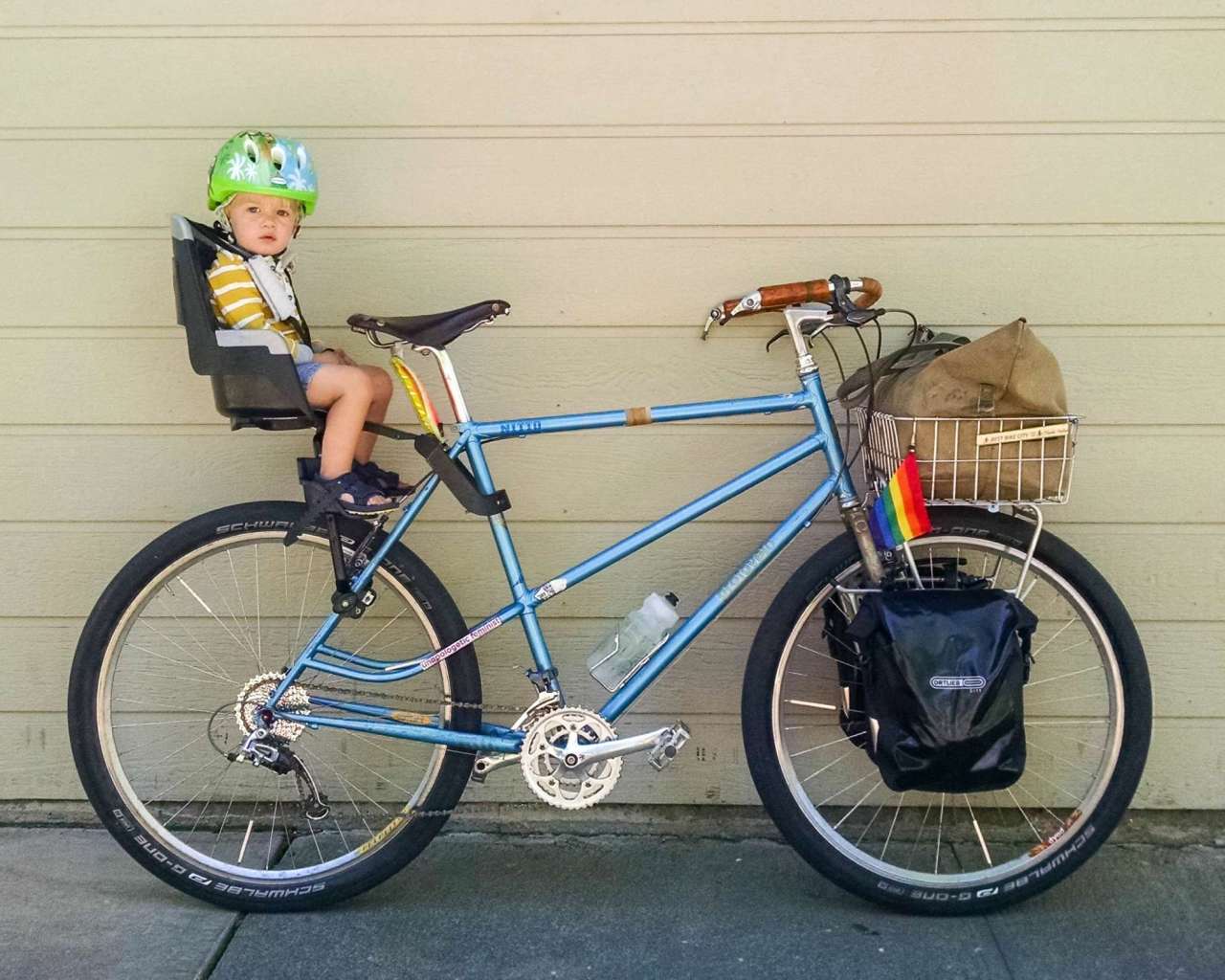
I believe this is the photo of the prototype. I don’t know the details of this bike, but check out that cool and long chain stay!
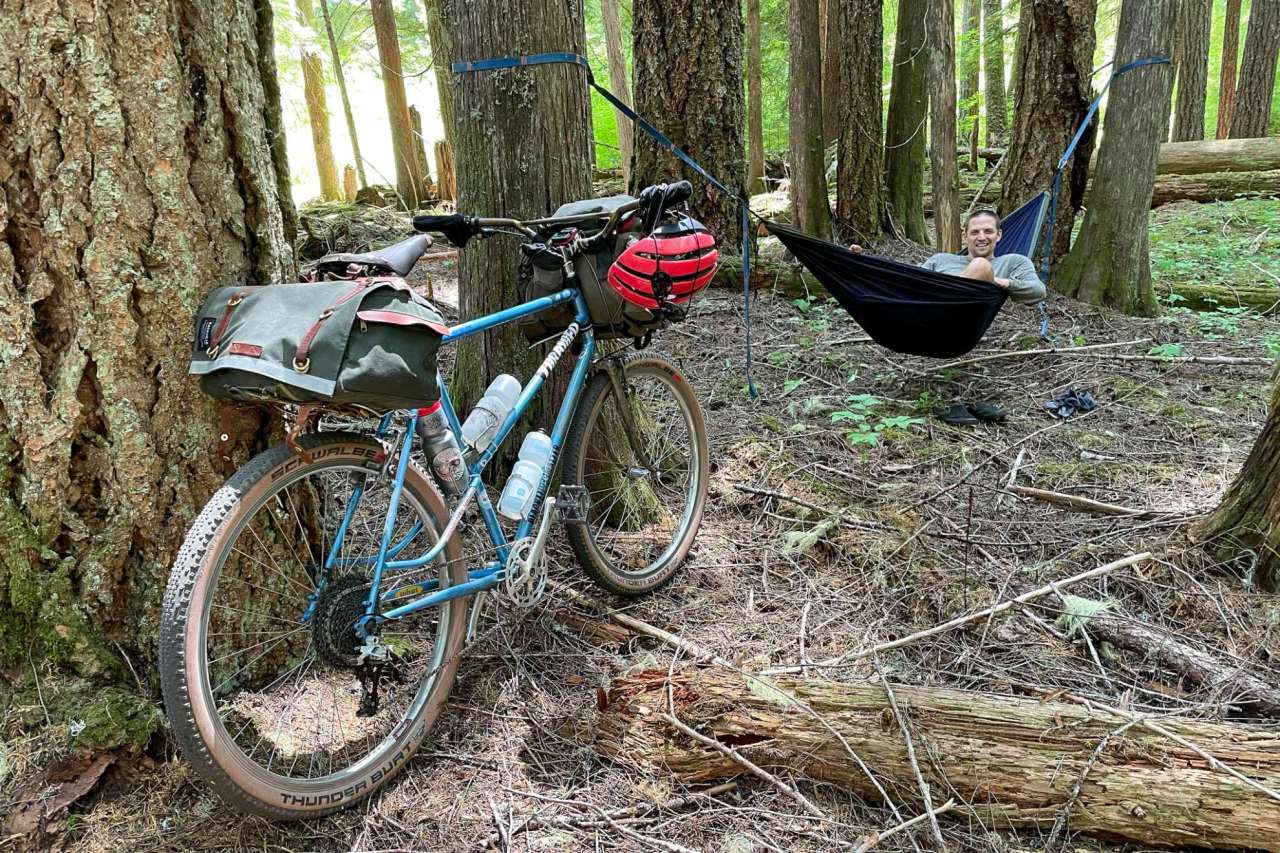
This gentleman was the test pilot of the prototype. I’ve seen photos of him riding with his child, riding in the mountains with MTB tires, or bike camping with a fully packed saddle bag.
I now think that this was the prime example of all-rounder.
While long chain stays have since become synonymous with Rivendell, back then I was completely brainwashed by the cycling world’s “theory” that “shorter is better when it comes to chain stays,” so I was shocked. (I used to blurt out things like “shorter chain stays are easier to handle” without any basis.)
I also thought, “The Appaloosa must be a touring bike!” I remember being obsessed with the naive conclusion that these super-long chain stays must be amazing when loaded with gear.
Heavily influenced by this, the initial reasons I became an Appaloosa rider were “touring” and “camping.”

(a photo from SWIFT CAMPOUT few years ago.)
Just like Grant and John, I wanted to try bike camping. I wanted a bike that could handle that kind of adventure.
And sure enough, even with a heavy load, the long frame stayed steady and felt secure. It’s an excellent touring bike, the most comfortable one I’ve ever ridden on a CAMPOUT trip. Plus, I wanted to try it out on a Rivendell rather than doing high-tech bike packing.
I found myself choosing the bike to commute even after the camp trip. I’m gradually realized that the Appaloosa isn’t a “frame designed exclusively for touring,” but rather a “frame that can also handle touring.” Its strengths aren’t limited to touring; they shine just as brightly during city rides and off-road rides.
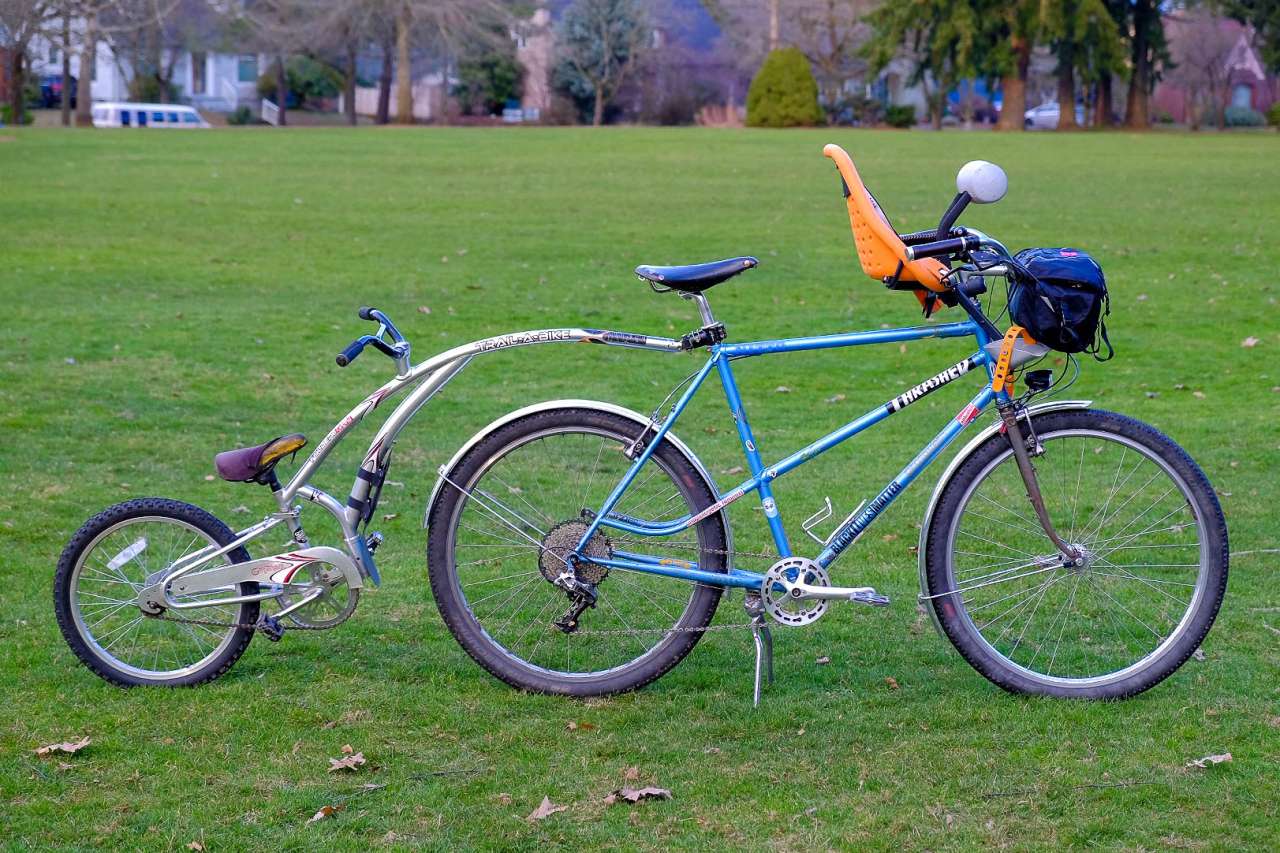
The test pilot of the prototype would go to parks with his child too. It’s natural change the set up of bikes based on the change of lifestyles.
You can’t go camping that often, and you want to ride it for everyday life and other activities too. Is this what you mean by “It’d be great if it could ridden in all sorts situations.” Right Grant-san?
Let’s take a look at my Appaloosa that I’ve ridden the heck out of. I hope this will convince the readers to become a future Appaloosa owner.

My current theme for the Appaloosa is “everyday life” and “comfort.” To put it dramatically, I have it built with the goal of creating a “mobile home.”
Even though I originally got this bike for the “escape from the reality” that camping offers, it’s still incredibly comfortable for everyday use. Now I think I’m starting to understand what it means to be an “all-rounder.”

The one thing I didn’t have on my camping trip was front and rear fenders. I absolutely hate taking the train in the rain, so I’ll ride my bike even in a downpour. It’s just easier that way.
When you have a bike that can handle the rain, rainy days don’t feel so depressing anymore. Instead, I get excited and think, “I can ride my fender bike!”

When you install fenders, you have to run narrower tires, but what’s really important about the Appaloosa is that it can still fit 48mm wide tires even with fenders.
On rainy days, you should just take it slow, and you need to be able to ride over wet curbs and manhole covers with confidence.

Albatross bars for a wider field of view and basket on the front. It’s idea to be able see better when wearing a hood on a rain jacket and I wouldn’t want to ride with a bag on me either.
If you put the light under the basket, the poncho wouldn’t cover the light.

I keep a large saddle bag on the rear. I put my daily belongings and bags in the basket, and I keep rain gear, tools, items that shouldn’t get wet, and spare socks, things I want to keep on the bike at all times, in the saddle bag. It’s also a good idea to keep a pair of sandals in there at all times.

The rear light is also dynamo, and if it’s mounted at the very end of the rack, it won’t get hidden by my poncho. Since I ride every day, rain or shine, I focus on “how to make things easier” and eliminate any inconveniences.

Chainring guard = pant guard. This is for preventing rain pants from getting caught in the chain.
And let’s touch on the frame color and paint job as well.

As I write this blog post, the new G.U. Green color is currently the most popular choice at the Kamiuma store. It’s a great color, of course, but I’m also really fond of this Lime Olive paint, so I’d like to give it a shout out.
When Grant came to Japan, we were out to dinner, and I had a few drinks, I asked him, “What’s your favorite Rivendell frame color?” At first, he said, “I like all the colors…” (I’m sure he was playing it down because he knew how much influence he has), but after I downed a bunch of beers and kept pestering him, he finally told me, “Well, I do like RBW Blue and Lime Olive…” “The master’s favorite colors” that’s more than enough of a deciding factor for a true fan right?
I wrote bike touring as an opposite to daily life to show the Appaloosa’s characteristics, but the Appaloosa isn’t technically a “mountain bike,” it’s explicitly described as a “trail bike.” It’s also a frame that definitely has an off-road vibe.

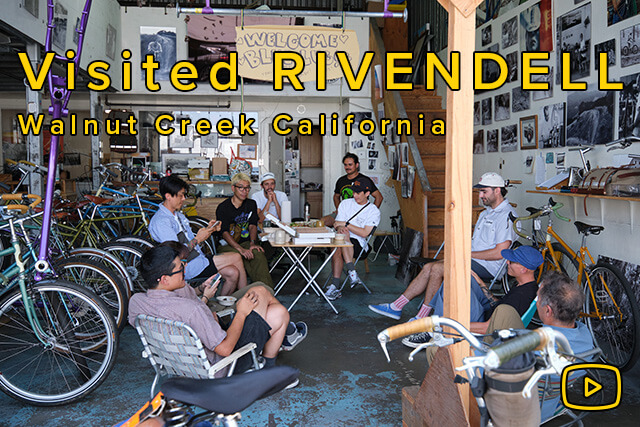
When we rode the trail in Walnut Creek, the bike Sub and Isshu borrowed were the Joe Appaloosa.

The long rear triangle prevents the rear tires to slip on gravel paths and it glides smoothly over bumpy off-road downhill sections, effortlessly absorbing the ground and skimming along the surface.
This off-road Appaloosa build was really fun to ride and I felt an old MTB/ATB vibes from the Appaloosa. I was impressed to realize that it must have come from the paths of the place where the bike was born.

So, I highly recommend the Appaloosa if you want to build a Riv as an off-road bike.
That was exactly the case with this customer’s bike. Since they already have a Platypus for everyday use, they ordered an Appaloosa specifically to ride actively.

The frame with skinny chromoly tubing, threaded stem and the fat tire combination is just beautiful to see.
Not to be outdone, I ditched the rack, fenders, and other gear and threw on some mountain bike tires.

I went riding on an MTB course with this set up.
It’s hard to believe this is the same bike as my usual Appaloosa with its basket and fenders, I guess this versatility is what makes it an “all-rounder.”
The max tire clearance is up to 55mm according to the specifications, but…
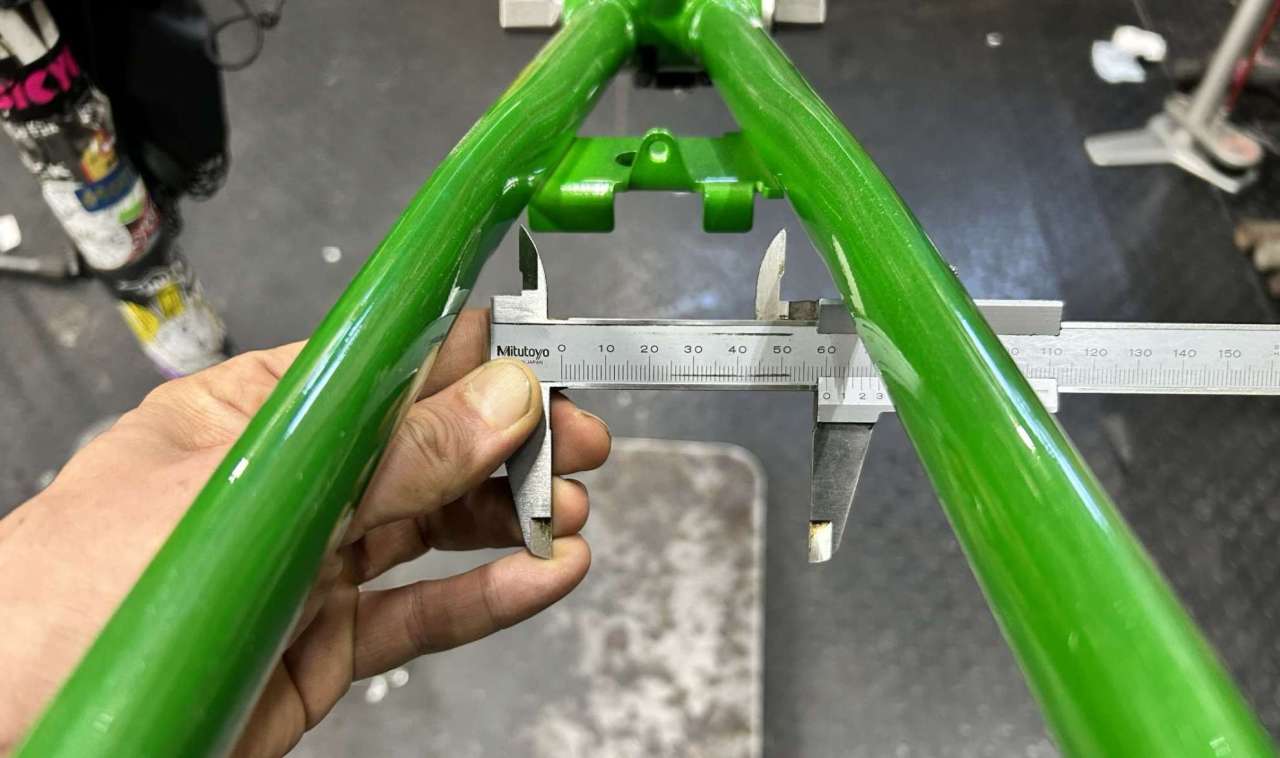
I think it should work for tires up to about 60 mm in actual size (60 ÷ 25.4 = 2.3 inches).
You just need to be a little careful when choosing the tires for this though.

From the options offered by various tire manufacturers, try choosing a mountain bike tire that offers “good rolling performance” and is “lightweight.” If you choose your tires wisely, you’ll be able to ride them just fine around town, and you can enjoy them as “all-rounder” rather than “off-road-only”. Of course, the premise is that you match your tires to the trails you want to ride!
(If you’re unsure, I recommend the Ultradynamico MARS, Maxxis Crossmark 2 or REKON, WTB Ranger, Schwalbe Rocket Ron or Racing Ralph, Continental Cross King or Race King and Teravail Ehline. I love researching tires!)
The Albatross also has handlebars that are the epitome of an everyday bike, but,


It reminds me that it was originally intended as a solution for mountain bikes and road bikes with low, far-set handlebars, and

Even the V-brakes I installed for camping trips and rainy days were originally mountain bike parts. I was able to enjoy the mountains using my usual gear ratios. That’s when I started to realize something.

Wait a minute…as long as you switch out the tires and load capacity to suit the situation, this bike can handle any use with the same parts. It’s designed so that “touring,” “daily commuting,” and “off-road” all flow seamlessly into one another. Hmm? So that’s what an all-rounder is, I see.
Sorry, this got long but those were my thoughts on the Joe Appaloosa.
“I want a single bike that can handle all kinds of riding styles,” or “I might start with one specific use, but I might end up using it for all sorts of things down the road.” If that’s the kind of Rivendell you’re looking for, I’m sure the Appaloosa will be a perfect fit. In other words, “It’s a frame that can do it all”. I always end up writing that.
Thanks for reading to the end.