Do you know what “stack height” is?
You might find yourself in a situation where you don’t have enough headset spacers when you try to install a new stem you just picked up, if you don’t know about the stack height.
The other day, I replaced the stem on my AC-3 and ended up learning the hard way from a 1.5mm difference.
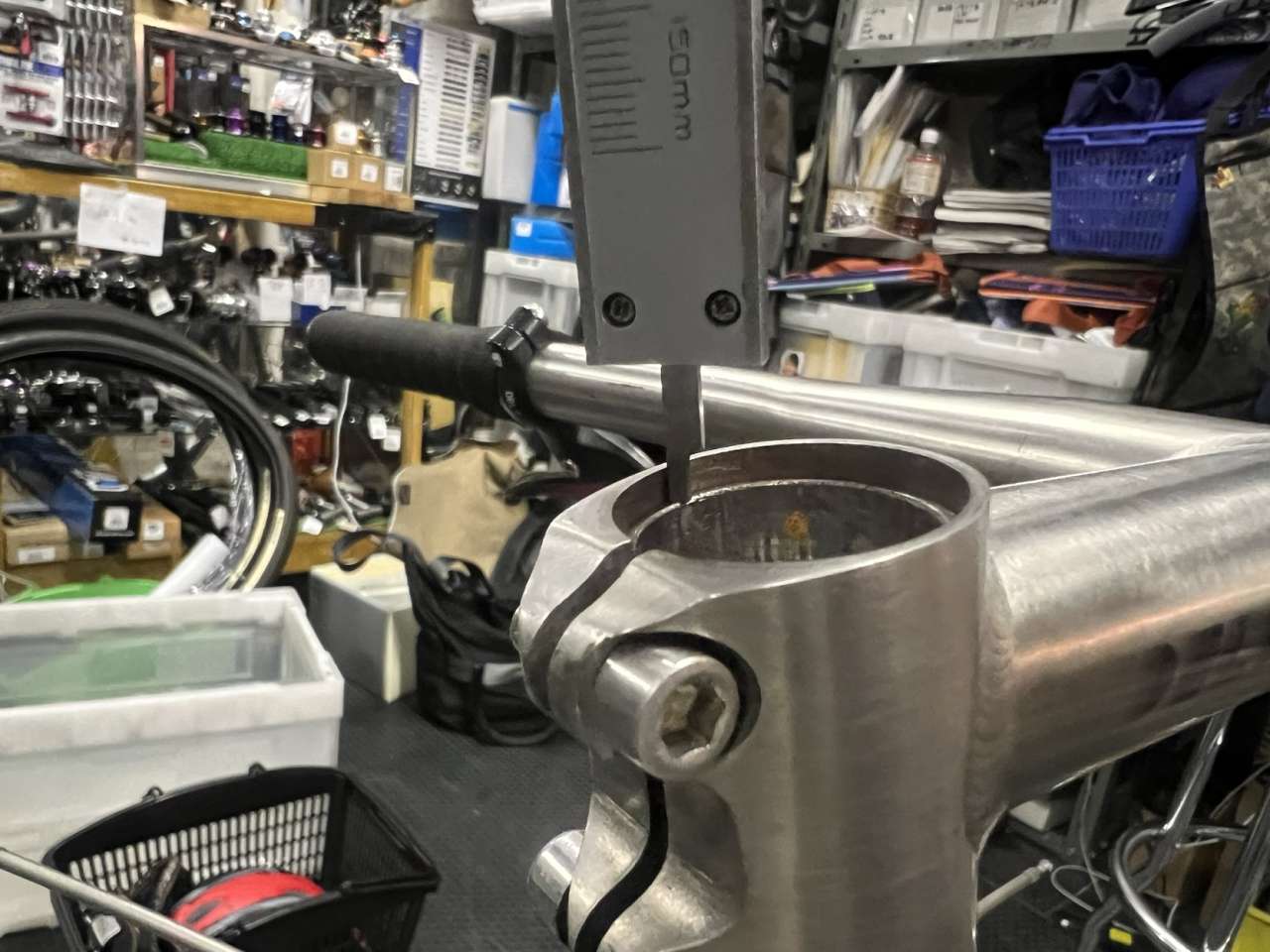
The stack height is the height of the clamp for the steerer tube. The image below shows that the stem I have on has a 45mm stack height. If the new stem has the same stack height as your old stem, you could swap the stem without any issues.
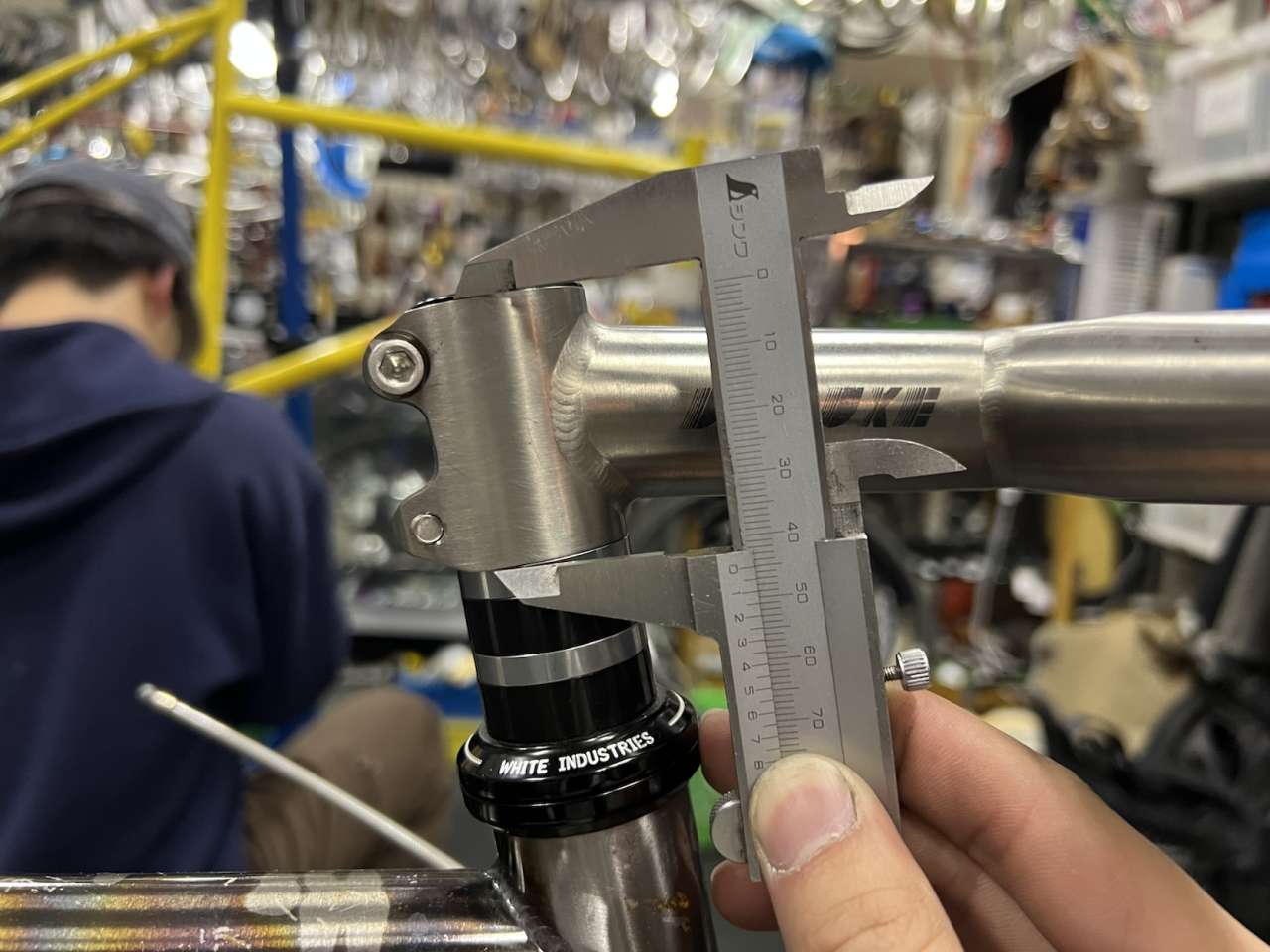
In this post, I’ll cover some important points to keep in mind when switching from a high-stack-height stem to a low-stack-height stem. Since you’ll definitely need to add spacers in this scenario, I’ll explain how to do that.
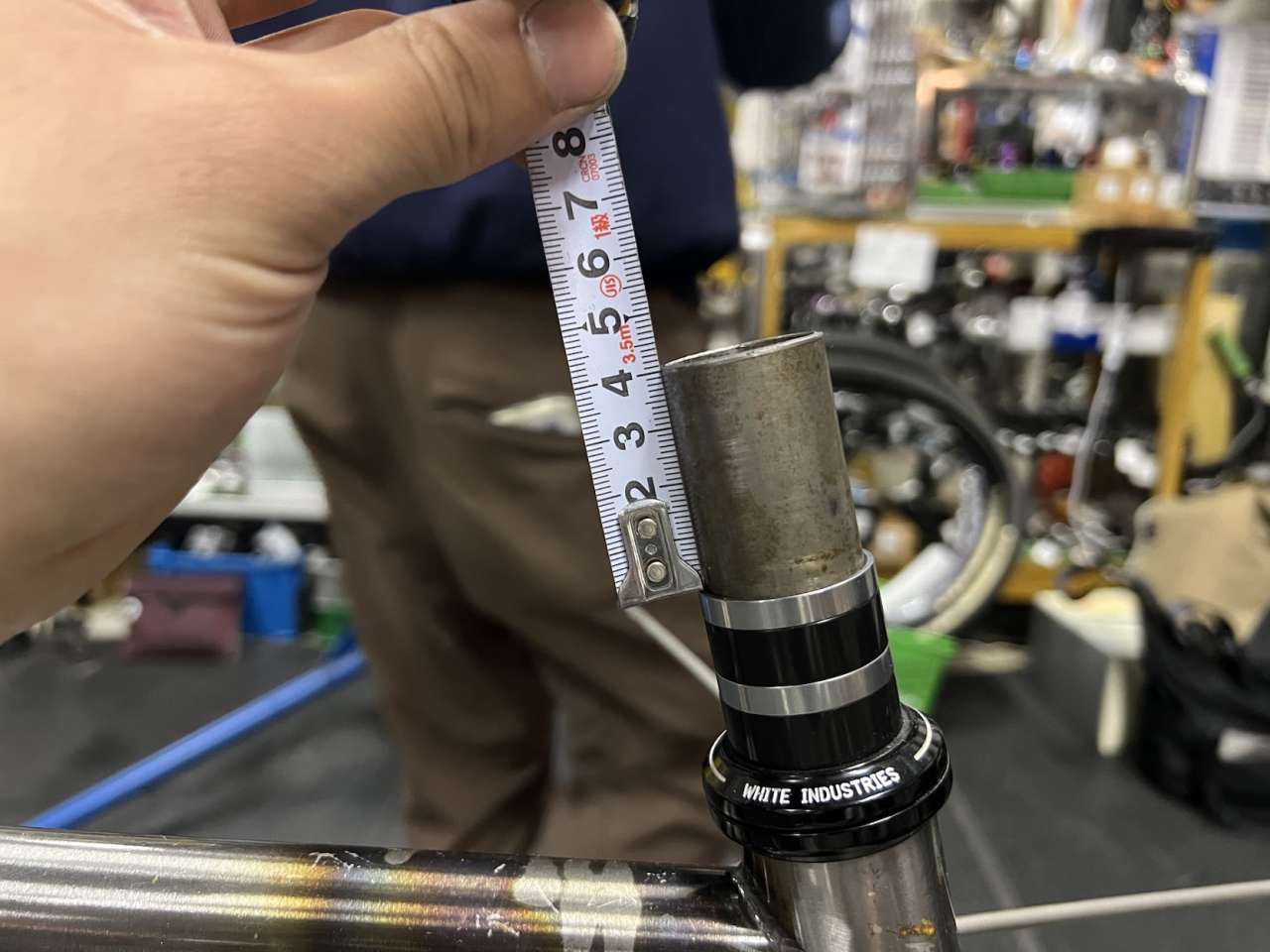
When measuring the distance from the top spacer to the top of the steerer tube, it shows that it is 41mm.
The stack height of the stem I previously had, was 45mm in stack height, but the Thomson x4 stem I want to install has a 41mm stack height.
↓This is what it looks like without adding any headset spacers
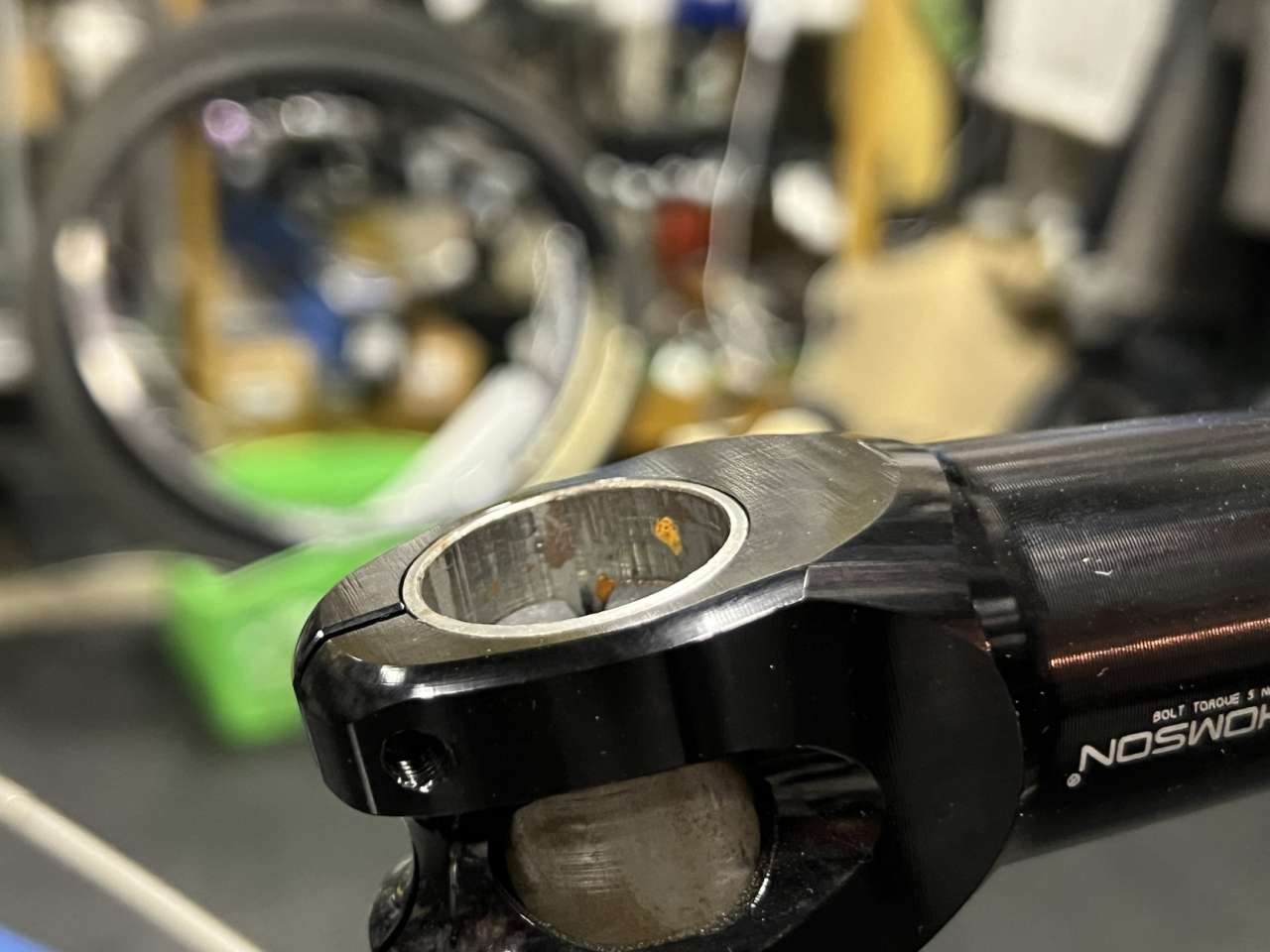
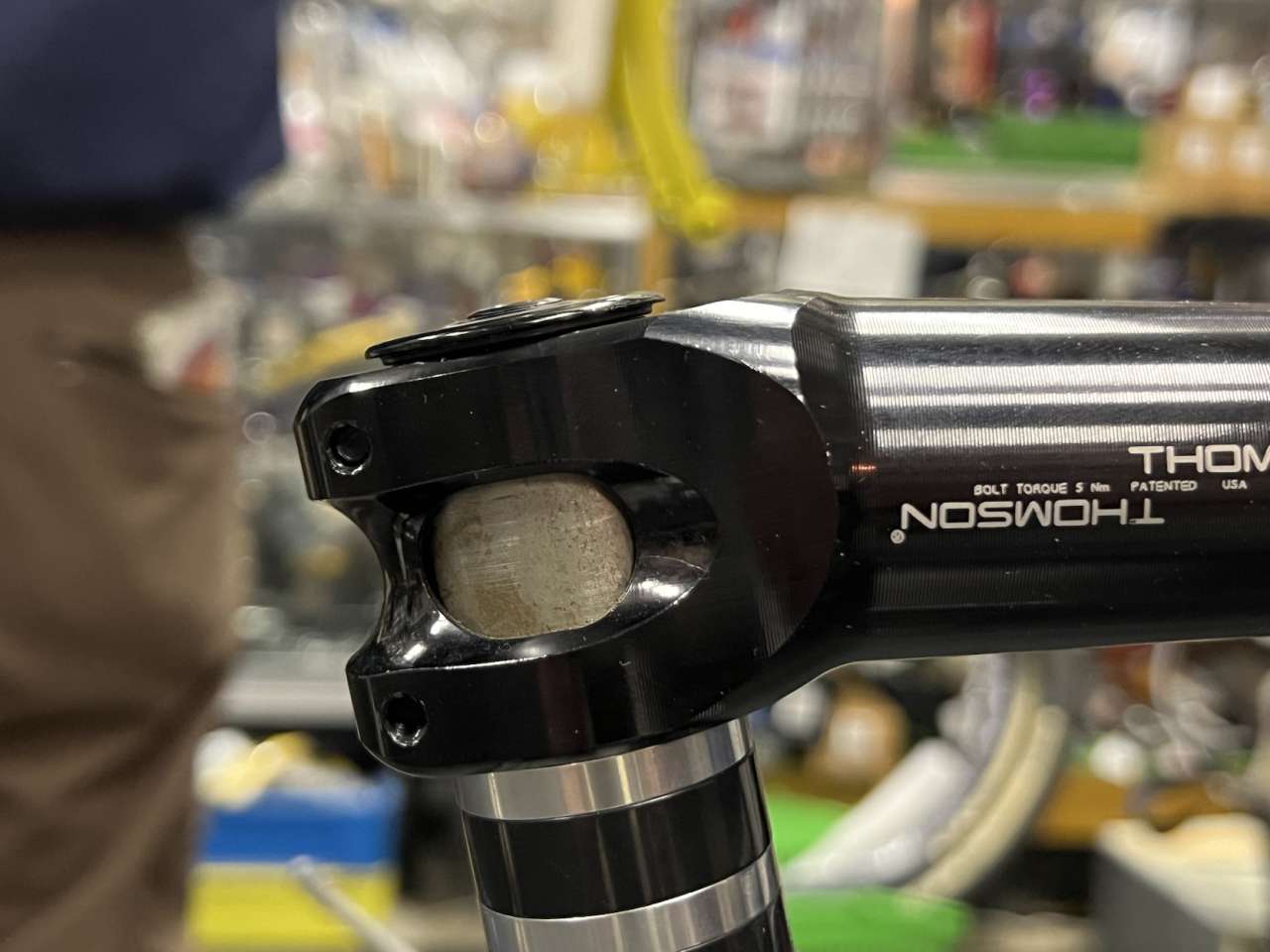
At first, it may seem that the stem in on the steerer tube perfectly, but that is not the case. You cannot tighten the stem bolt enough to close the gap on the headset. That’s why you need to add a spacer.
In the case of installing a Thomson G2 stem, its 36mm stack height is too short.
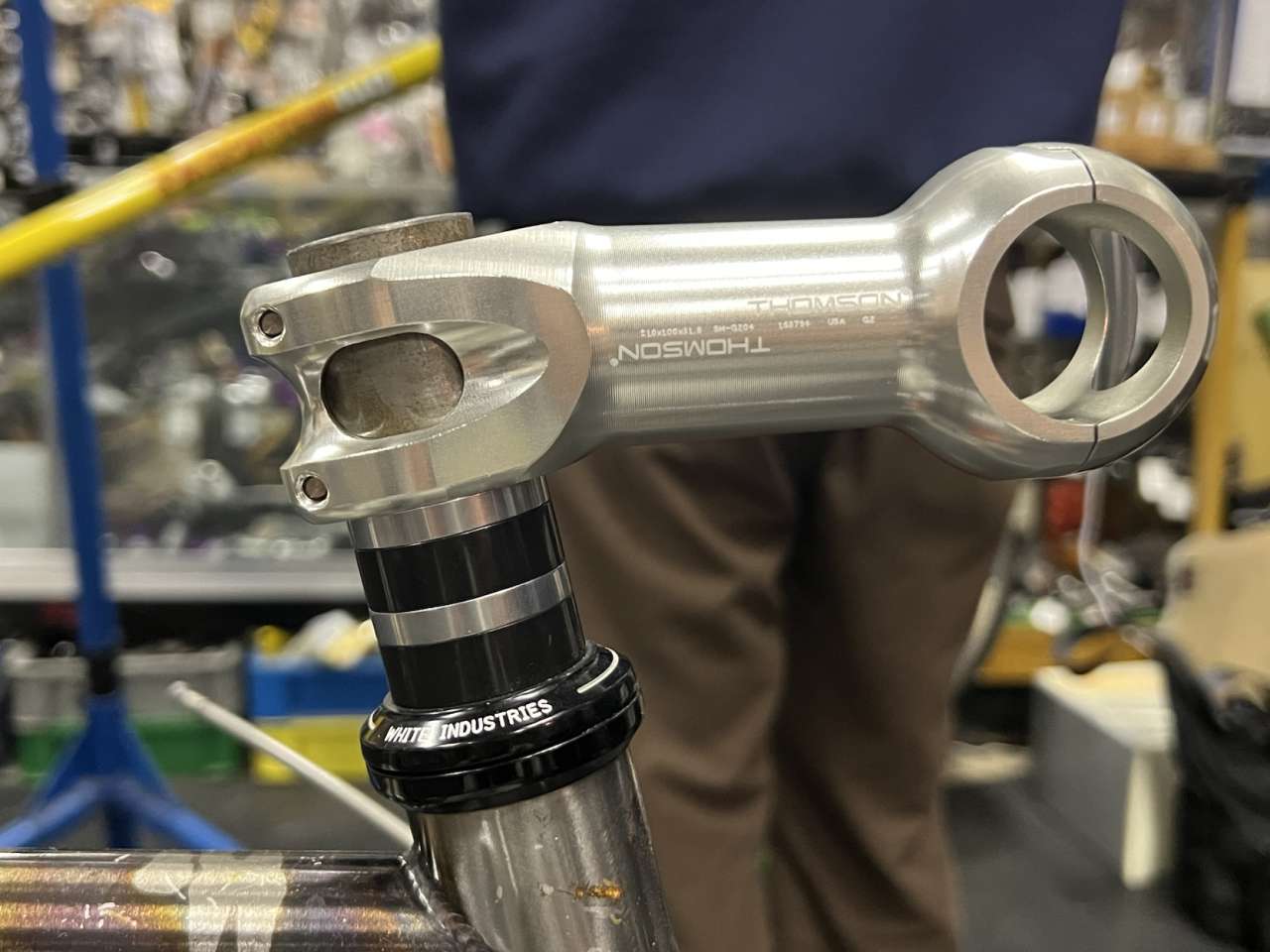
If you put a 36mm stack height stem on a 41mm space on the steerer fork, it obviously would have a 5mm gap. When putting the top cap on the steerer like this, you are not able to put enough force so that the stem could hold the steerer tube properly and cannot close the gap in the headset.
Since the stack height has been reduced by 9 mm from the original stem’s 45 mm, we’ll add spacers to compensate for that difference. One 5 mm spacer and two 2 mm spacers total 9 mm, or two 5 mm spacers total 10 mm.
To keep things simple, we’ll add 10 mm of spacers this time.
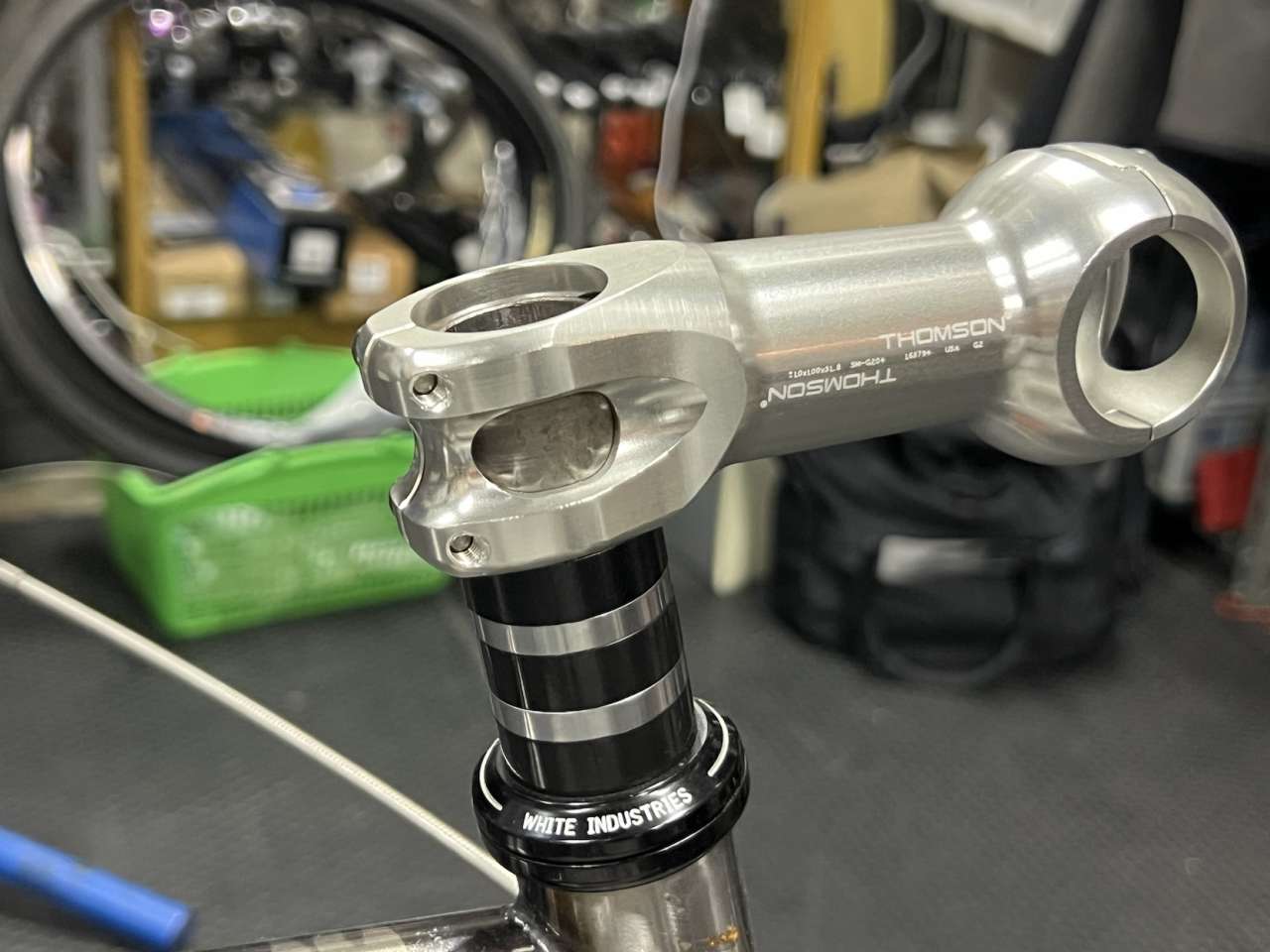
By doing so, the stem becomes taller than the steerer tube, making the top cap able to do its job.
As an example of what not to do, if the stem is too high, even if you tighten the stem’s screws, you won’t be able to apply torque to the steerer tube. This can result in the stem shifting due to insufficient clamping force or cracking from being overtightened. In this case, remove one spacer.
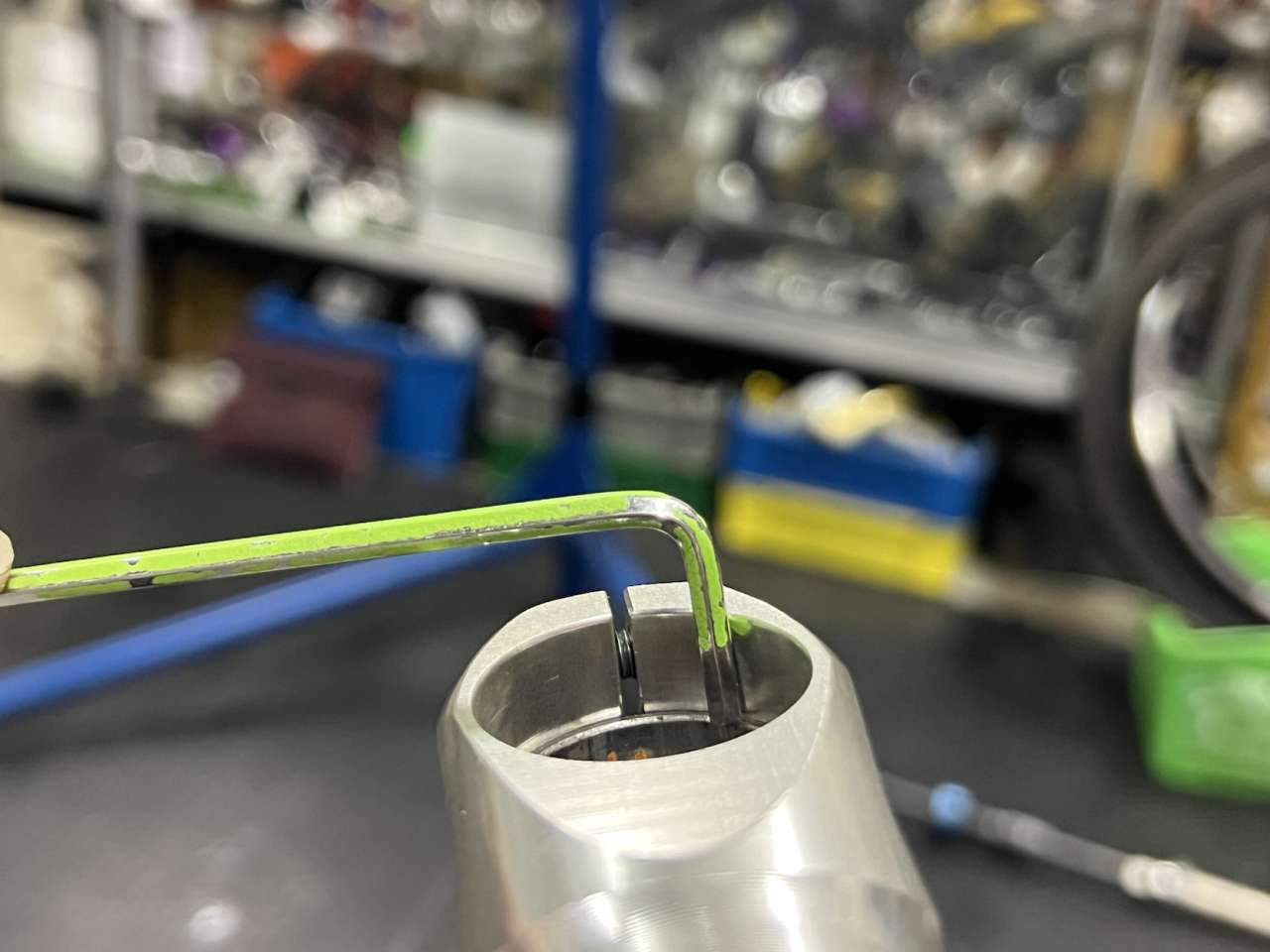
To make it simple, if the stack height changes, you just need to add spacers to compensate for the difference in stack height.
Based on the steerer tube, adjust the spacers so that the stem height increases by 3mm to 5mm.