Cotton Bar Tape + Shellac Varnish
Do you like cloth bar tapes?

I absolutely love how they make the bars look slim and how it shows the shape of the bar directly.

Bar tapes have evolved. There are many products with grippiness and cushion, but cloth bar tapes are just cloth tapes, so they are not the best in terms of the two factors above.
Today I’ll write about that charm that still draws me into cloth bar tapes.
Did you know that there are two different kinds of cloth bar tapes that we offer?
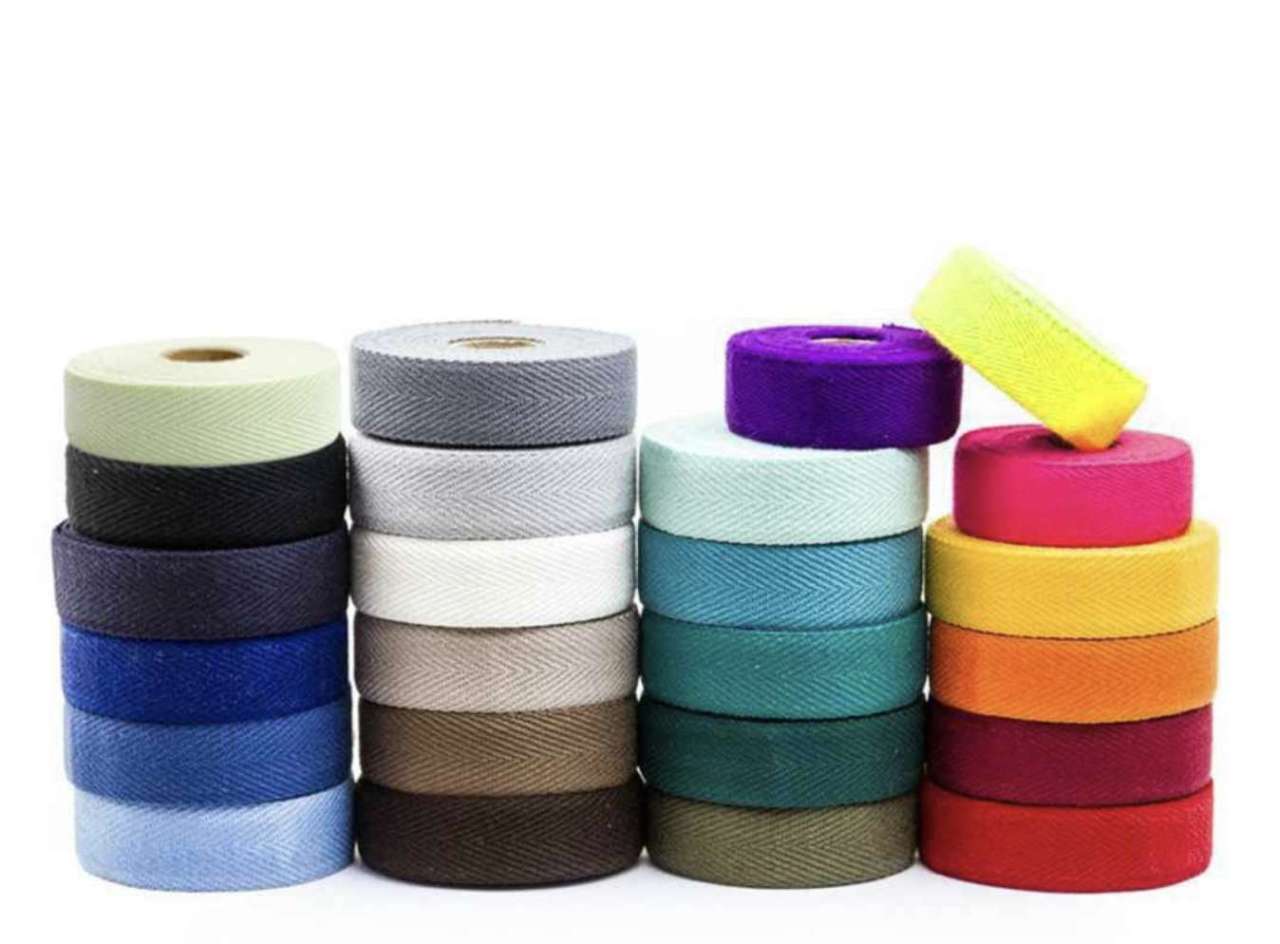
*BLUE LUG* Acrylic Cloth Bar Tape and
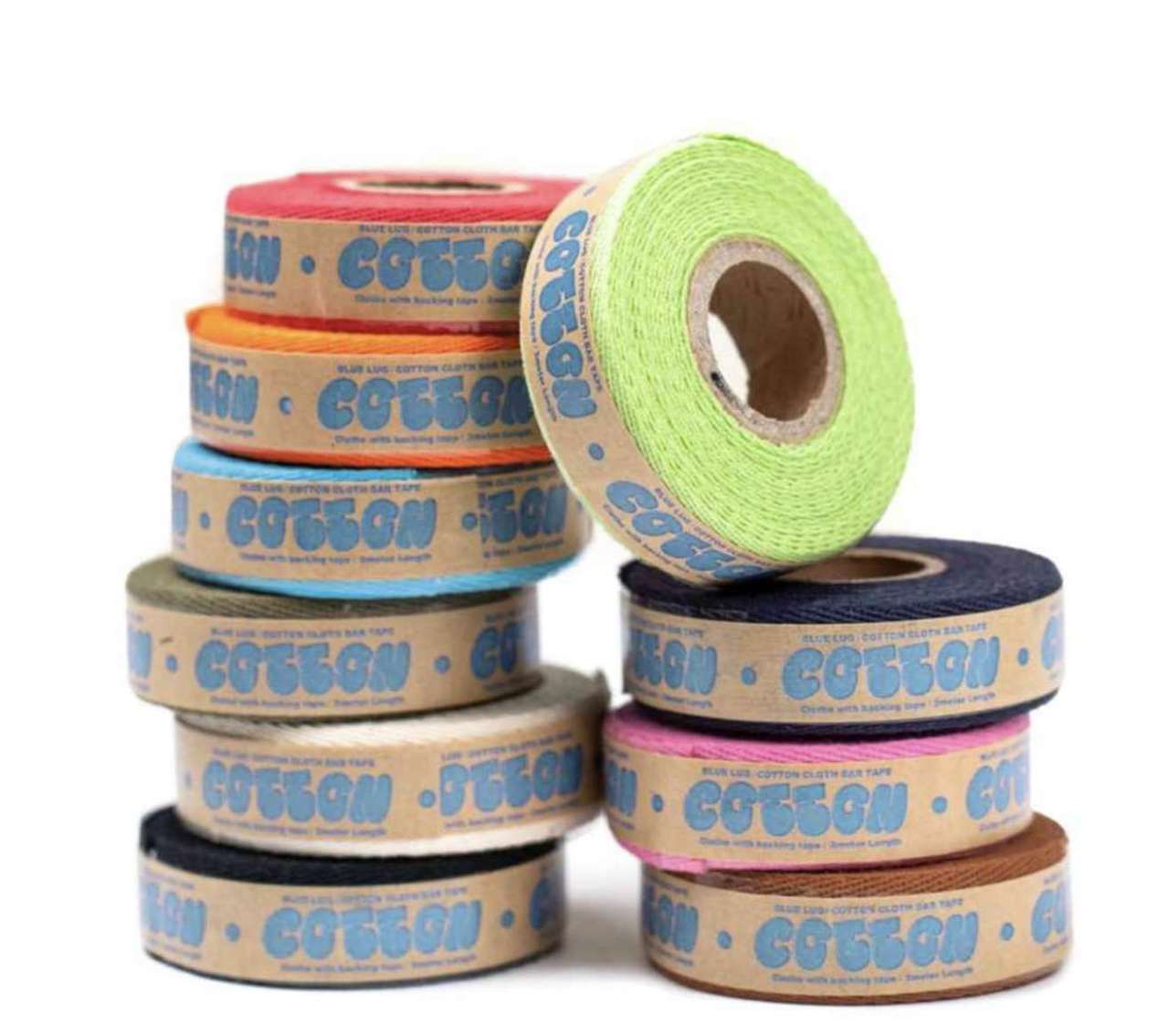
*BLUE LUG* cotton cloth bar tape made of 100% cotton
Both having pros and cons.
The acrylic bar tape is strong towards rain, sweat and dirt. The colors are bright and difficult to fade from sunlight.
The cotton bar tapes are the opposite. They absorb a lot of rain and sweat. They get dirty easily and gets destroyed from sunlight and friction.
Now, you may think “Hold up Tani, now it sounds like we should choose the acrylic tapes…” but no.
The main character of this blog post is the 100% cotton bar tapes, which is what I always choose for my own bikes.

Easy to get dirty = Easy to show a nice wear,
It’s like a nice pair of vintage jeans. Worn and faded.

Just like a leather saddle, it develops a unique character with use. Not only does its appearance change, but it also becomes more comfortable in your hands. That’s the charm of cotton bar tapes.
This 100% cotton bar tape, with its blend of pros and cons, had fewer color options compared to acrylic. But I asked the factory to make more colors and they have arrived recently.
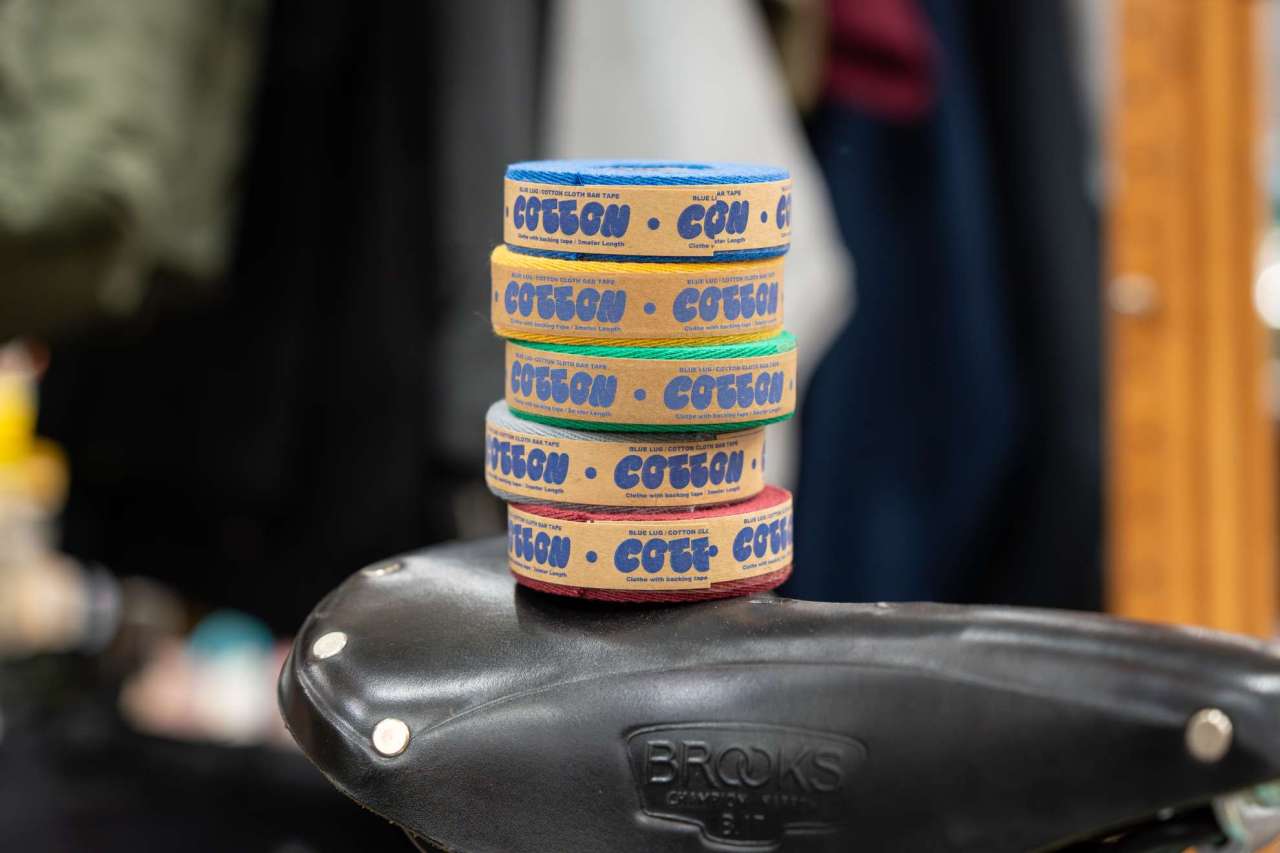
“Blue” — Not navy or cyan, but a general use blue.
“Green” — Not olive or dark green, but a general use green.
“Yellow” — Not a pale lemon, but a deep yellow like Japanese mustard
“Grey” — Not too light, not too dark, a grey that looks cool when it gets dirty
“Burgundy” — Not a bright wine red, but a solid “cinnabar red”
Each color is vivid and new, but I chose these five shades imagining how they’ll change over time. I think they’re my absolute favorite, the ultimate five colors…what do you think?

I strongly believe people that likes vintage clothing, faded Vans shoes and people who get bummed out when the T-shirt they want has synthetic fibers mixed in can understand the charm of cotton bar tapes.
(I know that sounds a bit dramatic, but what I really want to emphasize is that “acrylic or cotton” isn’t about superiority or quality. It’s just a matter of preference. If you prefer less fading and color loss, go for acrylic.)
I may be a member of the cotton bar tape cult, but that doesn’t mean that I want my bar tape to smell bad.
That’s when you use shellac varnish.
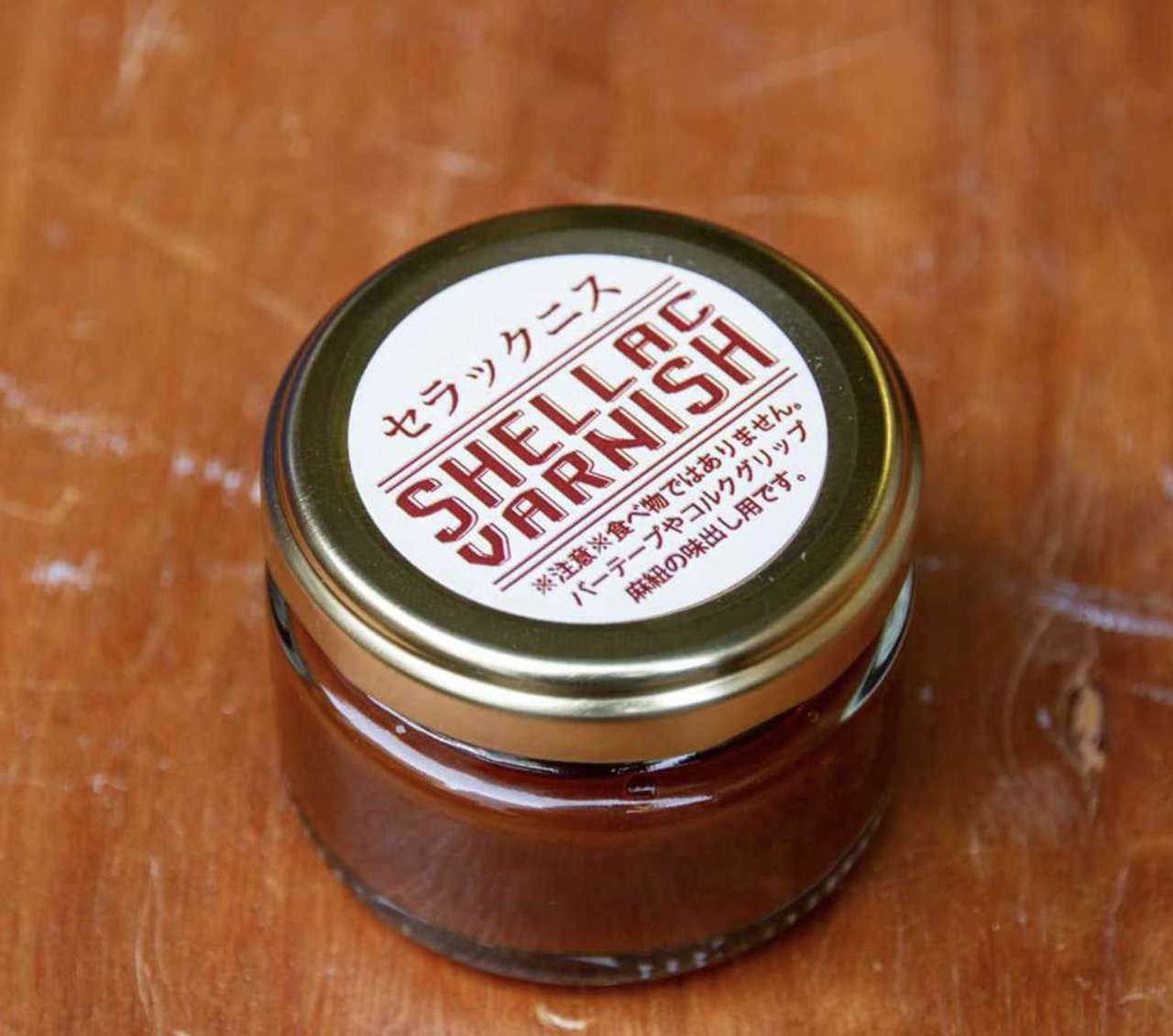
This is a must if you want to bring out the best in 100% cotton bar tapes. This protects the surface like when you apply them to a piece of furniture.
The varnish serves as a coating that protects the tapes from getting filthy, but they also serve as an extra spice to make the bike look more beautiful. I never use the cotton bar tape without the varnish.
I conveniently had a request for applying varnish to cotton bar tapes, so I had my college take some pics.
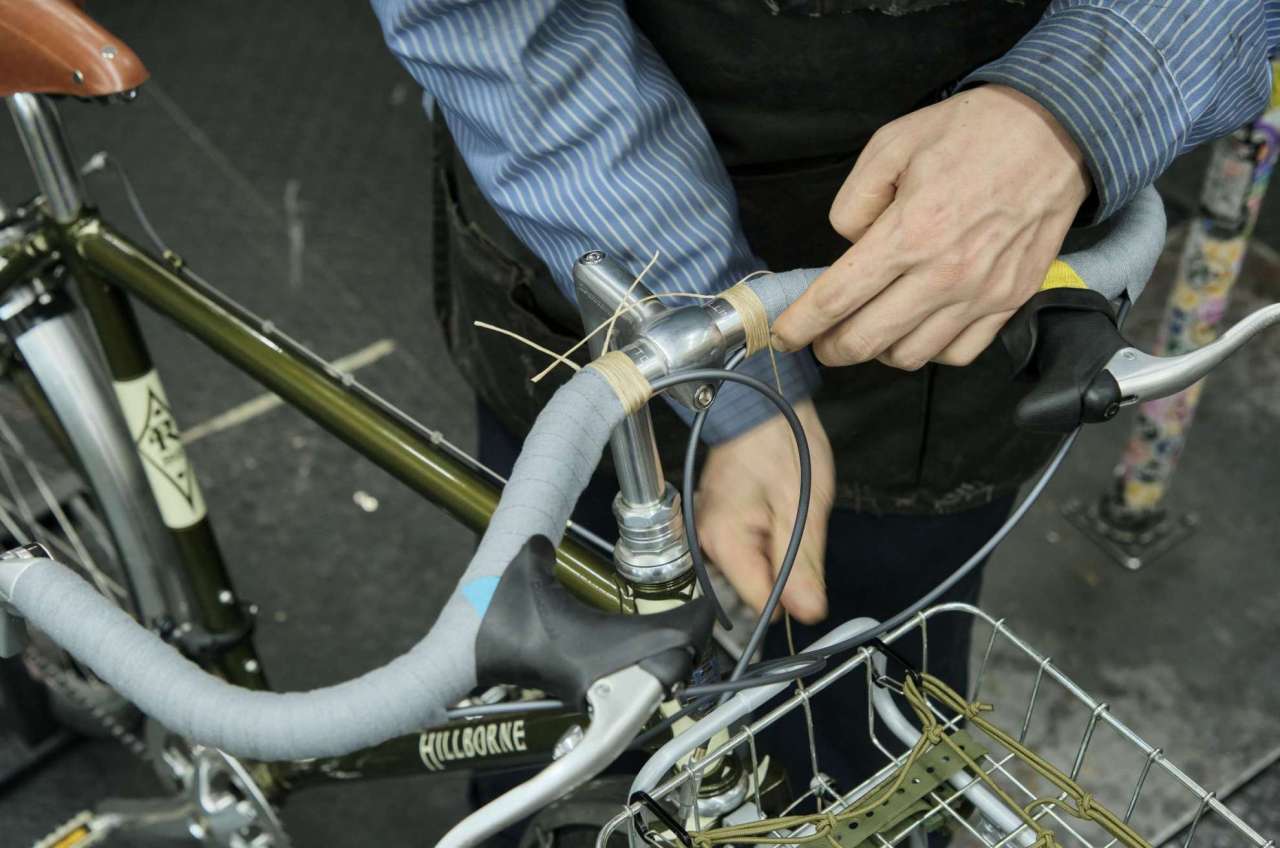
The new gray with the Albastache Bar on a Sam Hillborne. Finished with some sail twine.
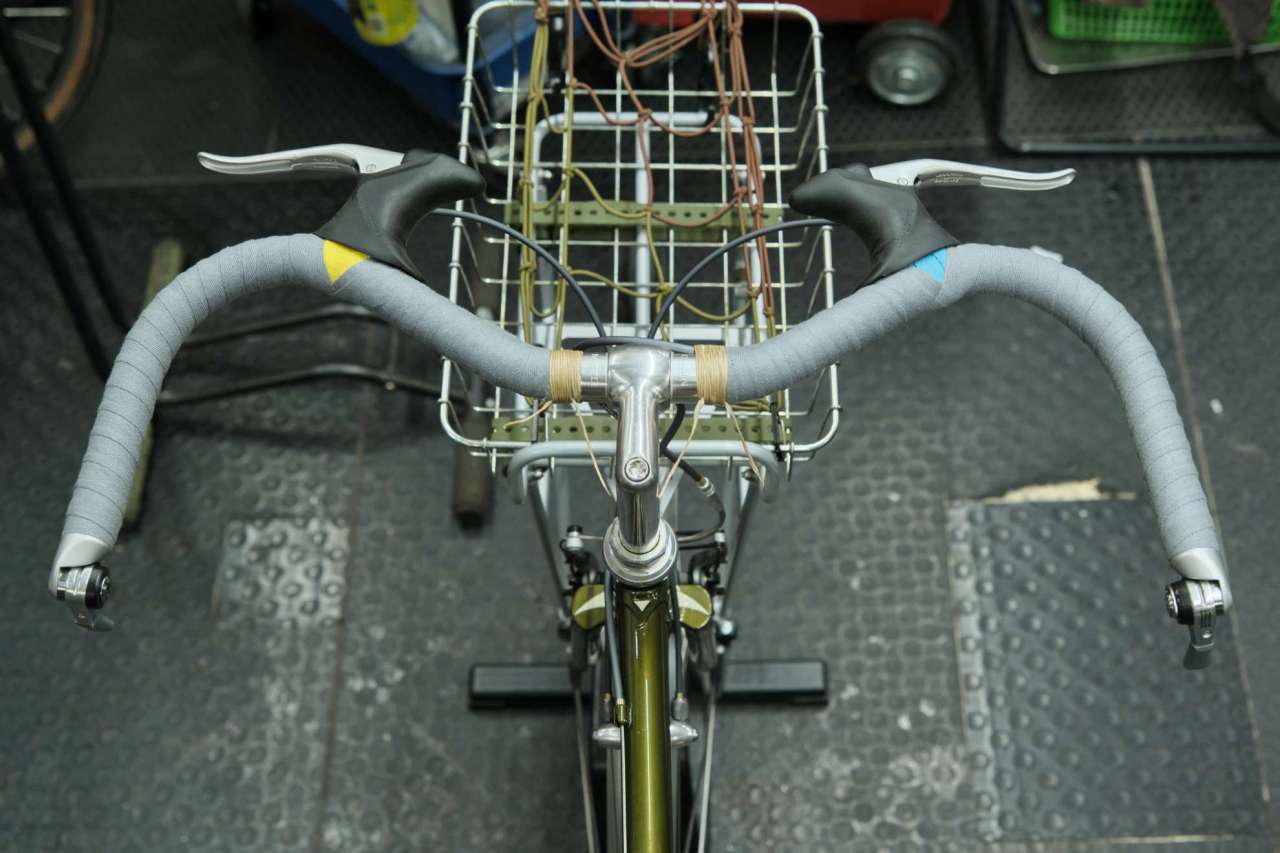
You can see a bit of secret colors I sneaked in, yellow and cyan peaking from where the brake levers are.
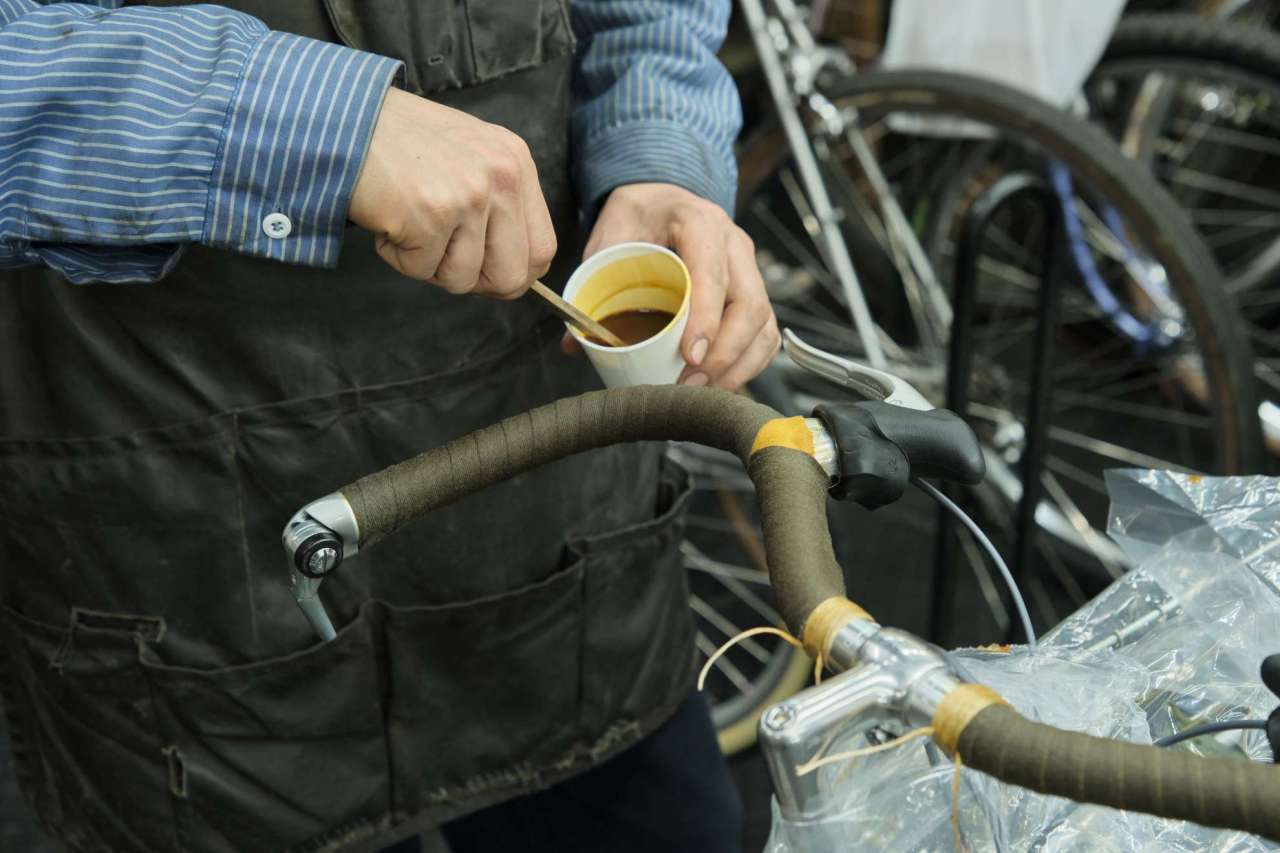
The gray turns into a color like in the image, when applying amber shellac.
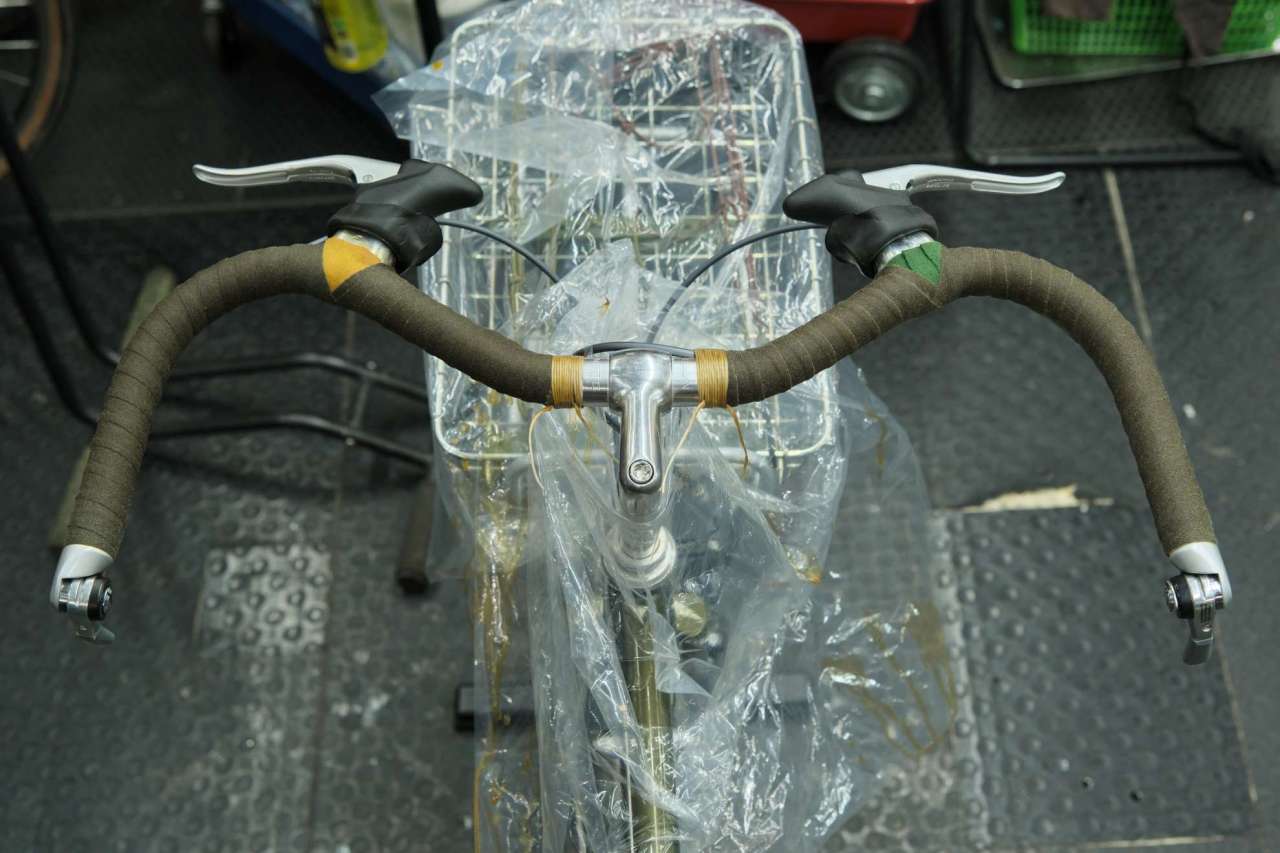
The Gray turns into a deep olive green, the yellow turns into golden yellow and the cyan turns into green.
Now they won’t be smelly after a few rides.
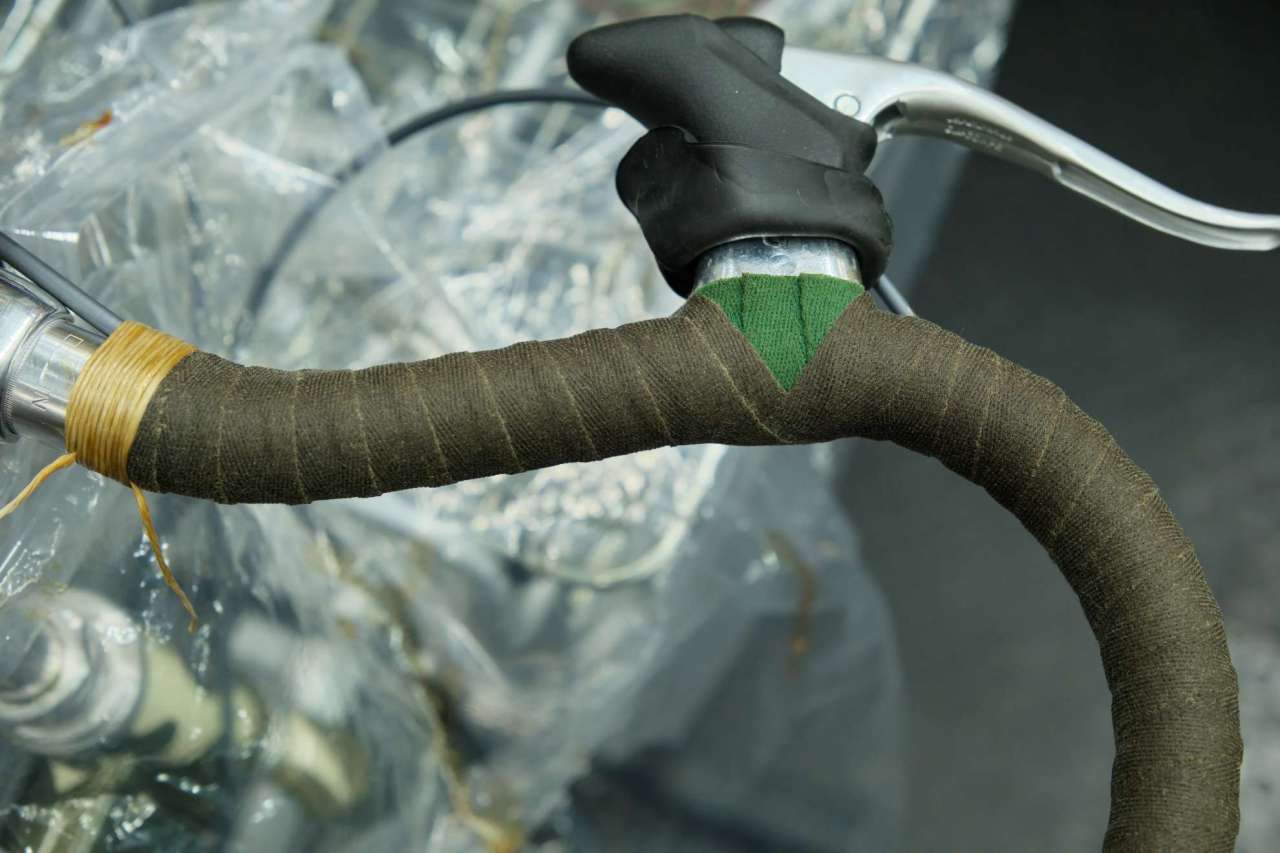
That said, that part about “the color changing” is I think both its charm and its hurdle.
I absolutely love this varnish’s amber hue, so it’s no problem for me. But you can’t control the color before applying it, and people who don’t want to varnish probably hate how it inevitably leans toward this brownish tint.
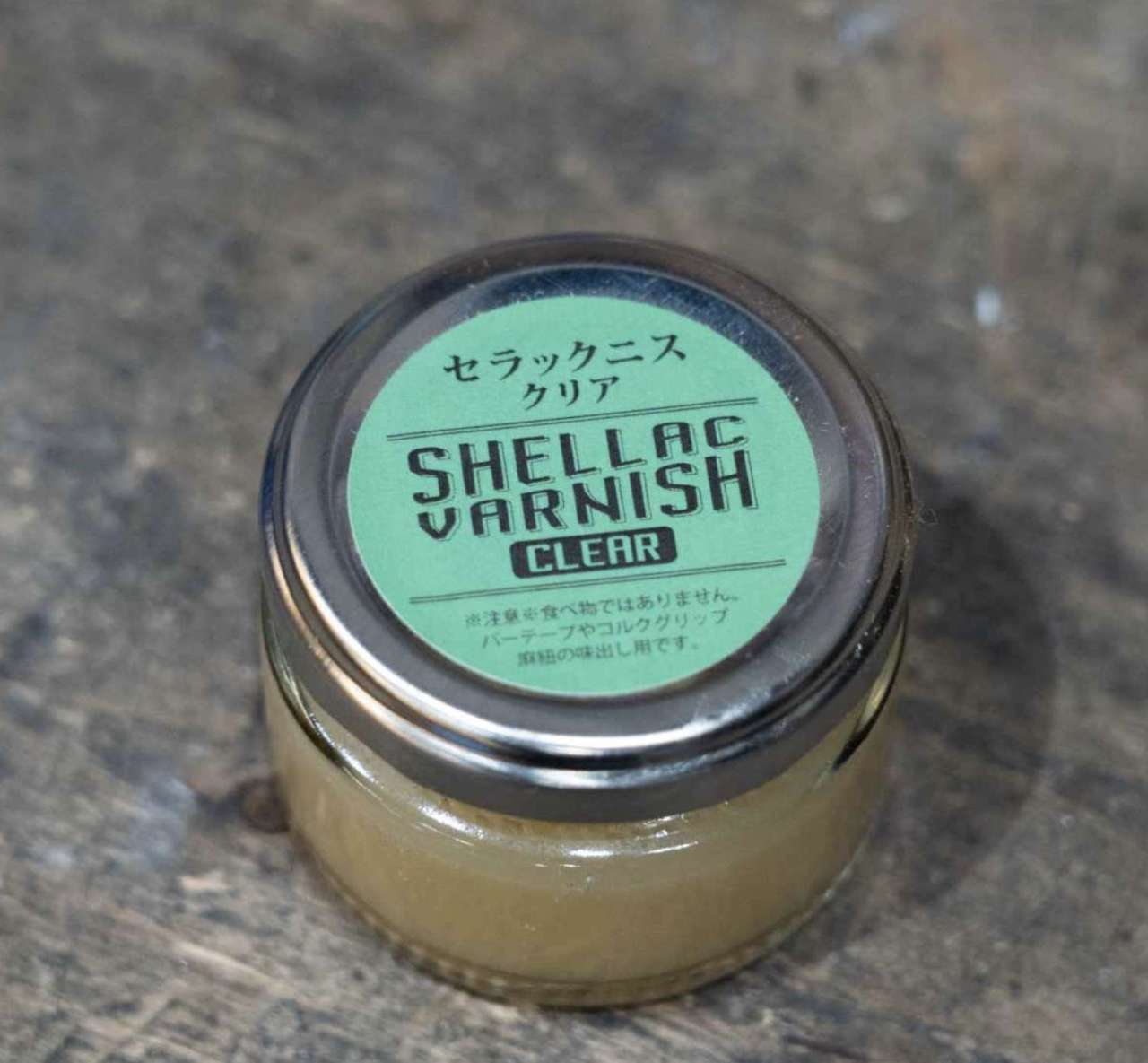
That’s when you use the clear shellac.
←clear/amber→
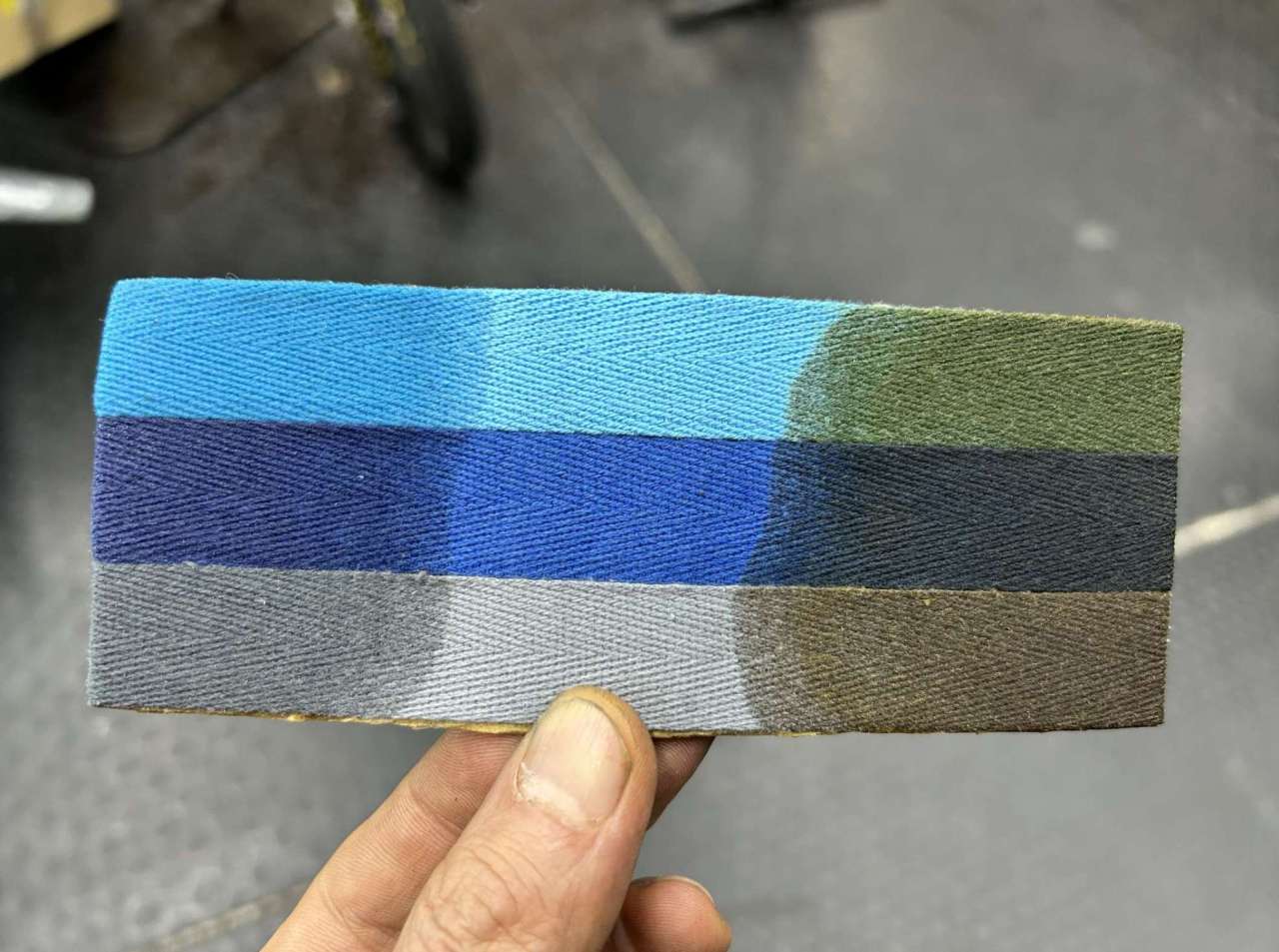
Applying this amber-colored varnish makes “blue tones” appear greenish, and “white/gray tones” become completely obscured when layered with amber.
The leftmost option is clear shellac. This provides surface protection and odor resistance while only slightly deepening the color and preserving the original hue. If you wish to retain blue or gray tones, try applying clear shellac.

(example of blue x gray + clear varnish)
Let’s experiment on my own bike now.
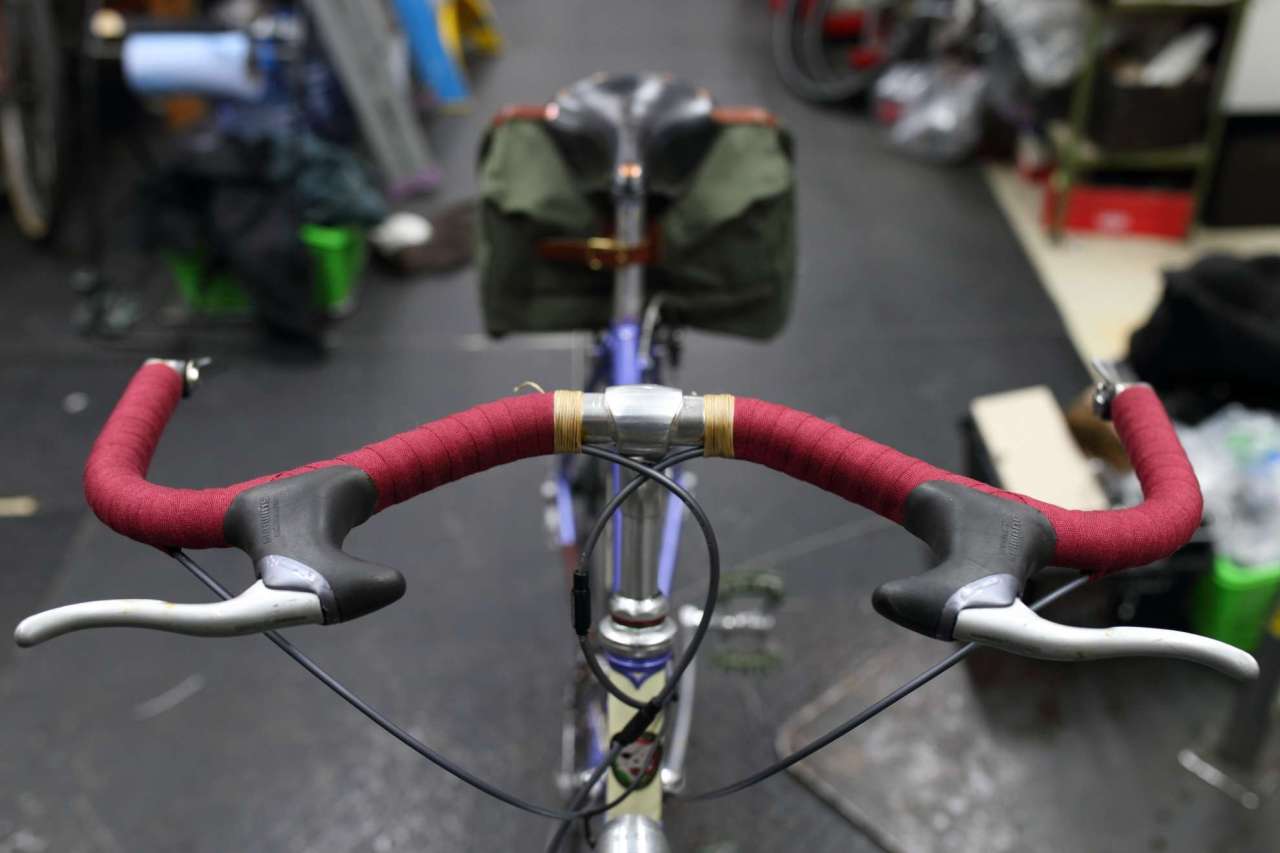
Here’s burgundy without shellac.
Let’s put some amber shellac…
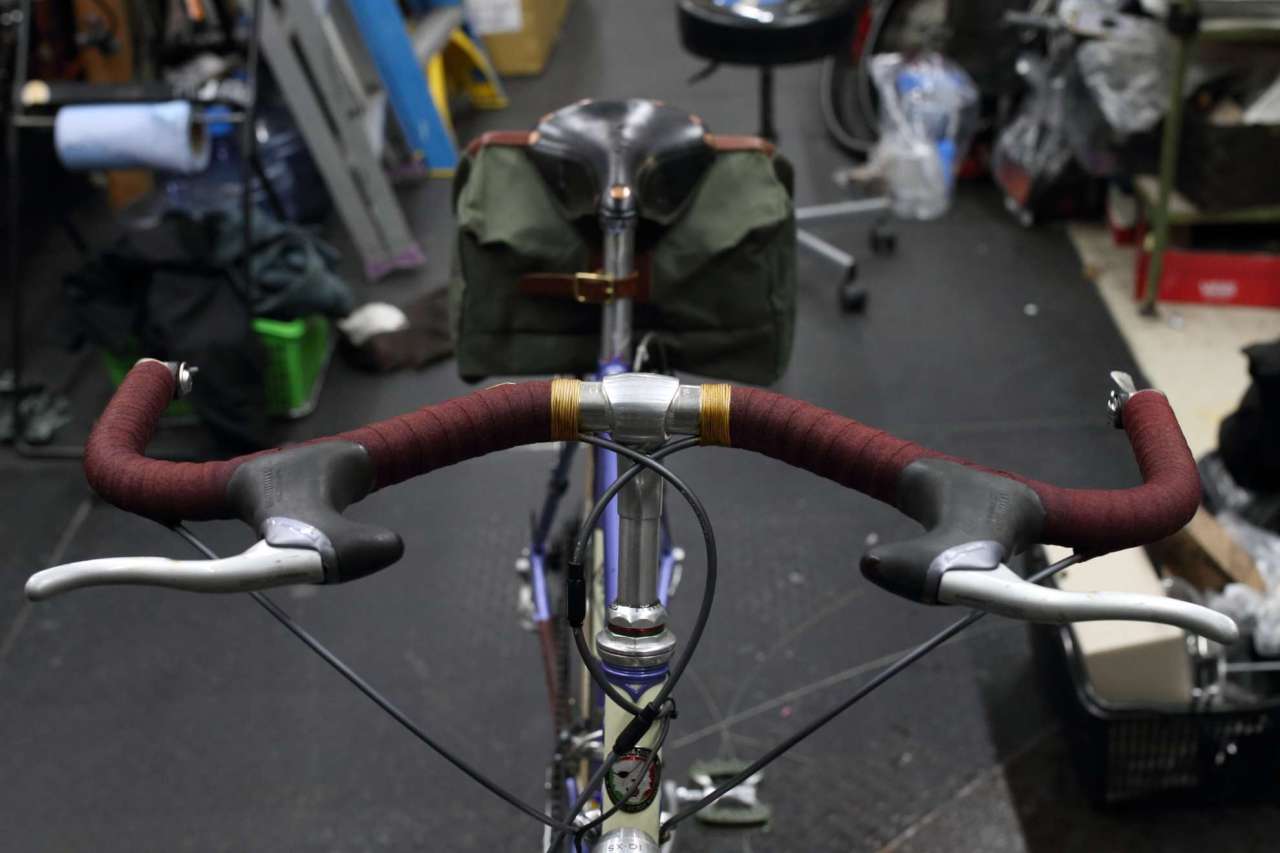
Mmm nice. The color becomes so deep. Wait til it fades from sun light. It’ll look perfect.
One more.
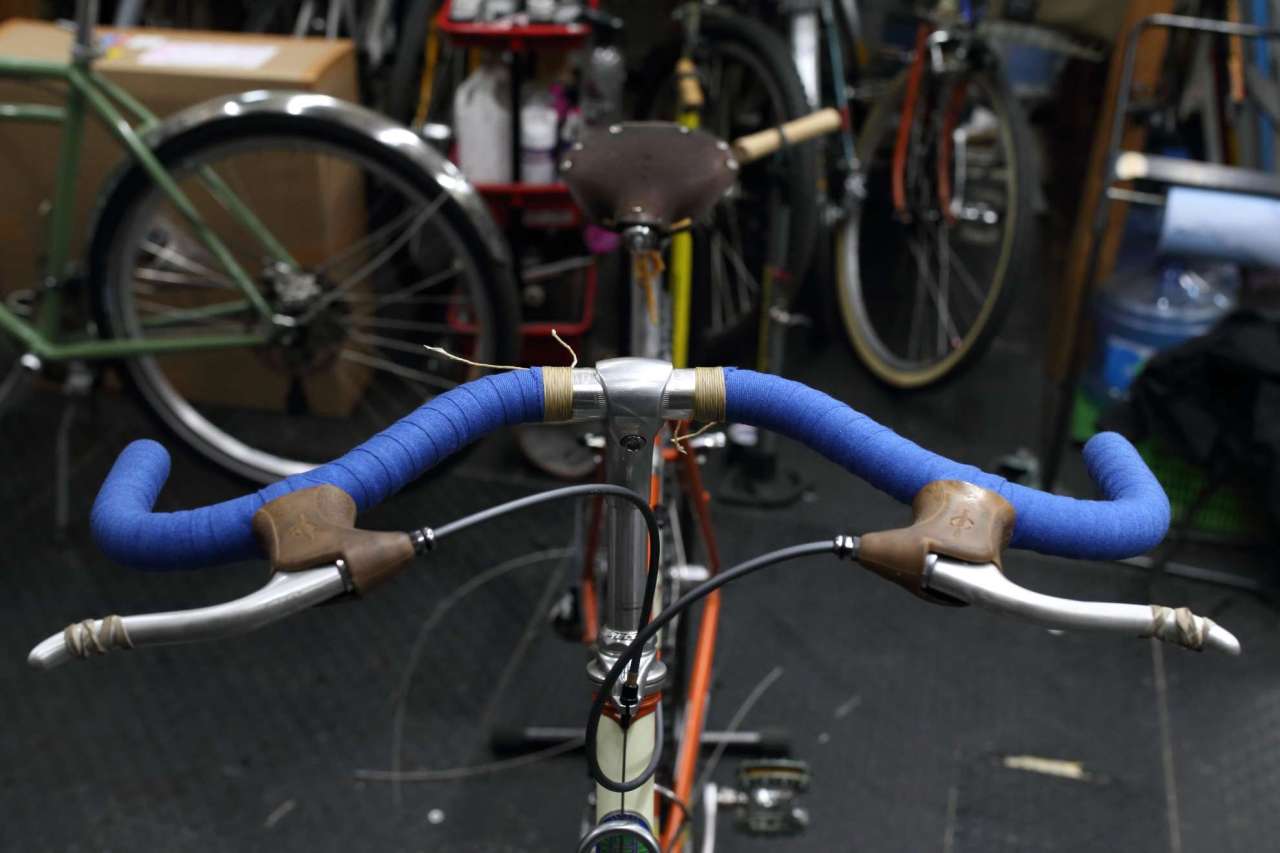
General use blue.
Sure, this color already looks good and when applying amber shellac, it turns green. This is where my little tip becomes handy.
Try mixing the amber and clear shellac in a 1:2 ratio…
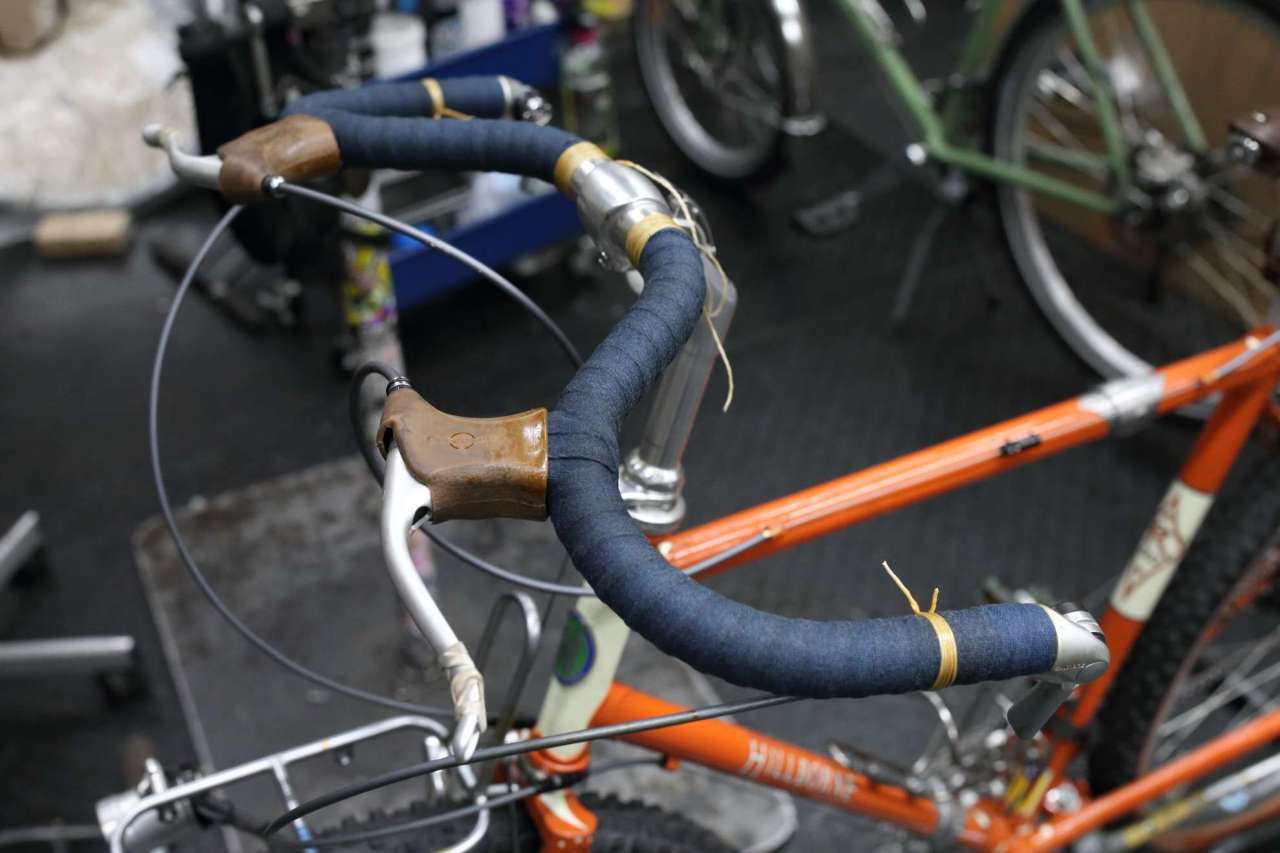
Look how good it looks!
If clear shellac alone seems too plain, but you don’t want to change the color too much, try blending two types of shellac to explore new shades.
Then you ride ride ride…

If the shellaced layer becomes thin, re-shellac it once again.

Then it revives again and again with a different look than before you applied it.
We also handle bar tape wrapping plus varnish application at our shop, so swing by anytime.
Thanks for reading to the end.
– Tani.